

Almost everyone who struggles with double unders blames their conditioning. Usually it’s the rope.
A cheap rope has two problems that make the movement close to impossible: the cable is too light to give you feedback on where it is in space, and the handles have no real bearing, so the rope stalls and whips instead of spinning smoothly. You can’t fix either with more effort. You end up doing more reps, missing more, and welting your forearms.
This guide covers the ropes worth buying if double unders are the goal, why cable weight is the variable that actually matters, and how to size a rope correctly — which is the free fix most people skip.
All of it comes from Elite Jumps, a specialist manufacturer in Wenatchee, Washington that builds ropes for competitive jumpers and CrossFit athletes — and, usefully for anyone learning, sells every component separately.
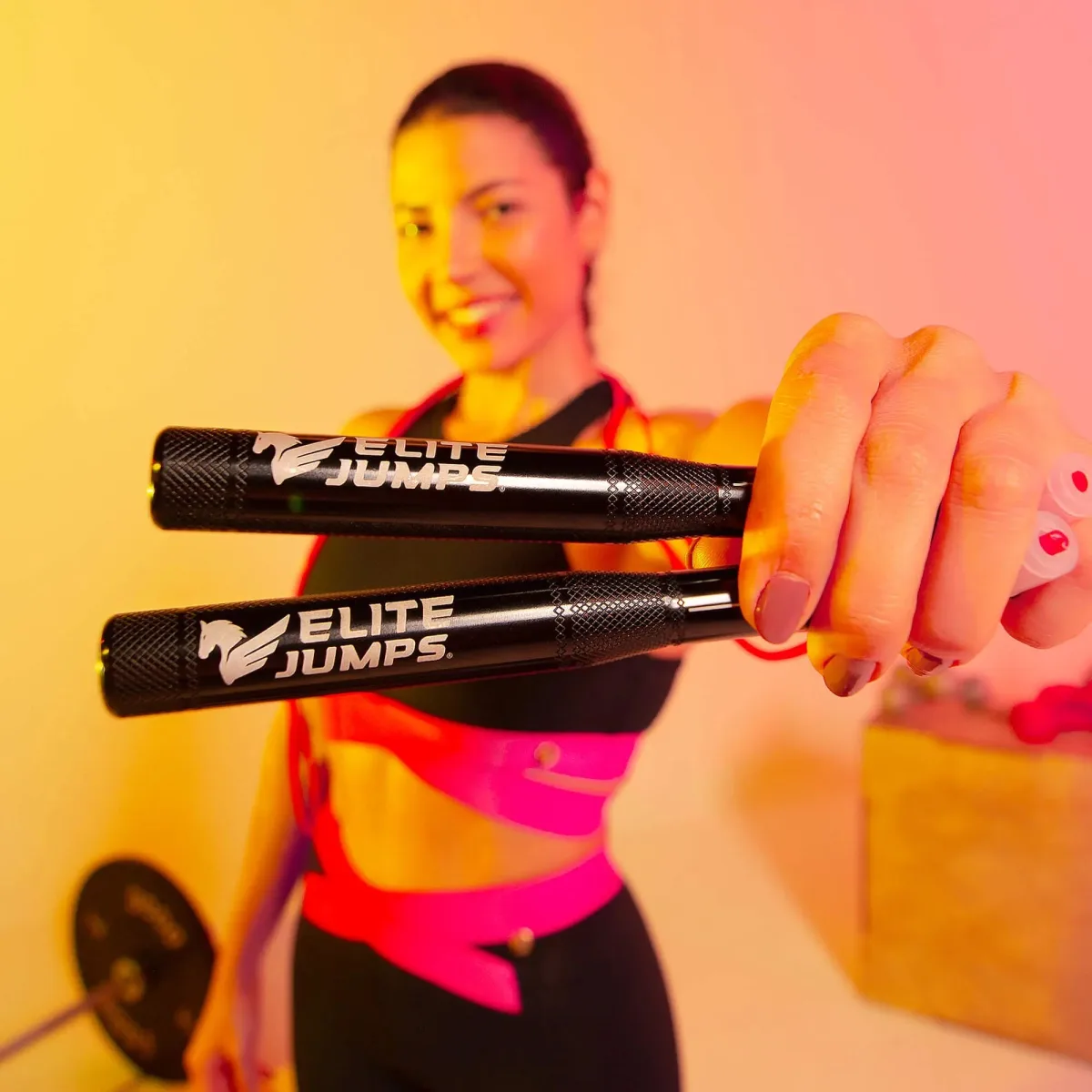
Quick Picks
| If you… | Buy this | Price |
|---|---|---|
| Are learning double unders | Performance Speed Rope — 3 Cable Bundle | From $49.99 |
| Want the best on a budget | Surge® 3.0 Speed Rope | $29.99 |
| Compete or want the top handle | Bullet COMP® Speed Rope | $79.99 |
| Need to build forearm endurance | Muay Thai 3.0 — 1.5lb Weighted | $64.99 |
| Train boxing or MMA rounds | Boxer Training Rope — 5mm PVC | $23.99 |
| Want rhythm feedback | Do Hard Things® 1″ Beaded | $22.99 |
| Are starting from zero | Beginner Progression Bundle | From $65.99 |
| Jump on concrete | Jump Rope Mat | From $59.99 |
First: Cable Weight Is the Variable That Matters
This is the part almost every jump rope guide skips, and it’s the reason people buy three ropes before finding one that works.
A speed rope’s cable is a thin steel wire in a plastic coating. The coating thickness determines the weight, and the weight determines how the rope behaves:
- Light cables (roughly 1.8–2.0mm) spin fastest and are what competitive jumpers use for maximum speed. They are also the hardest to learn on, because you can barely feel where the rope is. If you’re missing reps and don’t know why, a light cable is often the cause.
- Medium cables (around 2.5mm) are the learning weight. Enough mass to feel the rope’s position through the handles, still fast enough for genuine double unders. This is where nearly everyone should start.
- Heavy cables (3.0mm and up) slow everything down and build the specific forearm and shoulder endurance that double unders demand. Slow, deliberate, and excellent for drilling technique.
The practical implication: buy a rope where you can swap the cable. Progressing from medium to light should cost you a few dollars for a new cable, not another $60 for a whole rope.
Elite Jumps sells cables, handles, fasteners and beads as separate line items, which makes this straightforward. That modularity is the strongest structural reason to buy here rather than from a brand that sells sealed units.
1. Performance Speed Rope — 3 Cable Bundle — from $49.99
The single best answer to “which rope should I buy for double unders.”
It ships with three cables of different weights. That’s not a marketing extra — it’s the entire learning progression in one box. Start on the heaviest to drill timing, move to medium as the movement becomes reliable, switch to light when you’re chasing unbroken sets.
Buying this rope means you don’t have to correctly guess your cable weight before you’ve ever done the movement. You will guess wrong. Everyone does. This removes the guess.
At under fifty dollars for three cables plus handles, it also undercuts buying a single-cable rope and one spare.
2. Surge® 3.0 Speed Jump Rope — $29.99 (was $48.99)
The value pick.
Thirty dollars for a proper bearing-equipped speed rope is the price point where the argument against a $10 supermarket rope becomes unanswerable. The difference you feel immediately is rotation: a real bearing lets the cable spin freely regardless of how the handles are angled, so the rope stops catching mid-rep.
If you’re not sure whether jump rope will stick as a habit, this is the rope to test it with. Cheap enough not to matter if it doesn’t, good enough that you’ll know the failure wasn’t the equipment.
Also worth a look: Spark Speed Jump Rope
A lighter-handled alternative. One reviewer noted the handle is smaller than their previous ropes, which made the rope feel lighter and faster in the hand — worth knowing if you have larger hands and prefer something substantial to grip, or if you specifically want minimal handle mass.
3. Bullet COMP® Speed Rope — $79.99
The competition tier.
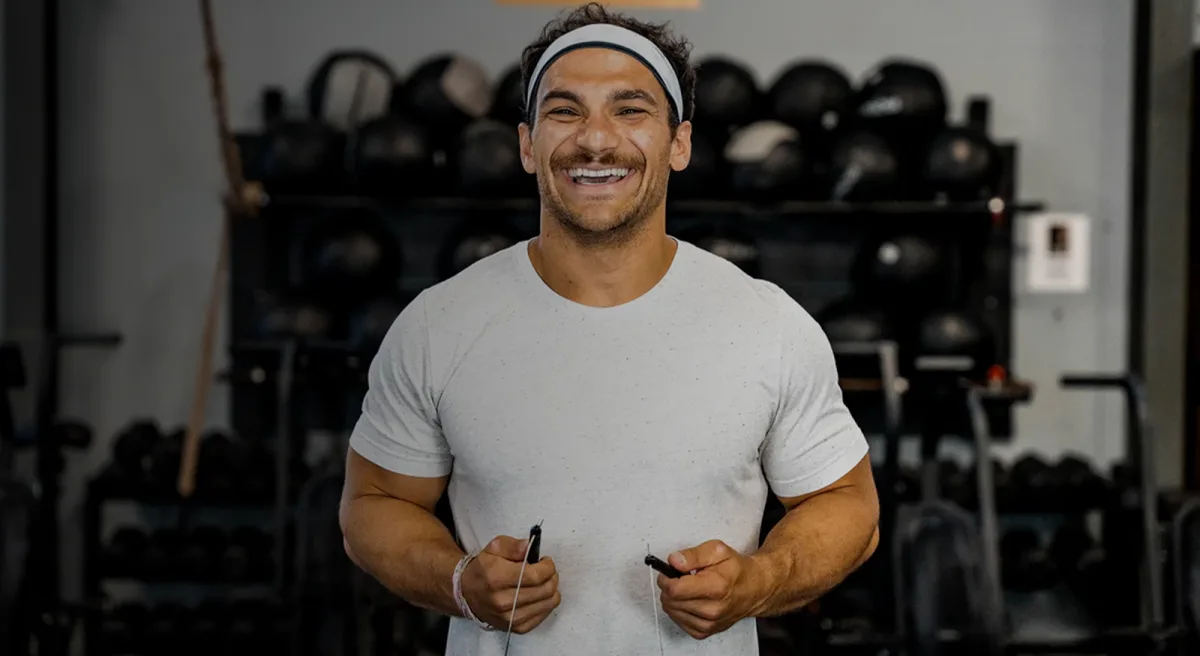
Eighty dollars for a jump rope needs justifying, so here’s the honest version: for a beginner, this will not add a single rep over the $30 rope. The bottleneck at that stage is your timing, not your hardware.
Where it earns the price is at the top end of the movement. Bearing quality determines how consistently the rope spins over hundreds of continuous reps, and handle balance determines how much forearm fatigue accumulates across a long set. Both are invisible until you’re doing unbroken sets of fifty-plus, and both become the limiting factor once you are.
Buy it if you compete, if you’re chasing a specific benchmark, or if you already know from experience that your current rope is what’s stopping you. Otherwise start cheaper and upgrade when you can articulate what’s wrong with what you have.
4. Weighted Ropes: Muay Thai 3.0 — $64.99
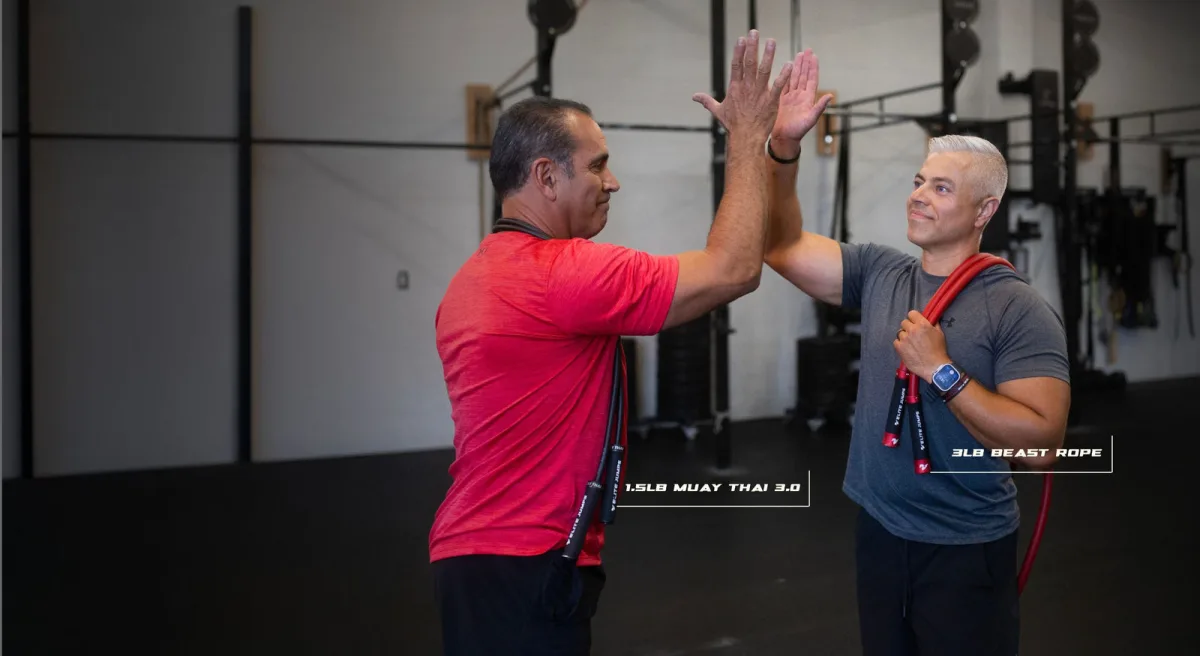
An adjustable 1.5lb rope, and the most interesting product in the range for anyone who has plateaued.
Weighted ropes work on double unders indirectly. They don’t make you faster — they build the specific endurance in forearms, shoulders and grip that lets you hold form deep into a set. Most people fail double unders at rep thirty not because their technique collapses but because their forearms do.
One customer review is worth the whole product page: a jumper who owns a Crossrope calls this their favourite rope. That’s a direct comparison against the category’s most heavily marketed brand, from someone who paid for both.
A word of caution: another reviewer describes the 1lb version as tough to sustain for long periods, with forearms and shoulders feeling it first. That’s the point of the tool, but it means weighted ropes are for short, deliberate blocks — not your main workout. Two to five minutes is a session, not a warm-up.
Muay Thai 2.0 — 1lb Weighted — $29.99
The lighter, cheaper entry into weighted work. Notably, the store lists a “slightly used / like new” variant of this rope — if that’s showing when you visit, it’s the cheapest legitimate way into the category.
5. Beaded and PVC Ropes: The Underrated Learning Tools

Do Hard Things® 1″ Beaded Jump Rope — $22.99. Beaded ropes are the best rhythm-training tool available and almost nobody outside the freestyle community knows it. The beads make an audible click each rotation, which gives you an external tempo to jump against. If your timing is inconsistent — you’re rushing the second rotation and catching your feet — a beaded rope fixes that faster than any amount of slow-motion video.
They’re also considerably more durable on rough surfaces than coated cable, which matters if you train outdoors.
Do Hard Things® 6mm PVC. One of the best-reviewed ropes on the site, with a customer comment that gets to the heart of it: after getting the length right, they could jump longer with fewer misses immediately. That’s sizing doing the work, not the rope — but it’s a good illustration of the point below.
Boxer Training Jump Rope — 5mm PVC — $23.99. Built for round-based training rather than maximum speed. PVC has enough mass to stay predictable while you’re moving your feet through footwork patterns, which is what boxing rope work actually is.
Core Jump Rope — 5mm PVC and 1% Better Today — 6mm PVC ($22.99) round out the beginner tier. Repeated reviews describe them as lightweight, smooth, and — the recurring theme — easy to adjust.
6. The Free Fix: Size Your Rope Correctly
Before you spend anything, this. A correctly sized rope will do more for your double unders than a $50 upgrade.
The standard method: stand on the middle of the cable with one foot. The handle tops should reach somewhere between your armpit and the top of your sternum. Longer than that and the rope has slack that makes timing unpredictable. Shorter and you’ll clip your feet.
For double unders specifically, size shorter than you would for single unders. A shorter rope completes its rotation faster, which is the whole requirement. Most people learning double unders are jumping a rope sized for singles and wondering why they can’t get the second rotation in.
Elite Jumps publishes a sizing guide and a three-question fit quiz that takes about fifteen seconds — do both before ordering. They also run a free app with guided progressions and a trick library on the site, which is a genuinely unusual amount of free instruction from a company that sells hardware.
7. The Accessories That Actually Matter
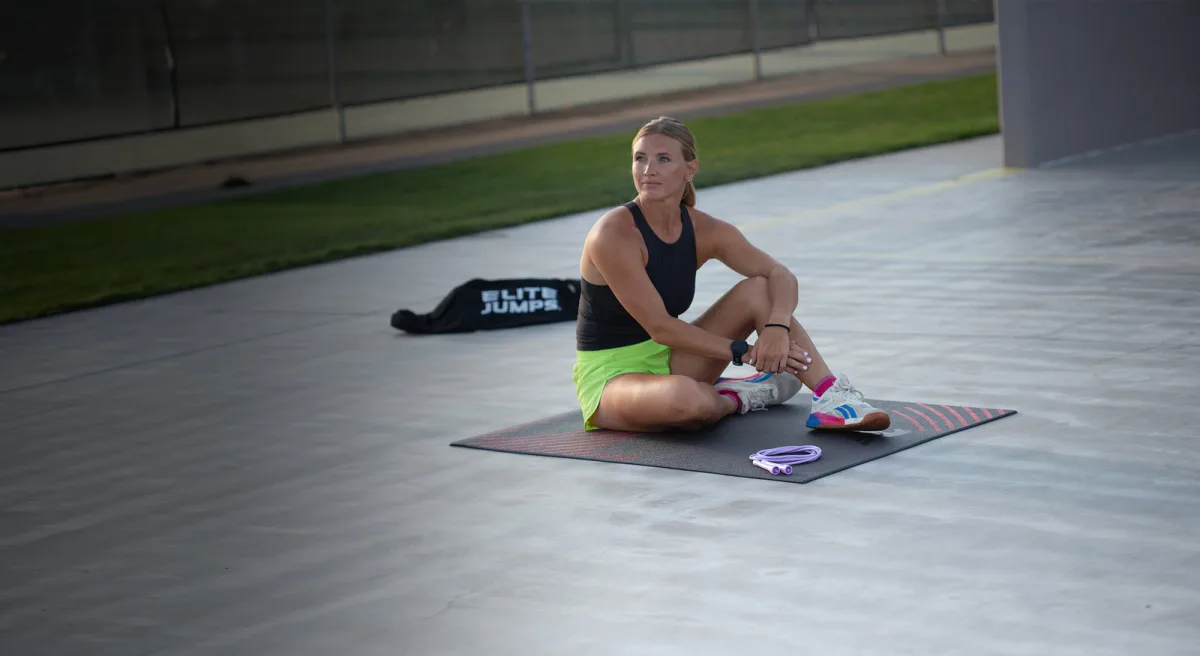
Jump Rope Mat — from $59.99. The most important non-rope purchase, for two reasons. It cuts the impact your joints absorb, and it stops concrete shredding your cable coating — which is what kills speed ropes. Available in standard (36″ x 48″) and jumbo (43.5″ x 86.5″), with an optional travel bag.
If you jump on concrete, garage floor or asphalt, a mat pays for itself in cables alone. And if your knees, shins or ankles ache after sessions, the surface is the first thing to change, not the rope.
Grip Tape — 2 rolls, $4.99. Cheapest meaningful upgrade on the entire site. Sweaty hands slipping on handles causes misses, and five dollars fixes it.
Pocket Power Mini Cable Cutter — $19.99. Only necessary if you’re cutting your own cables to length, but if you are, do not use household scissors. A clean cut prevents the coating fraying at the end, which is where cable failure starts.
Not Knots Elastic Holders (6-pack) — $9.99. Keeps coiled ropes from tangling in a bag. Trivial, and you’ll use them constantly.
Jump Rope Carry Case — $14.99 and the Gym Pack with wall rack if you’re storing several ropes properly.
What You Should Know Before Ordering
Speed rope cables are consumables
This is true of every brand and worth internalising. The steel cable inside is fine; the plastic coating wears wherever it strikes the ground. On concrete, expect to replace cables periodically. On a mat or gym flooring, they last far longer.
Elite Jumps handles this better than most by selling cables individually, but budget for it either way — and if you’re comparing against a brand that only sells complete ropes, factor that difference into the real cost.
You’ll probably buy the wrong cable weight first
Which is the argument for the 3-cable bundle, and the argument for buying from a company that sells replacement cables cheaply. If you buy a single-cable rope, buy a medium weight — it’s the most forgiving starting point.
Prices sit above the Amazon generics
A $30 Surge competes against $8 ropes. The difference is real — bearings, cable quality, a 1-year warranty, and parts availability — but if you only need something to warm up with occasionally, a cheap rope is genuinely adequate. Buy here when the rope is a tool you’re trying to improve at, not just an object you own.
Check shipping and returns before ordering
Shipping terms and the return window are published on the site. Worth reading before you order — particularly if you’re outside the US, since a specialist manufacturer’s international rates vary.
Ease into it
Jump rope is a repetitive impact activity, and the most common way people derail is doing too much too early — usually shin or calf pain in the first two weeks. Short sessions with rest intervals, a forgiving surface, and shoes with some cushioning are the boring answer. If something hurts rather than fatigues, stop and get it looked at.
What’s genuinely good
- Made in Wenatchee, Washington, with US-based customer service and a published phone number staffed on weekdays. Rare in this category.
- 1-year warranty across the range.
- Every component sold separately — handles, cables, beads, fasteners, repair kits. Your rope is repairable rather than disposable.
- Over 2,100 published reviews, including critical ones left visible. A store that shows the complaints is showing you the real distribution.
- Substantial free instruction — app, sizing guide, trick library, fit quiz, and an active community group.
- Custom rope builder from $12.99, which is a fair price for choosing your own handle and cord colours.
Frequently Asked Questions
What length rope do I need for double unders?
Stand on the cable’s midpoint; handle tops should sit between your sternum and armpit. For double unders specifically, size toward the shorter end of that range — a shorter rope completes its rotation faster, which is exactly what the movement requires.
Which cable weight should I start with?
Medium, around 2.5mm. Light cables are faster but give almost no feedback on where the rope is, which makes learning harder. Heavy cables are excellent for drilling but too slow for the actual movement. Start medium and move lighter as your timing becomes consistent.
Do weighted jump ropes help with double unders?
Indirectly. They build forearm, shoulder and grip endurance, which is what usually fails first in a long set. They won’t make you faster and shouldn’t be your main training rope — use them in short, deliberate blocks alongside a speed rope.
Why does my rope keep hitting my feet?
Usually one of three things: the rope is too long, you’re jumping too low, or you’re piking at the hips instead of staying tall. Fix the length first — it’s free and it’s the most common cause.
Beaded or speed rope for a beginner?
Beaded if your timing is the problem, because the audible click each rotation gives you a rhythm to jump against. Speed rope if you can already jump consistently and want to go faster. Beaded ropes are also more durable on rough outdoor surfaces.
Can I jump rope on concrete?
You can, but it wears your cable quickly and puts more impact through your joints. A mat solves both. If a mat isn’t an option, a beaded or PVC rope will survive concrete far better than a coated speed cable.
The Verdict
If you’re learning double unders, the highest-value purchase is the Performance Speed Rope 3-Cable Bundle at under $50 — because it removes the guess that costs most people two extra rope purchases. Add a mat if you’re on concrete, and grip tape regardless.
If you’re testing whether the habit sticks, start with the Surge 3.0 at $29.99. If you already know exactly what your current rope is doing wrong, the Bullet COMP at $79.99 is the piece that fixes it.
Strengths: US-manufactured with real customer service, every component sold separately so ropes are repairable, a 1-year warranty, over 2,100 published reviews, and an unusual amount of free instruction attached to the products.
Weaknesses: priced above generic alternatives, speed rope cables are an ongoing consumable on hard surfaces, and cable weight selection is a real decision that beginners are likely to get wrong on a single-cable rope.
Rating: 9/10. Size the rope properly before you blame anything else — then buy the three-cable bundle and stop guessing.
Prices and availability reflect published listings as of August 2026 and are subject to change. This article is general fitness information, not medical advice — if you have joint, bone or cardiovascular concerns, speak with a qualified professional before starting a new impact activity. As an affiliate, I earn from qualifying purchases made through links on this page.





Write Your Review
No reviews yet. Be the first to share your experience!