

A specialty barbell is the purchase people make when a straight bar starts hurting something. Shoulders that will not externally rotate far enough for a low-bar squat. Wrists that complain on curls. A bench press that has stopped adding weight and needs a different stimulus rather than another program.
The problem is that “specialty bar” covers about eight different shapes doing eight different jobs, the names are not standardized, and the price range runs from under a hundred dollars to well over a thousand. Buying the wrong one is expensive and the bar is too awkward to resell easily.
Kensui sells eight of them, named after Japanese cities, and every one in the specialty range is designed to drop into a standard rack. That last part matters more than it sounds: plenty of specialty bars will not sit on normal J-hooks, which turns loading them into a two-person job.
This guide matches each shape to the problem it solves, flags three things on the brand’s own listings that I would want corrected before ordering, and says which two bars most home gyms should actually buy.
Quick Picks
| If your problem is… | Buy this | Price |
|---|---|---|
| Deadlifts wreck your lower back | Tokyo Open Trap Bar | $299 |
| Pressing hurts your shoulders | Sapporo Open Swiss Bar | $299 |
| Squats hurt your shoulders, not your legs | Beppu Buffalo Bar | $279 |
| Curls and skull crushers hurt your wrists | Kyoto Rackable Curl Bar | $249 |
| Your bench press has stalled | Kobe Cambered Bar | $199 |
| You need a first proper barbell | Osaka Olympic Barbell | $149 |
| You want a light bar for accessory work | Toyama Training Bar | $99 |
| Joint-friendly variety, not heavier lifts | Okinawa Omni Barbell | $299 |
Prices checked on the brand’s own store in August 2026.
Three Things on the Listings I Would Fix First
I do not usually open a roundup with complaints about a catalog, but these three affect what you pay and what shows up in the box, so they belong before the recommendations rather than after them.
1. The Specialty Barbell Bundle contradicts its own pricing
The bundle is titled “Specialty Barbell Bundle ($50 OFF)” and costs $999. Its description lists the contents as Tokyo Open Trap Bar ($249), Kyoto Rackable Curl Bar ($249), Sapporo Open Swiss Bar ($249) and Okinawa Omni Bar ($299).
Three of those four prices are no longer what the bars cost. Buy them individually today and you pay $299, $249, $299 and $299, which is $1,146. So the bundle saves $147, not $50, and the description is quoting a price list that has since gone up.
The practical effect is in your favour, which is why I would still call the bundle the best value in the range if you genuinely want all four. But a listing whose own arithmetic does not match its own store is a reason to check the cart total carefully rather than trusting the headline.
2. The $99 bar appears to be wearing another bar’s name
The Toyama Training Bar is a 15 lb rackable bar with a 32 mm shaft and 12-inch sleeves. Its product description opens by calling it the “Beppu Basic Bar”, the word “Toyama” does not appear anywhere in that description, and every one of its product photos is filed under a beppu filename.
Beppu is a different bar. It is the $279 Buffalo Bar further down this page. Nothing about the Toyama listing is wrong on the specs, so this reads like a listing that was duplicated from a template and never renamed, but if you are ordering by name rather than by picture it is worth a second look at what lands in the cart.
3. Half the range does not publish a bar weight
Four of these eight bars tell you what the empty bar weighs: Okinawa at 45 lb, Beppu at 40 lb, Kobe at 30 lb, Toyama at 15 lb. The other four, Tokyo, Sapporo, Kyoto and Osaka, do not state it anywhere in the listing copy.
For a barbell that is a basic number. It is the difference between a working set of 135 and a working set of 150, and if you log your training you cannot record the lift accurately without it. Ask before you order if the total load matters to you, which for most people buying a specialty bar it does.
The Bars, by the Problem They Solve
Tokyo Open Trap Bar, $299 — the one most people should buy first
A trap bar puts the load in line with your body instead of in front of it, which is why it is the standard recommendation for anyone whose deadlift is limited by their lower back rather than their legs. The neutral handles also make it the friendlier option for tall lifters.
The open design is the upgrade over a conventional hexagonal trap bar. A closed hex bar has to be stepped into, which makes it awkward to load, awkward to store and impossible to use for anything that needs you to stand outside it. Opening one end turns the same bar into a seal row bar and a set of farmer’s handles, which is exactly how Kensui markets it.
Owner feedback is the strongest of anything in this range, with the caveat that most of it sits on the brand’s own store. The one recurring criticism worth knowing is that the bar can feel jumpy or whippy when used for squats, which is not what it is designed for anyway.
Skip it if: your deadlift is fine and your problem is upper body. This is a lower-body and carry tool first.
Sapporo Open Swiss Bar, $299 — for shoulders that hate pressing
A Swiss bar, sometimes called a football bar, replaces the straight shaft with a set of vertical neutral-grip handles. Pressing with your palms facing each other rather than forward changes the shoulder position substantially, and for a lot of people it is the difference between benching pain-free and not benching at all.
Kensui’s version is open-ended, which extends the range of motion on rows and lets you use it for movements a closed frame would block. Several handle widths give you options for presses, rows, curls and triceps work off one bar.
Skip it if: you compete in a sport that tests a straight-bar bench. This trains the pattern, it does not replace the competition lift.
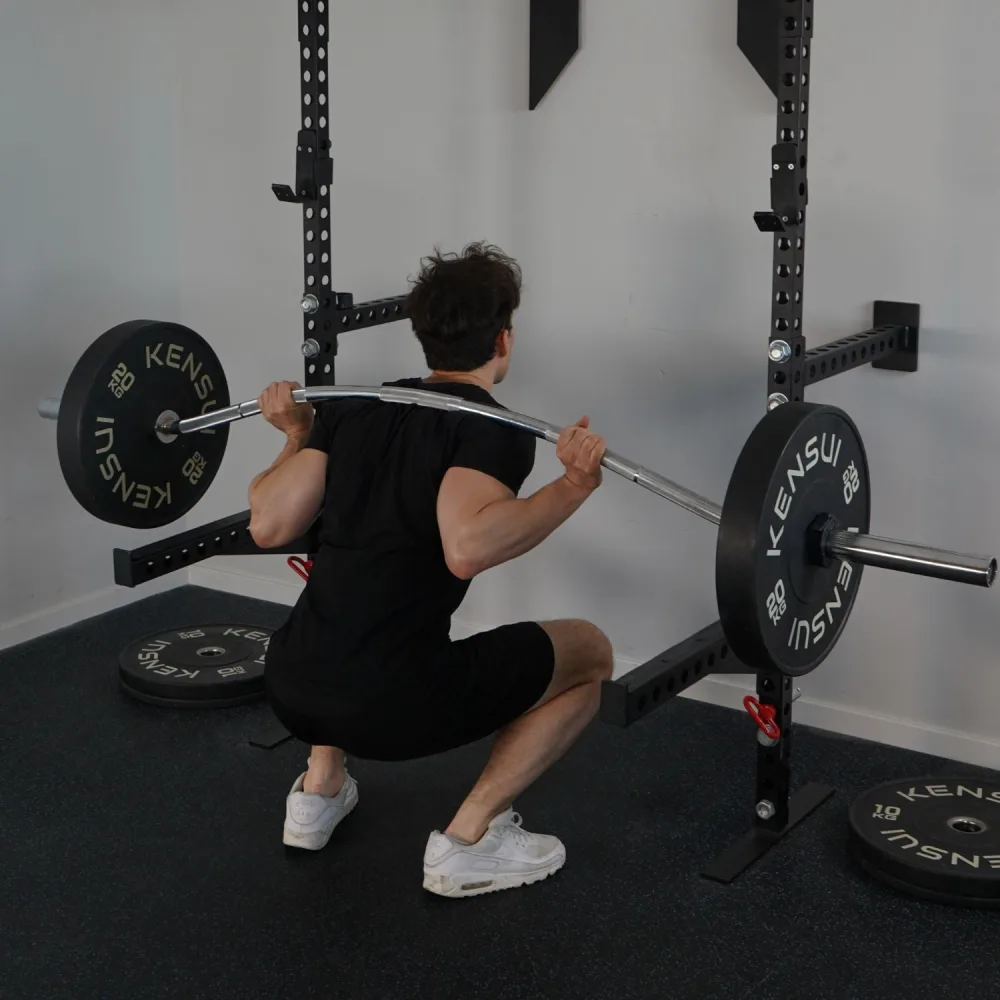
Beppu Buffalo Bar, $279 — for squatting without shoulder pain
A buffalo bar has a subtle forward curve in the shaft. Under a back squat that curve lets the sleeves drop and rotate forward, so your hands sit lower and wider and your shoulders do not have to externally rotate as hard to hold the bar in place. If you have ever finished a squat session with sore shoulders and fine legs, this is the specific fix.
It is 40 lb, chrome, and carries a straight centre knurl so it locks onto your back rather than sliding. That centre knurl also makes it a good good-morning bar.
One thing to check before ordering: this bar has been running as a pre-order, with the brand giving a July to August 2026 window for the first batch. Confirm current availability rather than assuming it ships with the rest of your order.
Skip it if: your squat is limited by your legs or your brace. A curved bar fixes a shoulder problem, not a strength problem.
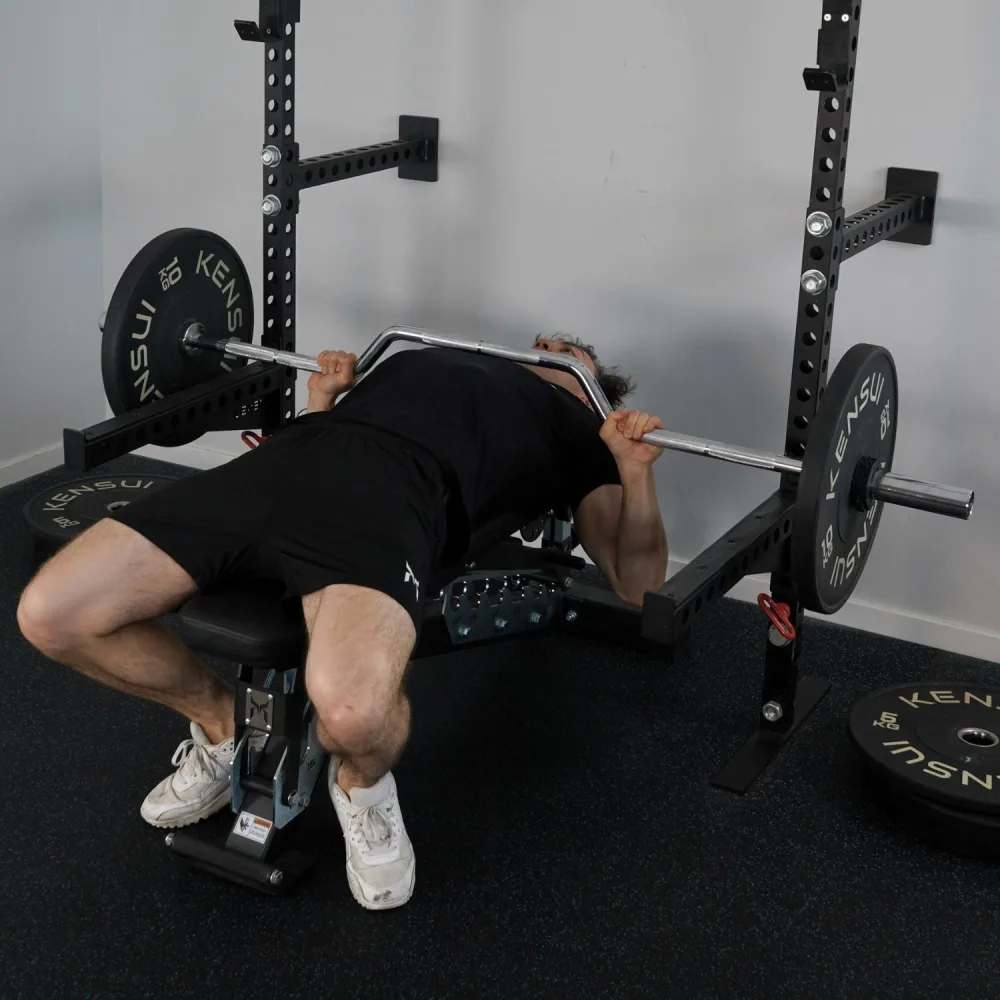
Kobe Cambered Bar, $199 — the best value in the range
This is the most completely specified bar Kensui sells and the cheapest genuine specialty bar in the lineup. A 4-inch drop in the shaft, 30 lb, 30 mm diameter, 9-inch loading sleeves that rotate, chrome finish, 600 lb capacity, centre knurling.
The 4-inch drop is what you are paying for. On a bench press it lets your hands travel below the line of your chest, which stretches the pecs further than a straight bar allows. On seal rows and bent-over rows it does the same thing at the other end of the movement. It is a hypertrophy tool, and a good one.
Being the only bar here with a published weight capacity and a full dimensional spec is worth something in itself, and at $199 it undercuts the $299 bars by a third.
Skip it if: you have no bench. This bar does most of its work lying down, and it wants a stable bench under it. Our guide to compact adjustable benches covers that purchase.
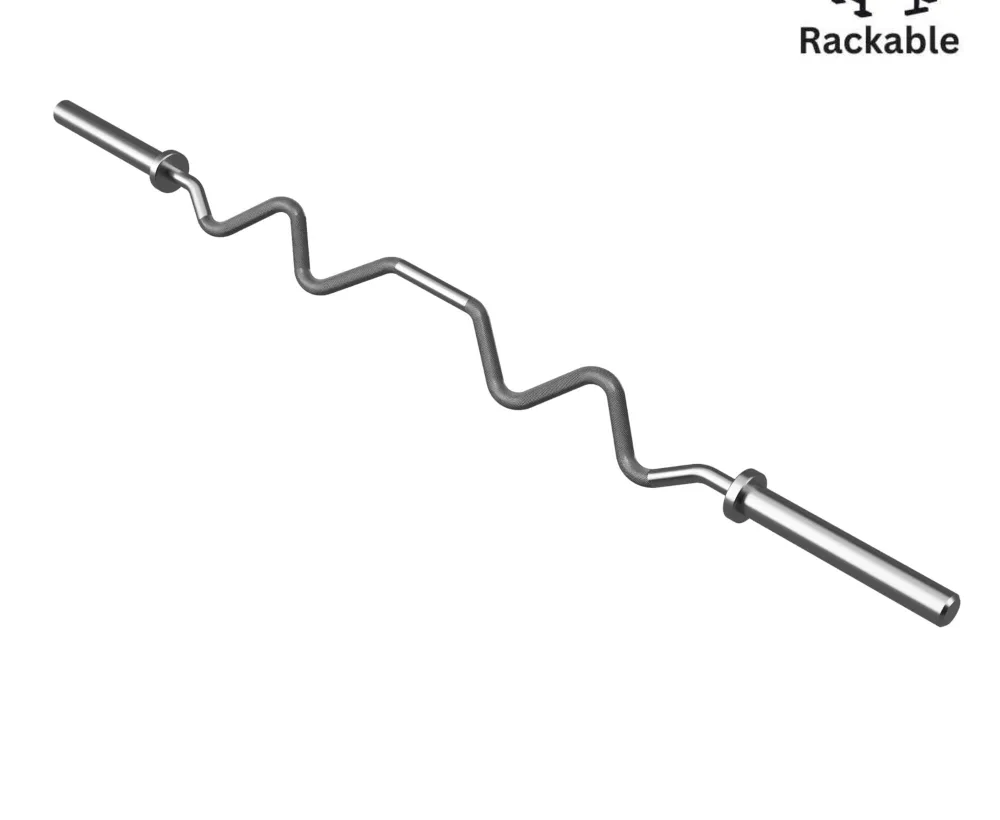
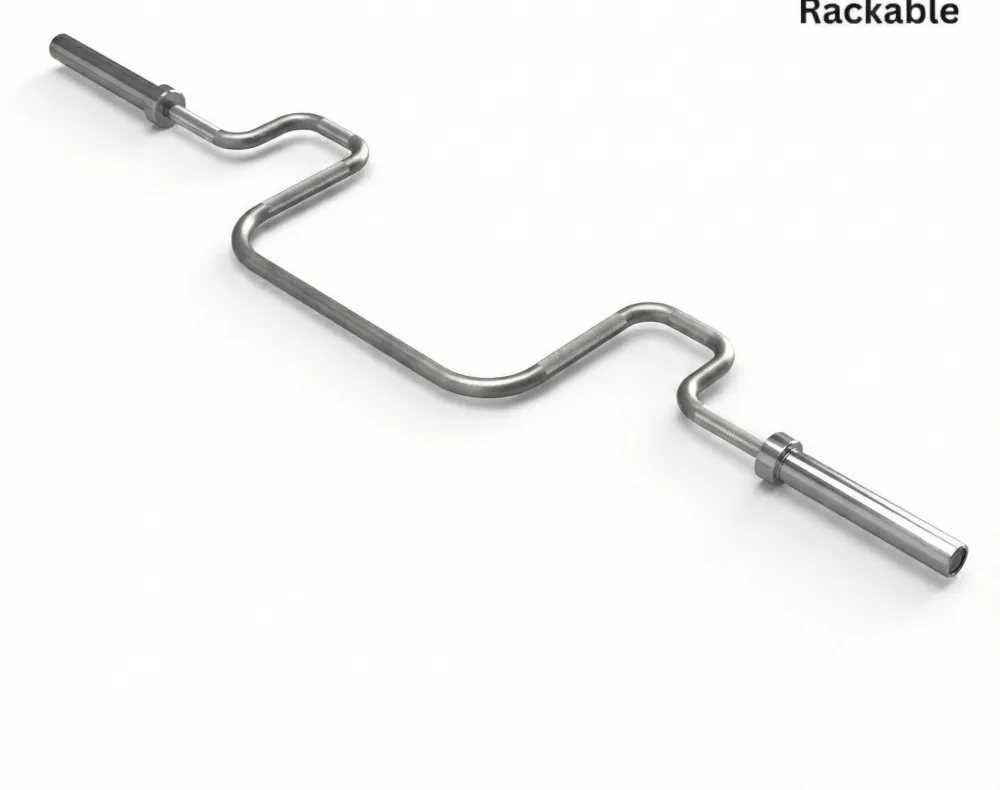
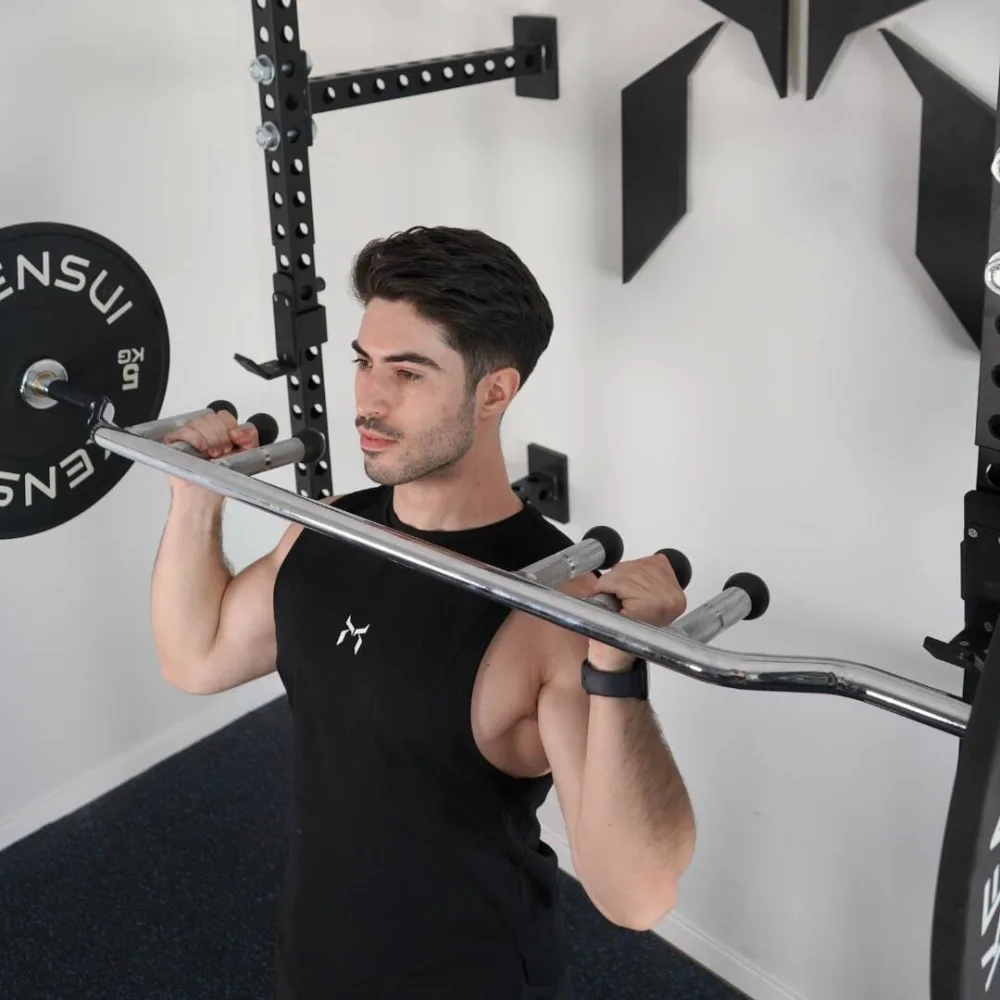
Kyoto Rackable Curl Bar, $249 — an EZ bar that is not only an EZ bar
Standard EZ curl bars are short, light and not rackable, which limits them to curls and skull crushers. The Kyoto is full length and drops onto a rack, so it can be used for overhead press, front squat, back squat and good mornings as well as the arm work it is shaped for. The repeating bend pattern gives you several supinated and pronated hand positions rather than the usual two.
Worth flagging that the brand’s marketing images for this bar carry claims like “40% steeper” and “reduces strain 30%” without saying what those percentages are measured against. Treat them as advertising rather than data. The underlying idea, that a bent bar is kinder to wrists than a straight one during curls, is well established and does not need the numbers.
Skip it if: you already own an EZ bar and do not need it to rack. At $249 you are paying mostly for length and rackability.
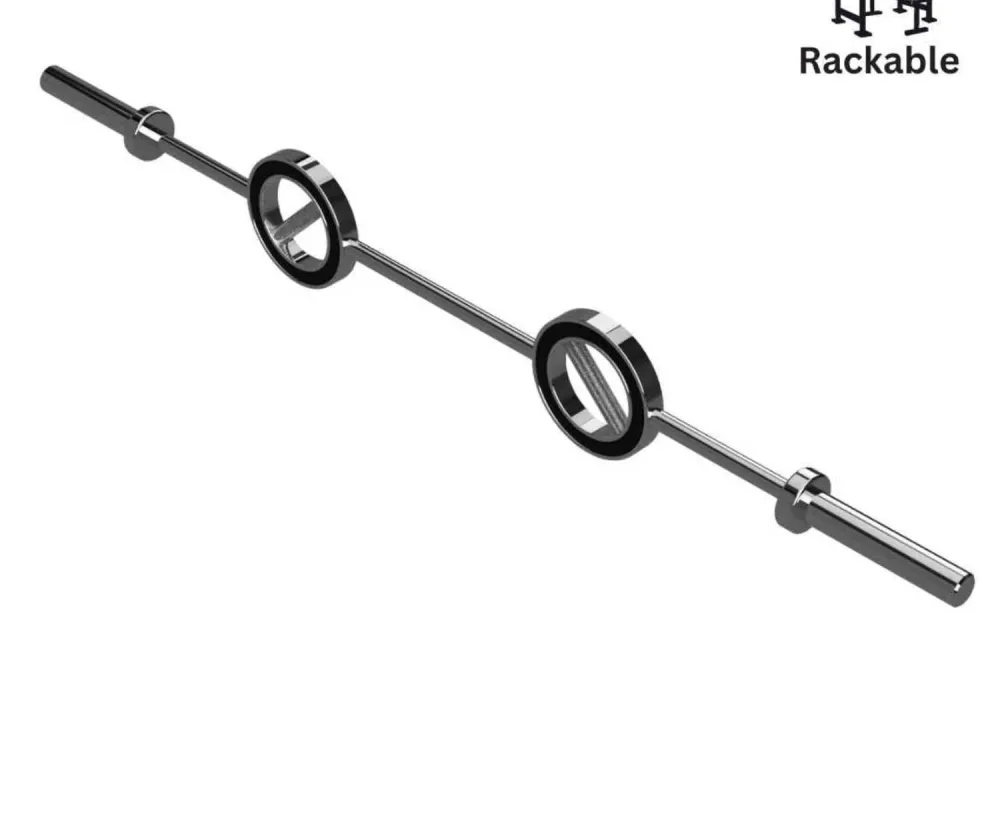
Okinawa Omni Barbell, $299 — the clever one with real limits
Two ring-mounted handles rotate a full 360 degrees, so your grip angle is never fixed. The idea is that your wrists and elbows find their own position through the rep instead of being locked into one the bar chose for you. It is 45 lb, rackable, with 28.5 mm handles, 9.25-inch sleeves, a 32.5-inch grip width and a 405 lb capacity.
This is the one bar in the range where I would push back hardest on the price, and I am not alone. The Jungle Gym Reviews published a full review of it and the criticisms are specific and hard to argue with. The handles never stop moving, so hands do not land in the same place twice, which makes tracking progressive overload genuinely difficult. Their reviewer dropped working weight by around 30% across most movements simply to stay stable. The 32.5-inch grip is comfortable for benching and overhead work but too wide for curls and rows. And the 9.25-inch sleeves limit how much you can load.
Their verdict was that the bar suits joint-friendly training and variety, and is hard to justify if your goal is hypertrophy, strict progression or heavy barbell work. That matches the design. Free rotation and repeatable loading are opposite goals, and this bar chose rotation.
Skip it if: you are trying to add weight to a lift over time. Which is most people, most of the time.
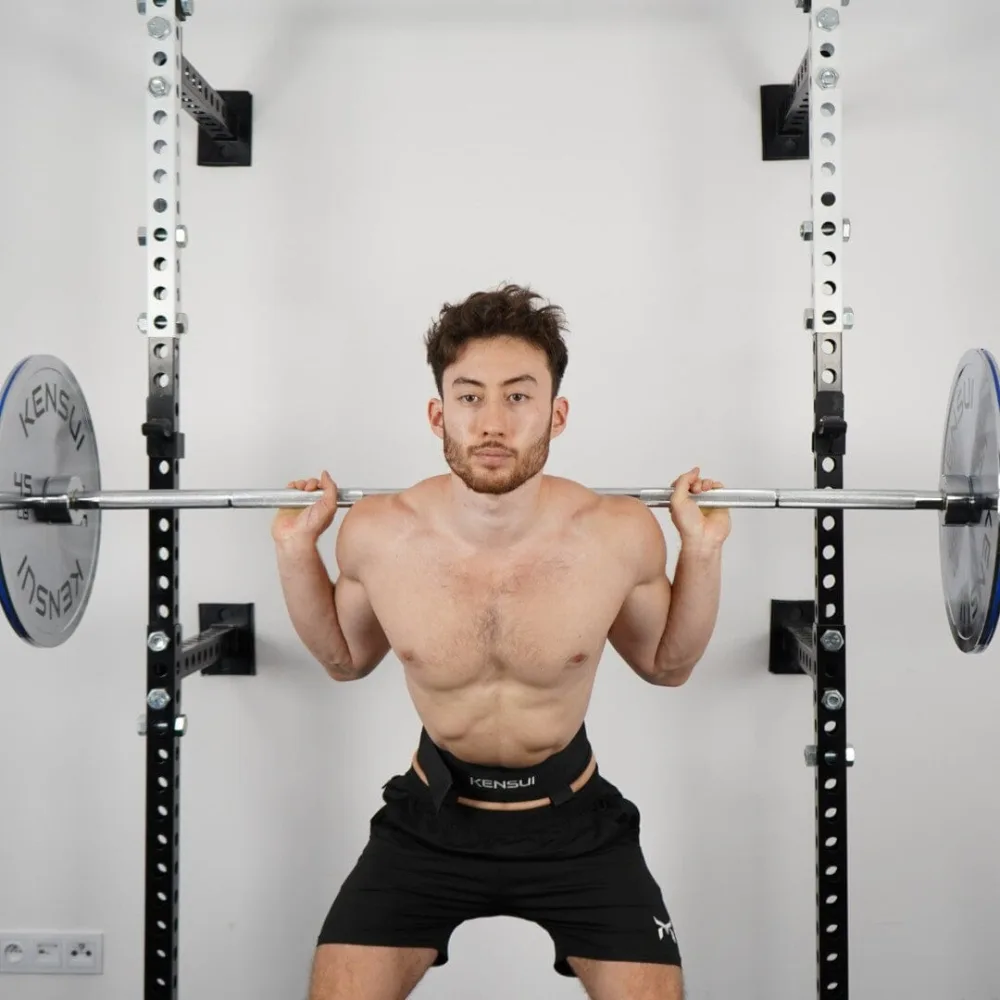
Osaka Olympic Barbell, $149, and Toyama Training Bar, $99
Neither of these is a specialty bar. They are here because a specialty bar is a second or third barbell, and if you do not own a first one yet, that is the purchase to make before anything above.
The Osaka at $149 is a straight Olympic bar with a 30 mm shaft and centre knurling, aimed at squats and general strength work rather than Olympic lifting. The Toyama at $99 is lighter and simpler: 15 lb, 32 mm shaft, 12-inch sleeves, powder coated, rackable. A 15 lb bar is genuinely useful for accessory work, for teaching movements, and for anyone who finds a 45 lb bar too heavy to start with.
What You Need Around Them
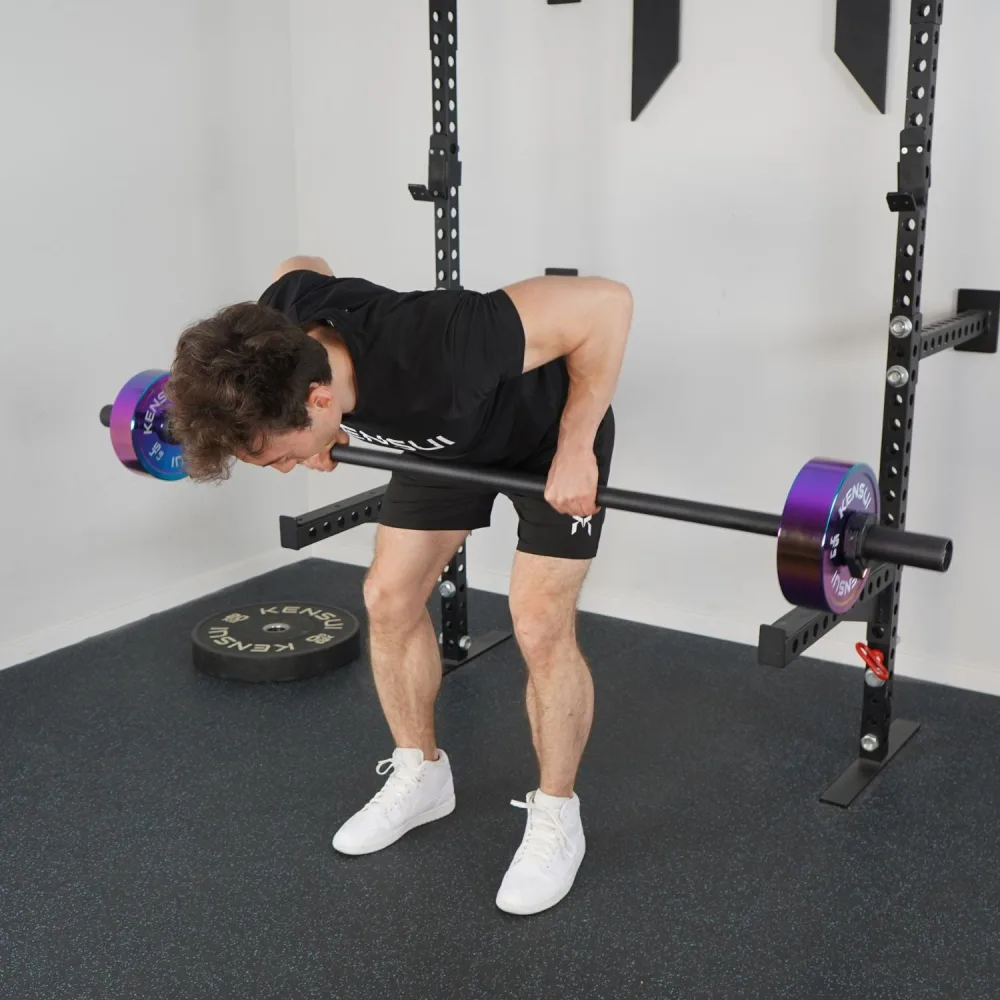
Every bar on this page is rackable, which is the feature that makes them practical at home. It also means they assume you have a rack. If you do not, that is the purchase that unlocks all of these, and our guide to folding squat racks for garage gyms covers the space-saving options.
You also need plates, and thickness matters more than you would expect once you start loading shorter specialty sleeves. The Okinawa’s 9.25-inch and the Kobe’s 9-inch sleeves fill up faster than a standard 16-inch Olympic sleeve, and rubber bumpers fill them fastest of all. Thin steel plates are the better match. The same logic applies to the brand’s plate-loaded weighted vests, which run into the same constraint.
The rest of the Home Gym section covers benches, dumbbells and the supporting equipment.
Frequently Asked Questions
Which specialty bar should I buy first?
The Tokyo Open Trap Bar at $299 if your limiting joint is your lower back, the Kobe Cambered Bar at $199 if it is your bench press and your budget. Those two cover the widest range of problems between them, and the Kobe is the cheapest way to find out whether specialty bars suit you at all.
Are these rackable on a normal rack?
Yes. All the bars covered here are marketed as rackable on standard racks and squat stands, which is not true of every specialty bar on the market. It is one of the more useful things about this particular range.
Is the four-bar bundle worth it?
Financially, more than the listing claims. At $999 against $1,146 for the four bars bought separately, it saves $147 despite the title saying $50 off. It only makes sense if you want all four, and one of them is the Okinawa, which is the bar I would be most cautious about.
Why do some of these not list a bar weight?
I do not know, and that is the honest answer. Four of the eight publish it and four do not. Contact the brand before ordering if you need the number for your training log.
Can a specialty bar replace my straight bar?
No, and it is not meant to. These change the loading position to work around a limitation or to add a new stimulus. The straight bar stays the reference lift and the thing you measure progress on.
Final Thoughts
Most home gyms need one specialty bar, not four, and the right one is determined by which joint is complaining rather than by which bar looks most interesting.
If you buy one thing here, make it the Kobe Cambered Bar at $199. It is the cheapest real specialty bar in the range, it is the only one with a complete published spec including the 600 lb capacity and the 4-inch drop, and a deeper bench and row position is the upgrade most lifters will feel immediately.
If your problem is deadlifting rather than pressing, the Tokyo Open Trap Bar at $299 is the one, and the open end genuinely earns the premium over a closed hex bar by doubling as a seal row bar and farmer’s handles. For shoulders that cannot press, the Sapporo Open Swiss Bar at $299. For shoulders that cannot hold a squat, the Beppu Buffalo Bar at $279, availability permitting.
If you have no barbell at all yet, start with the Osaka at $149 or the Toyama at $99 and come back to this page in a year.
The one I would think hardest about is the Okinawa Omni at $299. The rotating handles are a real idea and they do what they claim, but an independent review found them hard to load heavily and hard to progress on, and at the top of this price range that is a lot to pay for variety. Buy it because you want joint-friendly variation, not because you want to lift more.
Check current pricing at Kensui →
Specifications and prices were taken from the brand’s own online store in August 2026 and change without notice. Independent review findings on the Okinawa Omni Barbell are from The Jungle Gym Reviews. Product images are courtesy of Kensui.



Write Your Review
No reviews yet. Be the first to share your experience!