

A pull-up bar gives you exactly one grip. Palms forward, hands fixed, wrists locked at whatever angle the bar decided for you. That is fine for a while. It becomes a problem when your elbows start complaining, when your forearms fail before your back does, or when you simply stop getting anything new out of the movement.
The fix is not a new bar. It is something that hooks onto the bar you already own and changes where your hands go, and that category has become genuinely crowded over the last few years.
Kensui sells more of these than anyone I can find, and it sells them in a way that is both the most interesting thing about the range and the most frustrating. The engineering is good. The catalog is a mess. Both of those statements need a guide.
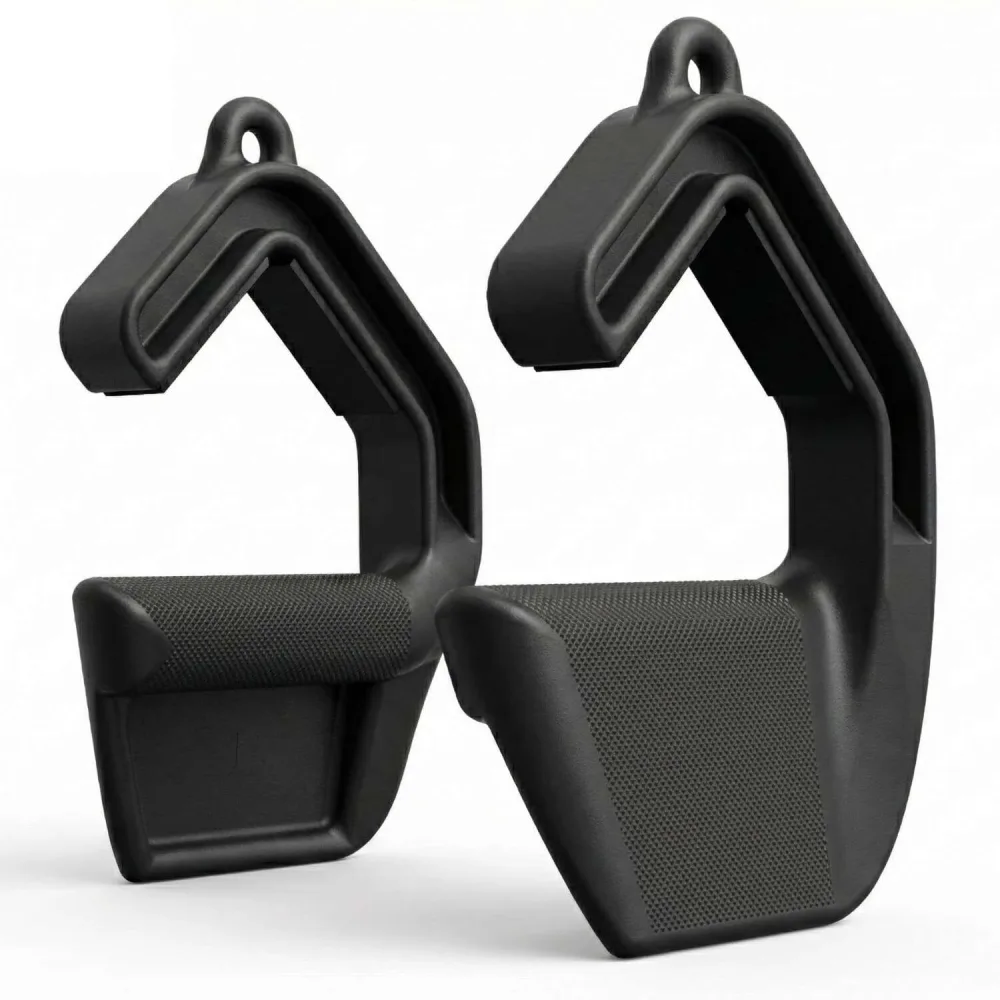
This guide decodes the naming, says which four products out of a very long list are actually worth owning, and covers what these things cannot do.
Quick Picks
| If you want… | Buy this | Price |
|---|---|---|
| Neutral grip on any bar, the default buy | Swissies V2 MAX | $49 |
| The cheapest way to try the idea | Swissies, original | $29 |
| A 45 degree grip instead of a neutral one | Swissies-SP | $35 |
| All three grip angles | Swissies S-P-N Bundle | $129 |
| Gymnastic rings that cover both standards | DUO-Rings | $49 |
| A suspension trainer that fits in a pocket | Nanobars V2 | $49 |
| Grip and forearm work on the same bar | EZ-ROPE | From $29 |
| To fine-tune the angle of your Swissies | Angle Modifiers | $19 |
Prices checked on the brand’s own store in August 2026.
First, the Naming, Because the Store Will Not Explain It
There are fourteen separate listings with Swissies in the name, spanning $0.99 to $299. Eight of them have a product description of thirty characters or fewer, and several of those simply repeat the product title back at you. The $299 listing, Swissies X, has no description at all.
So the letters are doing a lot of work and nothing on the page tells you what they mean. I had to read the description of a bundle to find out. Here it is:
| Name | Grip | What that means in practice |
|---|---|---|
| Swissies V2 MAX | Neutral | Palms facing each other, the classic Swiss bar position |
| Swissies-S V2 MAX | Supination | Angled toward palms-up, more biceps |
| Swissies-P V2 MAX | Pronation | Angled toward palms-down, more forearm and upper back |
| Swissies-SP | 45 degrees | Semi-pronated one way, semi-supinated the other, depending on which end you grab |
| Swissies X | Undocumented | $299 for a Full System, $69 for a Starter Kit, and no description |
That table took longer to assemble than it should have, and it is the single most useful thing in this guide. If you were browsing the store cold, you would have no way to tell a $49 Swissies-S from a $49 Swissies-P.
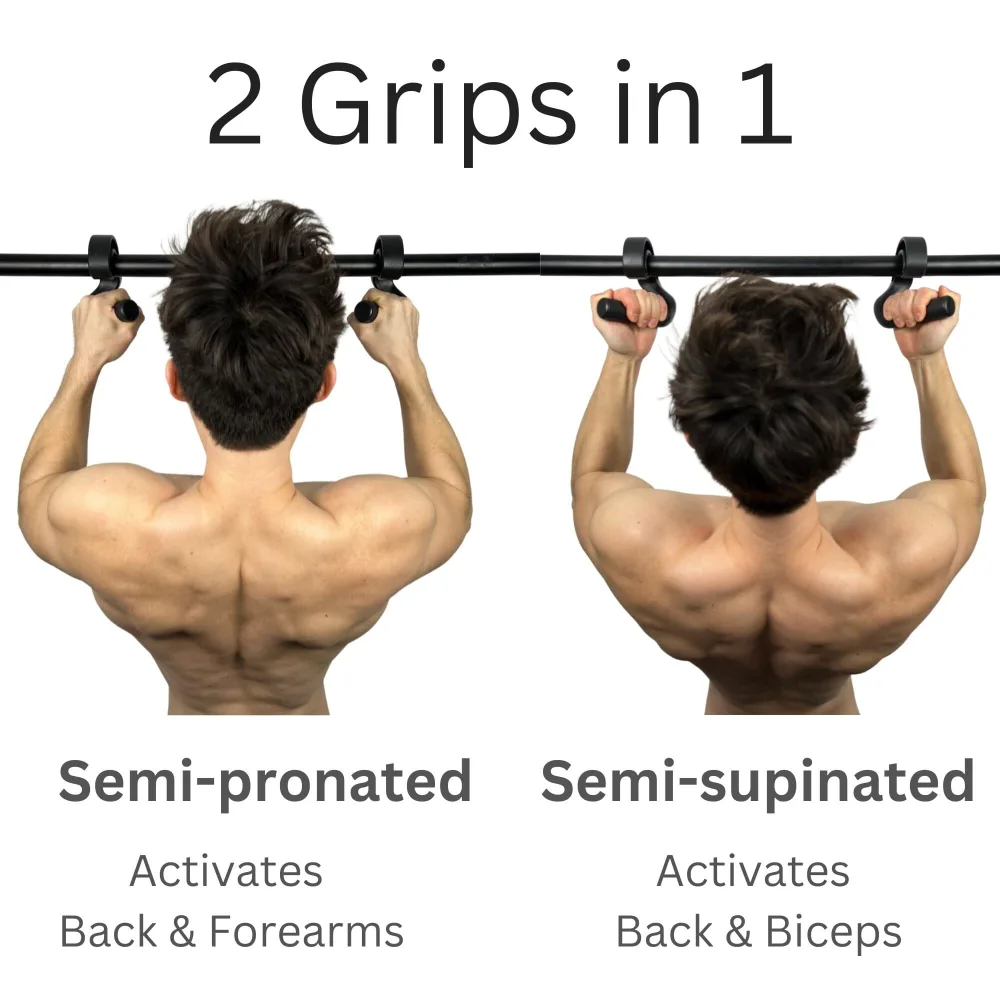
There are also three version generations still sold side by side: the original Swissies at $29, V2 at $39, and V2 MAX at $49. The differences are real. V2 added a hook that copes with more bar diameters, an eyelet for carabiners, and the ability to take angle modifiers. MAX added the fin-shaped palm support. But nothing sorts them for you, so a first-time buyer sees eight prices for what looks like the same object.
The Handles
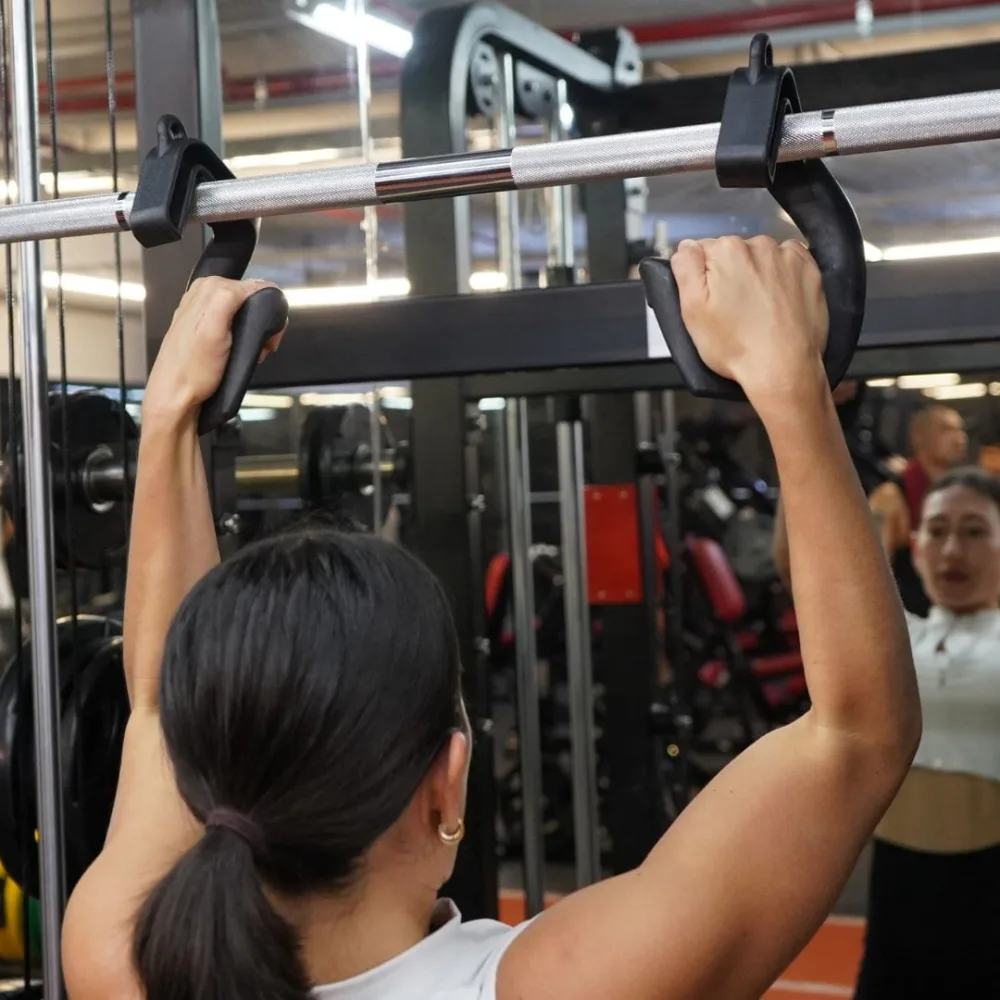
Swissies V2 MAX, $49 — the one to buy
If you buy one thing from this page, make it this. Neutral grip, the redesigned hook that fits varying bar diameters, a carabiner eyelet, compatibility with the angle modifiers, and the fin palm support that the cheaper versions do not have.
The construction facts worth knowing, which independent reviewers agree on: nylon fiberglass, a pair weighs under a pound, the hook interior is lined with high-density rubber so it wedges onto the bar without scratching it, and each handle is rated to 400 lb, giving 800 lb across the pair. That rating is far beyond what a bodyweight athlete needs, which is the point.
The versatility is the genuinely impressive part. These attach to Olympic bars, standard bars, axle bars, doorway bars, wall-mounted racks, outdoor calisthenics equipment, and cable machines via the eyelets. They will also anchor resistance bands. For a $49 object that fits in a bag, that is a lot of coverage.
Skip it if: you want to press with them. This is the one hard limitation. Swissies hang from a bar, so they do nothing for bench press or overhead press. If pressing is your problem, you want an actual Swiss bar or specialty barbell instead.
Swissies, original, $29 — the cheap entry
Same core idea, older hook, no carabiner eyelet, no angle modifier support, no palm fin. At $20 less it is a reasonable way to find out whether a neutral grip actually helps your elbows before committing further.
Skip it if: you already know you want them. The $20 gap buys three real features, and you will not want to buy twice.
Swissies-SP, $35 — the underrated one
Instead of a neutral grip this sits the handle at 45 degrees, which gives you a semi-pronated position from one side and a semi-supinated position from the other. One product, two grips, and both of them sit between the two positions a normal bar offers.
For most people chasing variety rather than fixing a specific joint problem, this is arguably a better first purchase than the neutral version, because it adds two new hand positions rather than one.
Angle Modifiers, $19, and the S-P-N Bundle, $129
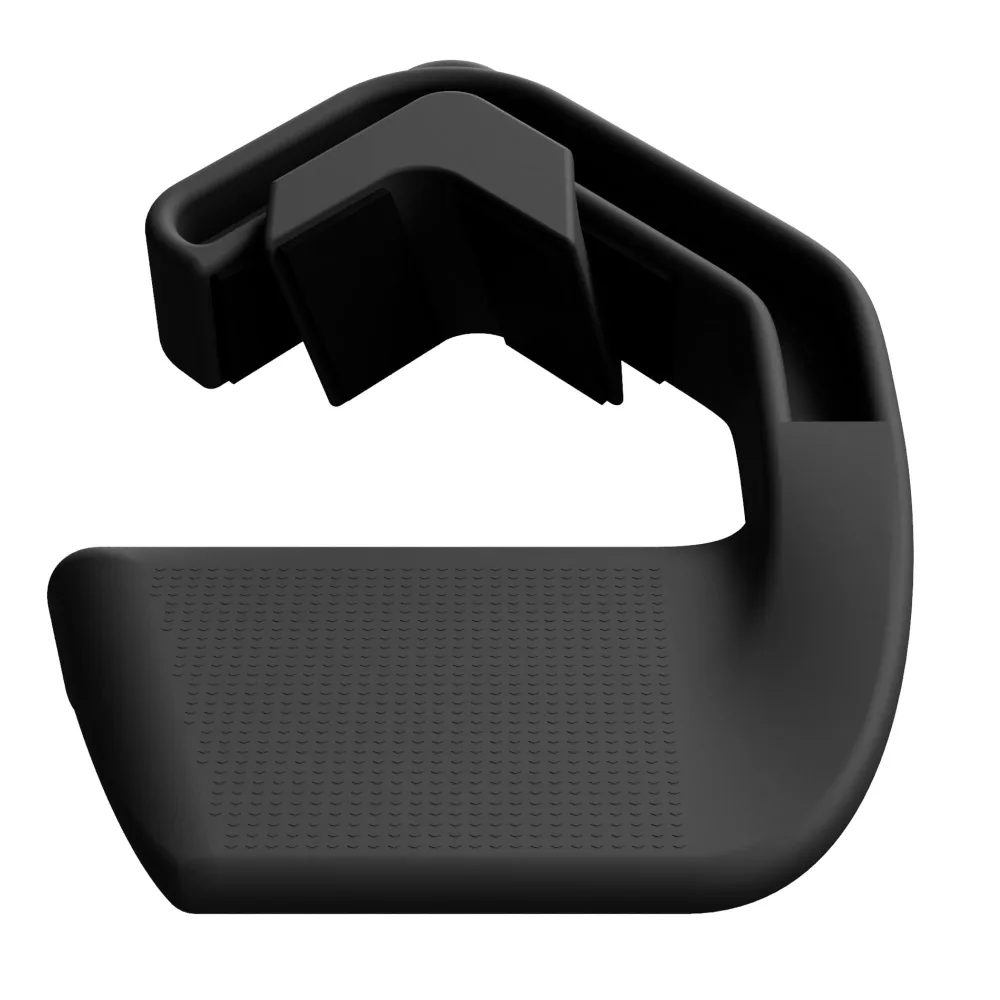
The modifiers are four wedges, two at 15 degrees and two at 30 degrees, that slot into a V2 or MAX hook and tilt the handle. If you already own one pair of Swissies, $19 is a far cheaper way to get more hand positions than buying another $49 pair.
The S-P-N Bundle is the supinated, pronated and neutral MAX handles together for $129 against $147 separately, saving $18. Worth it only if you are certain you want all three, and I would try one pair plus the modifiers first.
The Rings
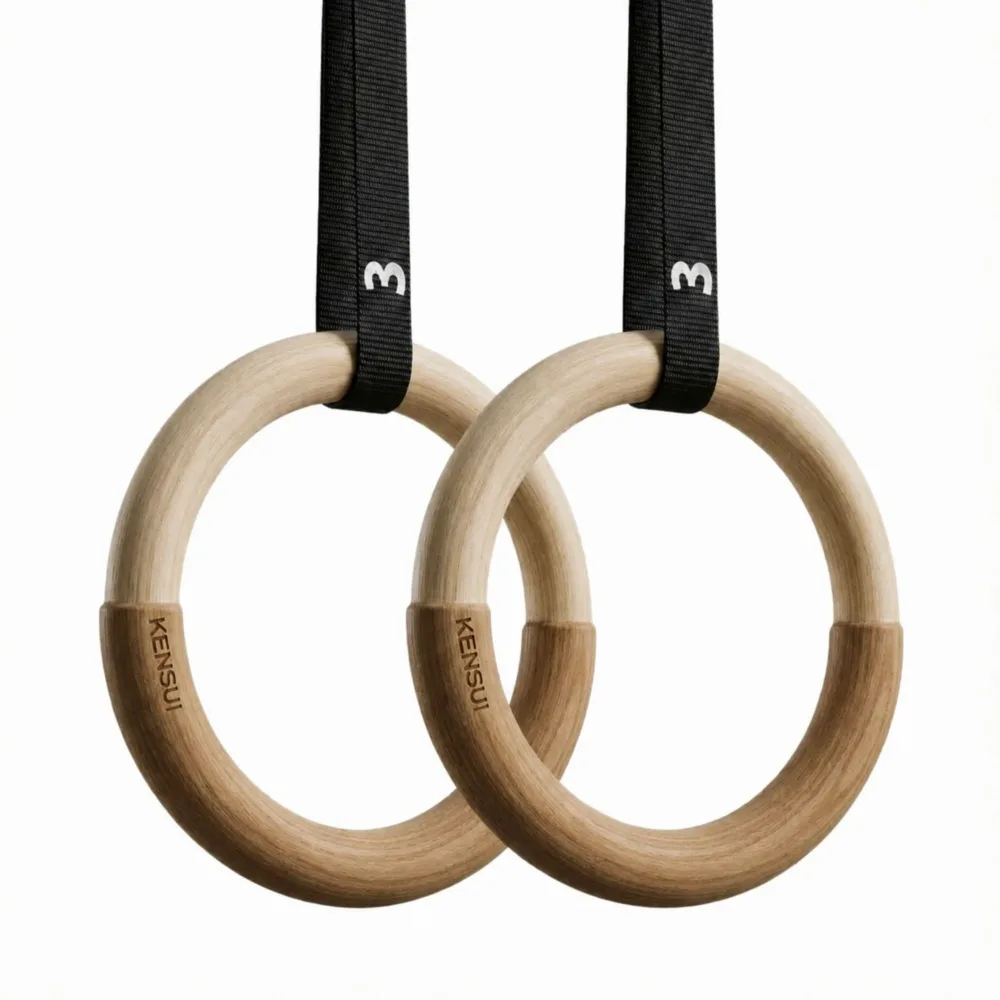
DUO-Rings, $49 — the most genuinely novel product here
Gymnastic rings normally force a choice. 28 mm is the FIG competition standard and the size gymnasts train on. 32 mm is the thicker size common in CrossFit gyms. Buy one and you live with it.
The DUO-Rings put both thicknesses on the same ring, so you rotate the ring to pick your diameter. Birch wood, designed in Japan, 4.8 m numbered nylon straps with cam buckles, 3/4 inch strap width, a rated capacity of 1,200 lb, and 900 g for the complete set. That last number matters if you travel with them.
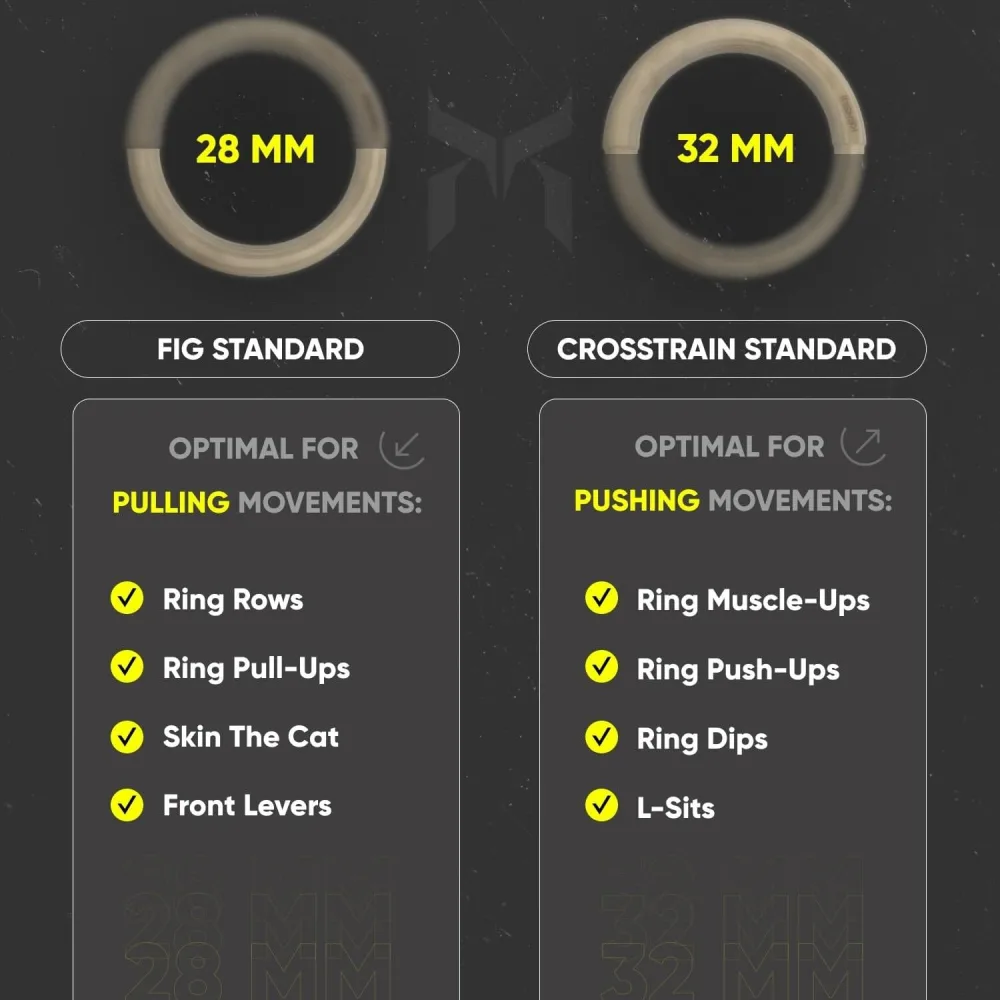
The numbered straps are a small thing that turns out to matter a lot. If you and somebody else share the rings, or you move between ring rows and ring dips in one session, numbered webbing means you reset the height in seconds instead of eyeballing it.
Skip it if: you have nowhere to hang them. Rings need a rated anchor point with clearance, which is a bigger ask than a doorway bar. A squat rack with a pull-up bar is the usual answer at home.
The Portable Options
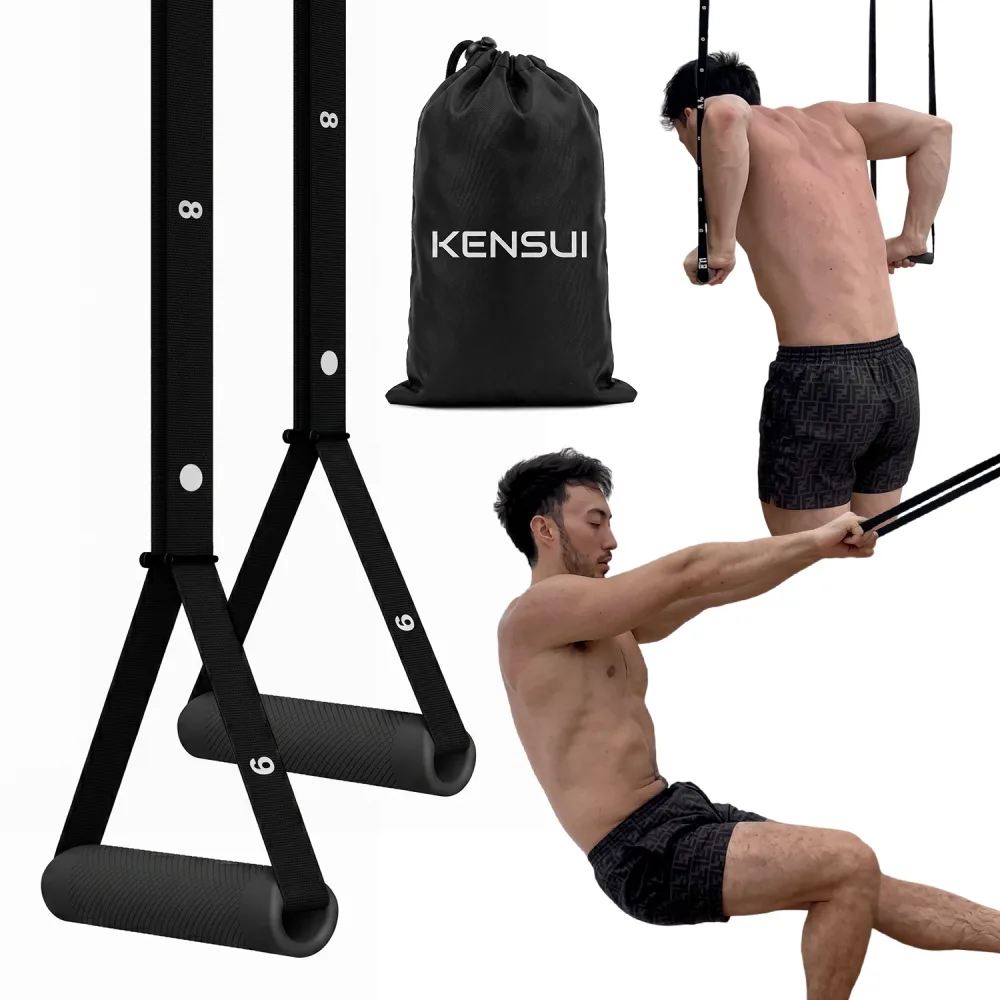
Nanobars V2, $49
A suspension trainer stripped down to two knurled handles on numbered webbing, using a double anchor system rather than the single anchor most suspension trainers use. Under a pound, and small enough to live in a bag permanently.
The double anchor is the meaningful difference. A single anchor means both handles share one attachment point and swing together. Two anchors let you set the handles independently, which changes what rows and presses feel like and makes wider positions possible.
Skip it if: you have a rack and rings at home. This solves a travel problem, not a training problem, and rings do more when you are not carrying them anywhere.
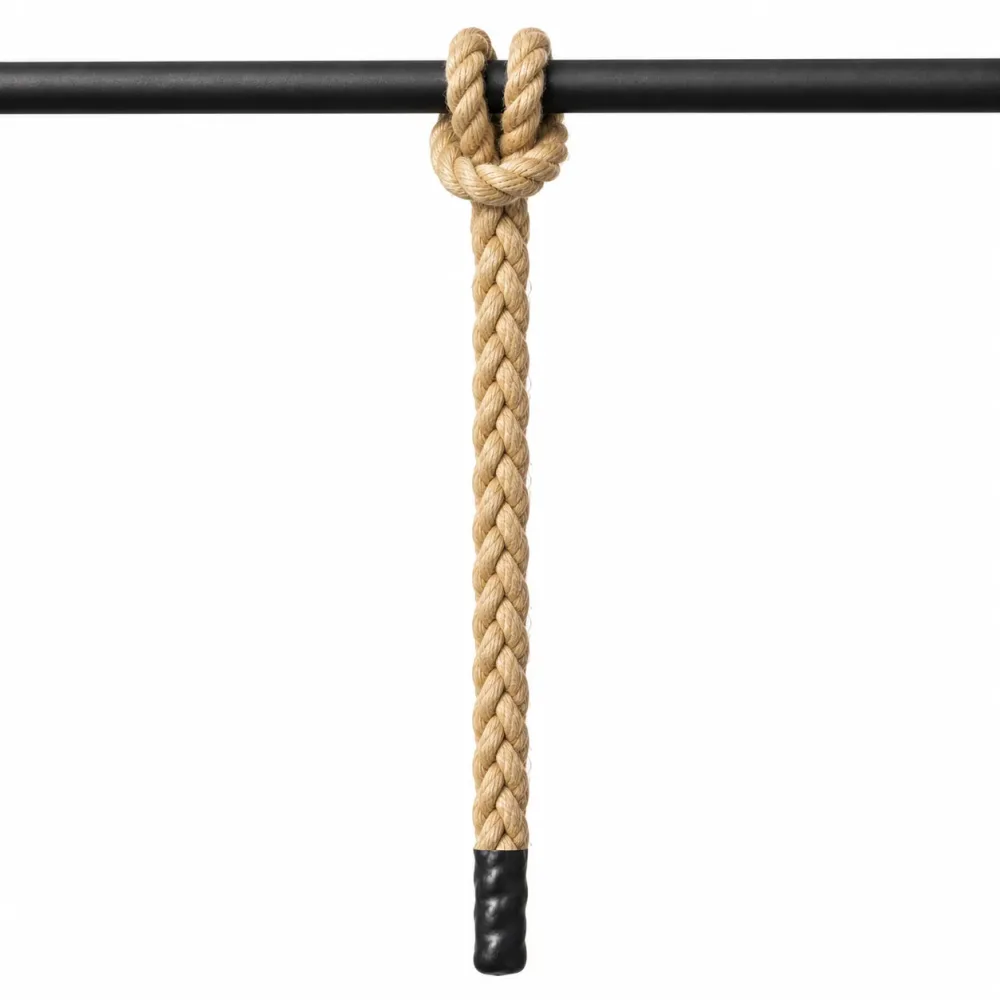
EZ-ROPE, from $29
A length of rope that loops over any bar and turns it into climbing rope work. It comes in two thicknesses, 38 mm for a normal grip and 50 mm for a harder one, and two lengths, a 50 cm loop for grip work and a 200 cm version for actual climbing range. Natural jute grips better, black Dacron polyester resists fraying.
Rope work loads your hands, wrists and forearms in a way a bar cannot, because the rope deforms and moves. If your pull-ups end because your grip goes before your back does, this is the cheapest fix on this page.
What About the Grips Covered Elsewhere
Kensui also sells the ARX Grips at $45 and the 360°GRIPS from $29, which are both bar attachments and would otherwise belong on this page. I covered them in the guide to plate-loaded weighted vests, because they pair naturally with adding load rather than with changing grip angle. The short version: ARX gives you wide sloping handles in the shape of a lat pulldown bar, and the 360°GRIPS rotate.
The rest of the Home Gym section covers benches, racks and the equipment these attach to.
Frequently Asked Questions
Do neutral grip handles actually help?
For a lot of people, yes, and the reason is mechanical rather than magical. A pronated bar grip fixes your forearm in full rotation and your shoulder follows it. A neutral grip lets the forearm sit halfway, which usually feels better at the elbow and shoulder. If your joints are fine and you have no plateau, you do not need them.
Which Swissies version should I buy?
The V2 MAX at $49. It is the only one with the palm fin, the carabiner eyelet and angle modifier support together. Buy the $29 original only if you want to test the concept cheaply first.
Will they damage my pull-up bar?
The hook interiors are lined with high-density rubber specifically to avoid that, and the same lining is what stops them sliding under load. Replacement lining is sold for under a dollar a pair, which suggests it is a wear item rather than a permanent part.
Are 28 mm or 32 mm rings better?
Neither, they suit different things. Thinner is easier to hold, which helps on long pulling sets and is the gymnastics competition standard. Thicker is harder on the grip and more stable under the palm for pushing. The DUO-Rings exist precisely so you do not have to decide.
Can I use any of this for pressing?
Not the Swissies, which is their one real limitation. The rings and the Nanobars both handle pushing movements fine, which is the strongest argument for choosing them over handles if you only buy one thing.
Final Thoughts
This is a range where the products are better than the shopping experience, and the single most valuable thing you can do is ignore how many listings there are.
Buy the Swissies V2 MAX at $49 if your problem is grip angle and your elbows. It is the version with every feature, it attaches to essentially anything, and the independent coverage on it is consistent. Add the Angle Modifiers at $19 rather than a second pair of handles when you want more positions.
Buy the DUO-Rings at $49 if you have somewhere to hang them and you want the most training per dollar on this page. Two ring thicknesses in one product is a real idea, the 1,200 lb rated capacity and the numbered straps are the marks of a considered design, and rings do pushing as well as pulling, which the handles cannot.
Take the Swissies-SP at $35 over the neutral version if you want two new hand positions instead of one, the Nanobars V2 at $49 if the real constraint is that you travel, and the EZ-ROPE from $29 if your grip is what fails first, accepting that the jute you probably want is currently unavailable.
I would leave the Swissies X at $299 alone until the brand writes a description for it. Nobody should spend that much on a listing that does not say what it is.
Check current pricing and stock →
Specifications, prices and stock status were taken from the brand’s own online store in August 2026 and change without notice. Product images and diagrams are courtesy of Kensui.



Write Your Review
No reviews yet. Be the first to share your experience!