

A rowing machine is the rare piece of cardio equipment that works almost everyone at once, folds into a corner, and does not pound your knees. Merach sells twelve of them, from $249.99 to $699.99, and the listings compete on screen size, resistance numbers and discount percentages.
None of those are the decision. The decision is which of four resistance systems you are buying, because that determines what the machine sounds like, how the stroke feels, whether you can use it in an apartment at 6am, and how much maintenance it needs. Two rowers at the same price can be completely different machines.
So this guide sorts the Merach rowing line by resistance type first and price second, works out which model is the sensible pick in each category, and flags the parts of the catalogue that need reading carefully before you buy.
Quick Picks
| If you want… | Model | Price | Why |
|---|---|---|---|
| The quietest option for an apartment | NovaRow R7 Aura | $549.99 | Belt-driven magnetic, 16 levels, and the only rower here with a 21.5″ rotating screen |
| Quiet on a tighter budget | Q1S Self-Powered | $249.99 | Electromagnetic, 16 levels, no power cord, cheapest rower in the line |
| The closest thing to a gym rower | UltraRow R60N | $699.99 | Air plus magnetic, cast aluminium rail, 500 lb capacity, stores upright |
| Air feel without the top price | NovaRow R50 Pro | $499.99 | Same air system as the Aura, backlit monitor instead of the HD screen |
| A rower that looks like furniture | CoreRow R28 | $279.99 | Wooden water rower, the cheapest way into the water-tank feel |
| Water feel in a sturdier frame | CoreRow R300 | $329.99 | Rubberwood, 350 lb capacity |
| Both water sound and adjustable drag | NovaRow 950 | $539.99 | Water tank plus 16 electromagnetic levels, though read the listing carefully |
| Maximum resistance per dollar | R15 Pro | $309.99 | 88 lb peak electromagnetic resistance, 16 levels, silent |
How I Checked This
Every price, specification and claim here comes from Merach’s own published product data, read on October 22, 2026, rather than from retail listings elsewhere. Resistance types were taken from each product description rather than inferred from the model name, which matters more than it sounds: two of the twelve are named in a way that does not match what the description says they contain.
I have not rowed on these machines, so there is no feel or durability verdict here and nothing below is a test result. What follows is a catalogue analysis: what each resistance system does, what Merach charges for it, and where the listings contradict themselves.
The Four Resistance Types, and What Each One Costs
Every rower creates drag somehow, and the method is the product. Here is the whole Merach line sorted by price, with the resistance system each one actually uses:
| Model | Price | Listed “was” | Resistance | Notes |
|---|---|---|---|---|
| UltraRow R60N | $699.99 | $1,099.99 | Air + magnetic | 500 lb capacity, cast aluminium rail, self-powered |
| NovaRow R50 Aura | $659.99 | $859.99 | Air | 10 levels up to 110 lb, rotating HD screen, 350 lb capacity |
| NovaRow R7 Aura | $549.99 | $699.99 | Magnetic | 16 levels up to 130 lb, 21.5″ rotating screen, belt drive |
| NovaRow 950 | $539.99 | $819.99 | Water + magnetic | 16 electromagnetic levels, oak frame, polycarbonate tank |
| NovaRow R50 Pro | $499.99 | $759.99 | Air | Backlit LCD, offline data storage, no touchscreen |
| NovaRow R7 Self-powered | $399.99 | $599.99 | Magnetic | 130 lb resistance, LED display, self-powered |
| Q1S Interactive | $359.99 | $729.99 | Magnetic | 15.6″ HD display, 350 lb capacity |
| NovaRow RS3 | $339.99 | $529.99 | Magnetic | Double-scull handles, 350 lb capacity |
| CoreRow R300 | $329.99 | $499.99 | Water | Rubberwood frame, 350 lb capacity |
| R15 Pro | $309.99 | $559.99 | Electromagnetic | 88 lb peak, 16 levels, 350 lb capacity |
| CoreRow R28 | $279.99 | $489.99 | Water | Wooden frame, 400 lb capacity |
| Q1S Self-Powered | $249.99 | $359.99 | Electromagnetic | 16 levels, no power cord needed |
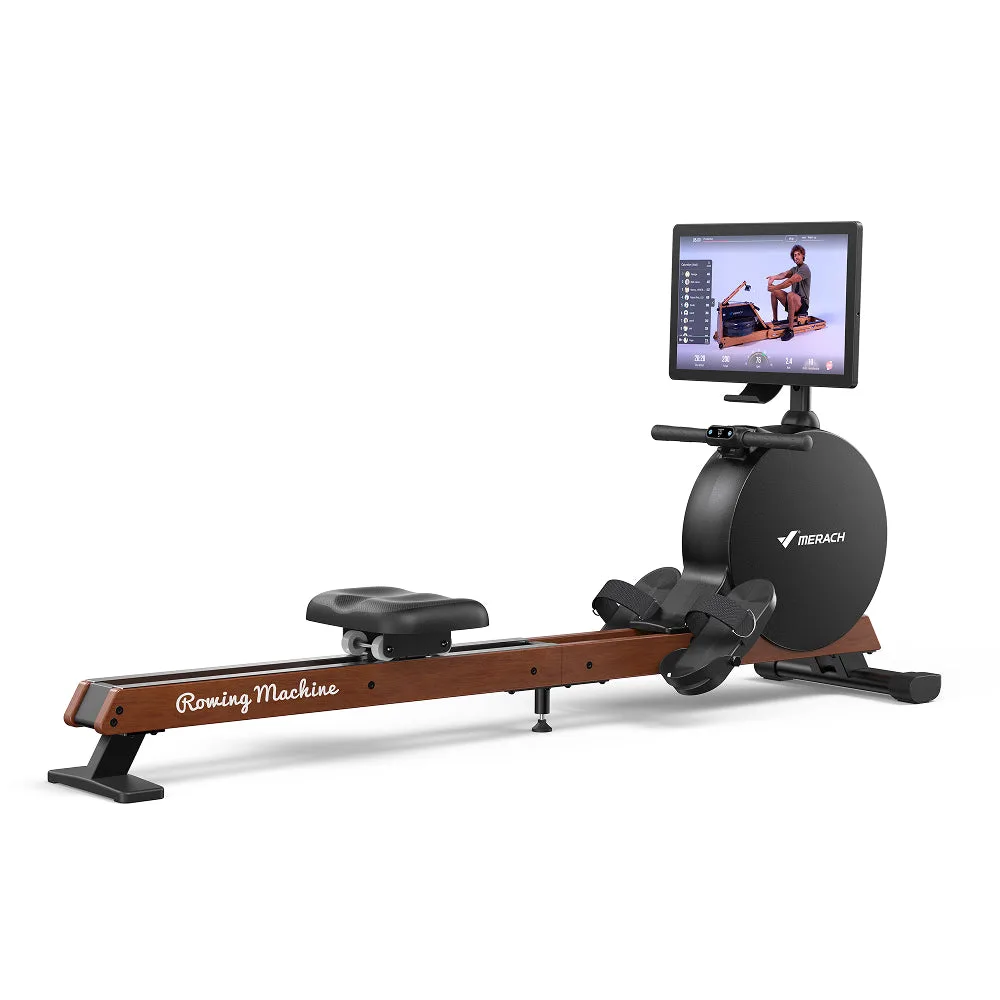
Magnetic: the apartment answer
Four of the twelve are straight magnetic, and this is the type most people should buy. A magnet near a flywheel creates drag with nothing touching and nothing rushing, so the machine is close to silent. Merach describes the R7 Aura’s belt-driven system as “a truly quiet rowing machine for apartments and homes”, and quiet is the single feature most likely to decide whether a home rower gets used or becomes a clothes rail.
The trade is feel. Magnetic resistance stays constant no matter how hard you pull, so the stroke does not load up when you accelerate the way it does on the water or on an air rower. Many people never notice. Rowers who have trained on a gym machine usually do.
Electromagnetic: magnetic with a motor
Two models use electromagnetic flywheels, which add motorised resistance control so the machine can change drag mid-stroke and follow a programme. The R15 Pro claims “up to 88 lbs of peak resistance” and says it “surpasses traditional magnetic rowing machines”; the Q1S Self-Powered generates its own power so it needs no outlet.
At $249.99 and $309.99 these are the two cheapest rowers Merach sells, and both offer 16 resistance levels. If silence and a low price are your constraints, this is the pair to look at.
Air: the one that feels like rowing
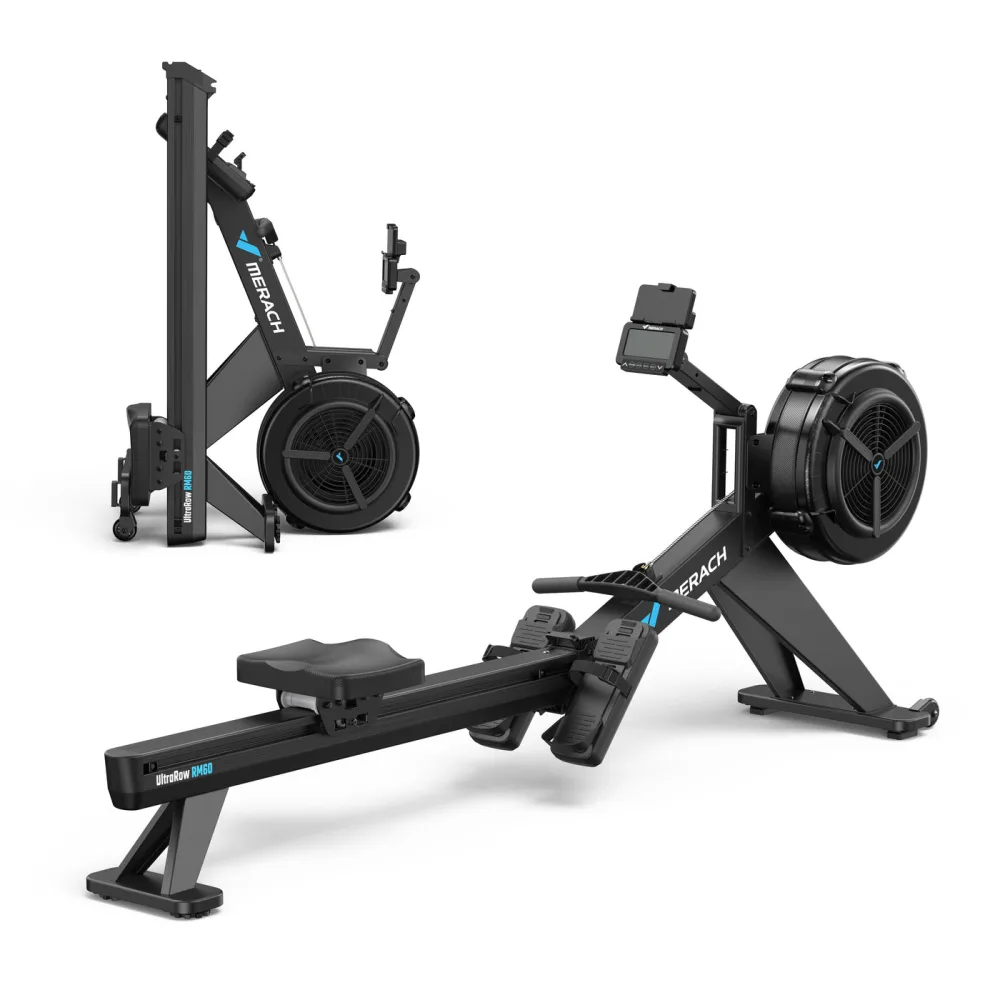
Air rowers spin a fan. The harder you pull, the more air the blades have to move, so resistance rises with your effort. That self-regulating feel is why competition rowers and most gyms use air, and it is why the R50 Aura is the second most expensive machine here.
The cost is noise. A fan moving enough air to resist a hard stroke makes a rushing sound you cannot engineer away. If you share walls or train early, think carefully. Merach does not publish a decibel figure for any of its rowers, which is the specification I would most like to see on this page and the one place the listings go quiet.
Water: the one that sounds nice
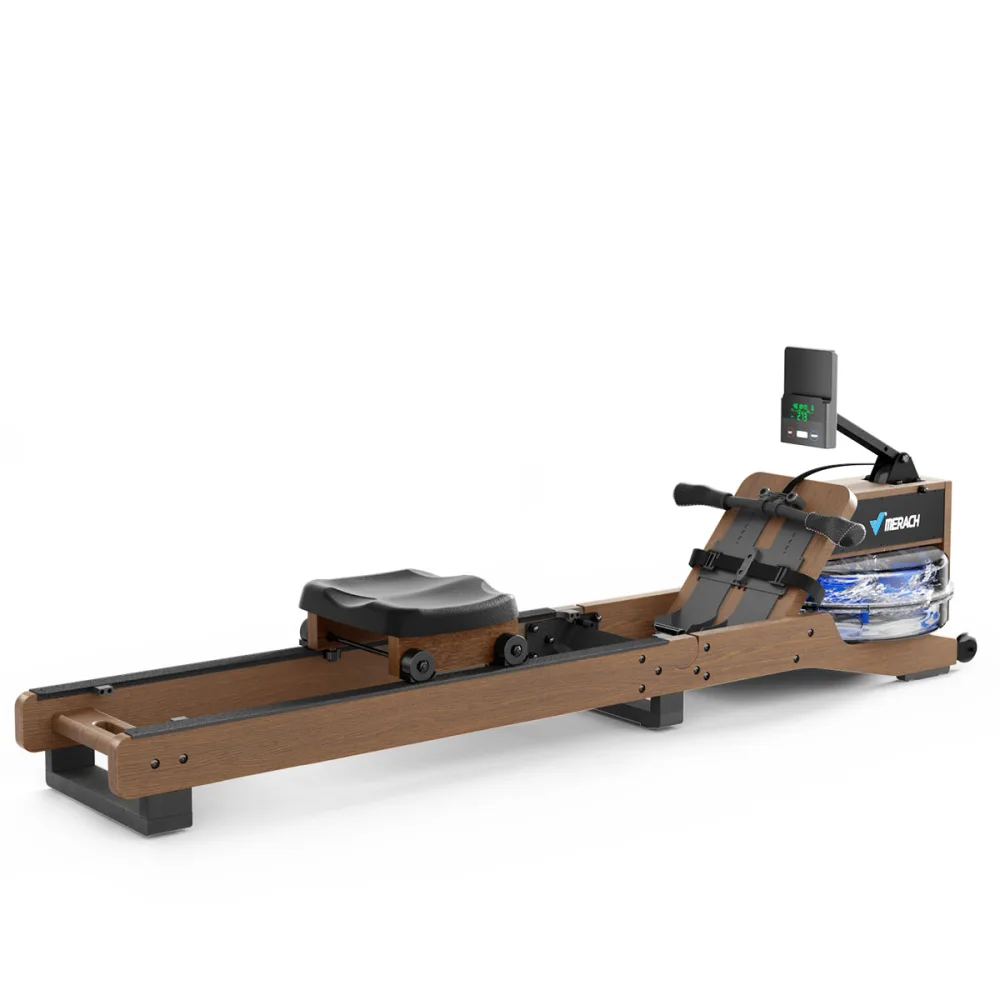
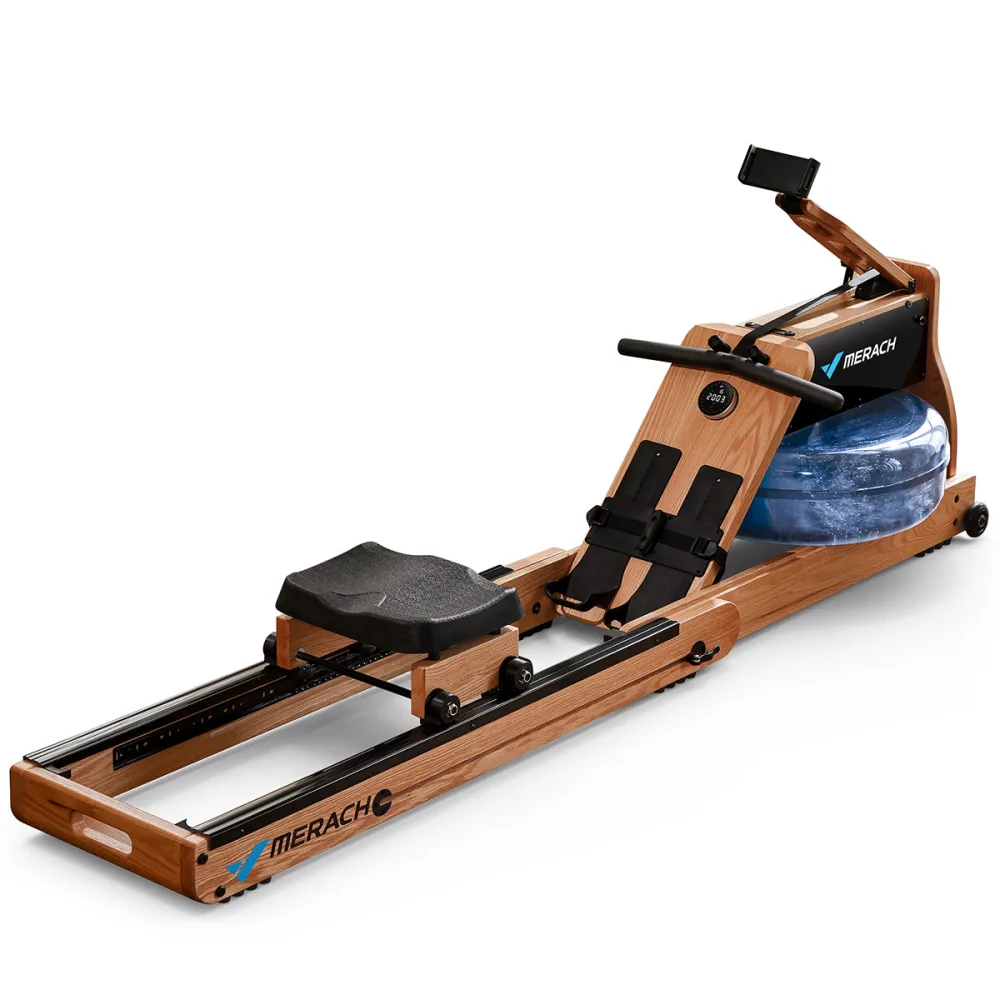
Water rowers drag paddles through a tank. The feel is close to air, the sound is a wave rather than a rush, and the frames are wooden, so they read as furniture rather than equipment. Merach has three water machines and they are the cheapest route into that feel, starting at $279.99 for the R28.
Two things to know. Water tanks need occasional treatment to stop the water going green, which no other type requires. And water rowers do not fold, so the footprint is permanent in a way a magnetic rower’s is not.
What the Struck-Through Prices Actually Mean
Across the whole Merach catalogue, 61 of 65 products show a higher “was” price next to the current one. At variant level it is 134 of 140, or 96 percent. The median discount is 44 percent and the mean is 47 percent, with the deepest at 74 percent.
When nearly every item in a store is marked down at nearly every moment, the struck-through figure is functioning as a reference price rather than as a record of what the item recently sold for. I cannot tell you whether any of these products were sold at their “was” prices, and nothing on the site establishes it either way.
The practical advice is simple: ignore the percentage and judge the current price against what the machine is. A $359.99 magnetic rower with a 15.6 inch screen is either worth $359.99 to you or it is not, and the $729.99 next to it should not move that judgement.
Two listings also have the arithmetic backwards. The Folding Vertical Stair Stepper is priced at $299.99 against a “was” of $229.99, which would render a discount badge on a price increase, and the T12 Aura Treadmill shows $599.99 against a “was” of exactly $599.99.
Where the Listings Need Reading Carefully
The NovaRow 950 describes a different product. Its description opens with a passage about cherry wood versus oak that belongs in a furniture catalogue, states the material as “Oak Wood, ABS” while discussing cherry, and then says “The Aqua-Mag Cruise Rower uses the magnetic and water resistance system”. Aqua-Mag Cruise Rower is not the name of this product. The specifications may well be right, but the copy has been assembled from somewhere else and not checked.
Two models are named for the wrong resistance type. The Q1S Self-Powered Auto Magnetic Rower is described in its own text as using an “Upgraded Electromagnetic Flywheel 2.0”. The UltraRow R60N’s product photograph has “UltraRow RM60” printed on the rail. Neither is a serious problem, but if you are comparing models by name across tabs, you will trip over it.
There is a typo in the app name. The R50 Pro listing tells you to “sync seamlessly with the MEACH App”. The app is called Merach.
The 86 percent figure has no source. Two rower listings say rowing works “86% of muscles in just 20 minutes”. It is a widely repeated number in the rowing industry and it may well be defensible, but neither listing attributes it to anything. Treat it as marketing rather than as a measurement.
What Merach Gets Right
The range genuinely covers every resistance type. Most brands at this price pick magnetic and stop. Being able to choose air, water, magnetic or electromagnetic inside one catalogue, at prices between $249.99 and $699.99, is unusual and useful.
Capacities are high and stated. Most models publish a 350 lb user limit, the R28 is rated to 400 lb and the R60N to 500 lb. Budget cardio equipment often omits this number or sets it low, and Merach puts it in the listing.
Self-powered designs are a real convenience. Several machines generate their own power from the stroke, so no outlet is needed and there are no batteries to replace. That genuinely changes where in a room you can put one.
Folding and storage are addressed. The R60N advertises tool-free two-step rail disassembly, and several models store upright on built-in wheels. For equipment that lives in a shared room, this matters as much as resistance.
Everything in the rower line is in stock. All twelve were available at the time of checking, which is not true of every category in this catalogue.
A Note on the Rest of the Catalogue
Rowers are twelve of the sixty-five products. The rest is bikes, treadmills, ellipticals, steppers and a ten-model vibration plate line, and that last category is where the marketing language changes character.
The rowing machines carry none of this language, which is part of why they are the part of the catalogue worth recommending.
Who Should Skip These
- Anyone training for competition. These are home machines. Serious rowers use a specific gym-standard air machine with a comparable performance monitor, and no Merach model is positioned against it.
- Apartment dwellers set on an air rower. Air is the loudest type by physics, and Merach publishes no decibel figure for any rower. If noise is your binding constraint, buy magnetic.
- Anyone who will not maintain a water tank. Water rowers need periodic treatment and do not fold. Lovely machines, more commitment.
- Buyers who need a verified former price. With 94 percent of the catalogue discounted, the “was” column is not a reliable guide to value.
- People with no floor space. A rower needs roughly eight feet of clear length in use, whatever the folded dimensions say.
Frequently Asked Questions
What do Merach rowing machines cost?
Twelve models from $249.99 for the Q1S Self-Powered to $699.99 for the UltraRow R60N, with most of the range between $279.99 and $549.99.
Which resistance type should I buy?
Magnetic or electromagnetic if noise matters, which it usually does at home. Air if you want the stroke to load up as you pull harder and can tolerate the sound. Water if you want the sound and the furniture look and will maintain the tank.
Which is the quietest?
The magnetic and electromagnetic models. Merach describes the R7 Aura’s belt-driven system as a quiet machine suitable for apartments, though no decibel figure is published for any rower in the line.
Are the discounts real?
61 of 65 products carry a struck-through price, median 44 percent off, so the discount is the catalogue’s normal state rather than a limited event. Judge the current price on its own merits.
Do they need to be plugged in?
Several are self-powered and generate electricity from your stroke, including the R60N, the NovaRow R7 Self-powered and the Q1S Self-Powered. Models with large HD screens do need power.
How much weight do they support?
Most are rated to 350 lb. The CoreRow R28 is rated to 400 lb and the UltraRow R60N to 500 lb.
Is there an app?
Yes, the Merach app, which several listings tie to guided and gamified classes. The R7 Aura listing claims access to over 1,000 interactive classes.
Final Thoughts
Merach’s rowing line is the strongest part of a catalogue that is otherwise fairly ordinary budget cardio equipment. Twelve machines spanning all four resistance systems, stated weight capacities that are higher than this price bracket usually admits to, self-powered designs that free you from an outlet, and everything in stock. For a first rower that has to live in a shared room, that is a reasonable place to shop.
Buy it in the right order, though. Pick the resistance type from how your home actually works, not from the price ladder: magnetic or electromagnetic if anyone else is in the building, air if you want the stroke to fight back, water if you want it to look like furniture and you will keep the tank clean. Then pick the cheapest model in that type that has the capacity and the screen you need. On this catalogue that lands most people on the Q1S Self-Powered at $249.99 or the R7 Aura at $549.99, depending entirely on whether a screen is worth $300 to you.
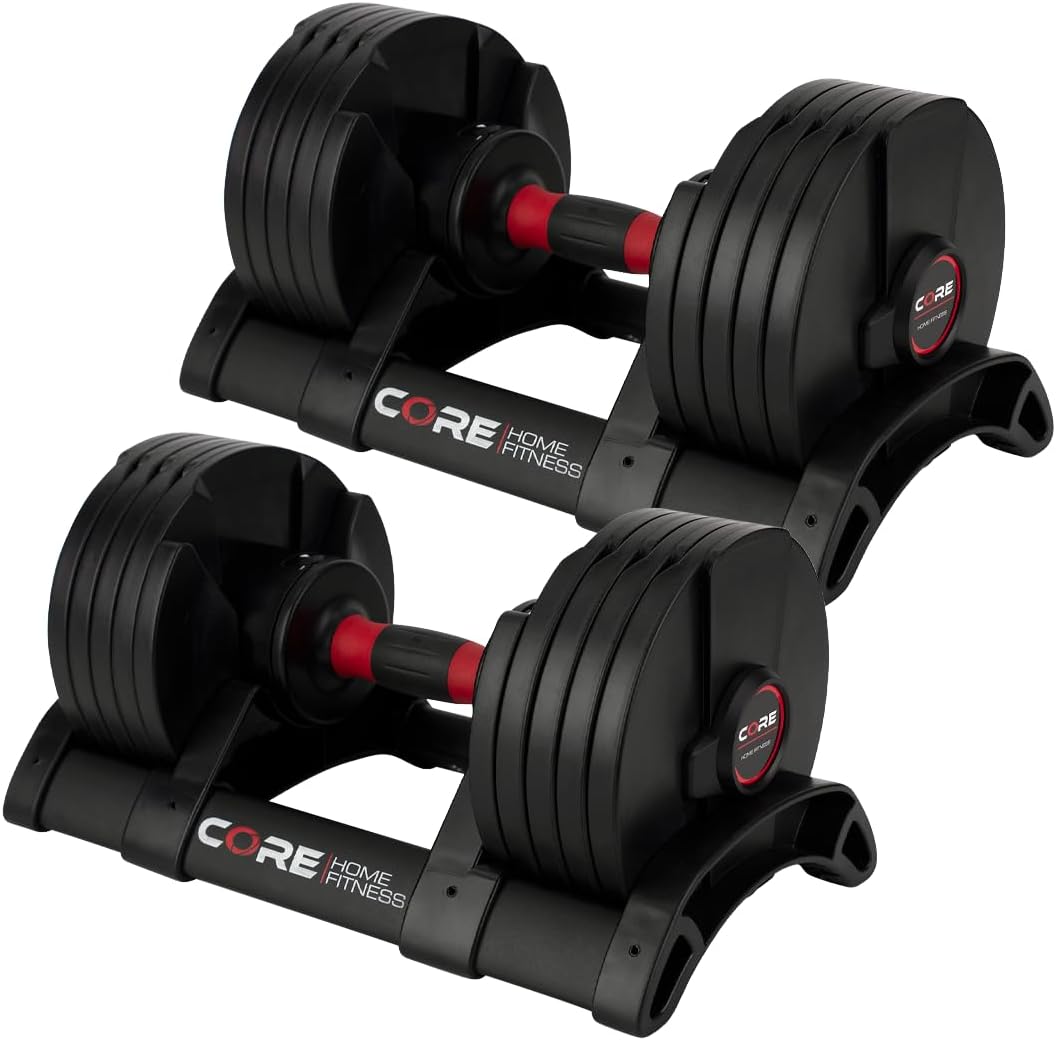
And treat the struck-through prices as decoration. When 94 percent of a store is on sale, the sale is the price. If the number in front of you is worth the machine, buy it; if it is not, the percentage next to it will not fix that. Once the rower is in, pairing it with a little strength work is what turns cardio equipment into a programme, and our adjustable dumbbell picks for small spaces and the rest of the home gym coverage are built for exactly that corner of a room.
You can see the current rower line and what each one is discounted to on Merach’s store, and the resistance type is listed on every product page if you read past the headline.




Write Your Review
No reviews yet. Be the first to share your experience!