

Many cat owners struggle with a common problem: their feline companions simply don’t drink enough water. Unlike dogs, cats have a naturally low thirst drive, which can lead to dehydration, kidney disease, and urinary tract issues over time. A flowing water fountain mimics the natural preference cats have for running water, encouraging them to drink more frequently and stay properly hydrated throughout the day.
This guide reviews 12 of the most effective cat water fountains available, focusing on models that combine stainless steel durability, multi-stage filtration, whisper-quiet operation, and generous capacity. Whether you have one cat or a multi-pet household, you’ll find options suited to your needs and home environment.
This guide is for informational purposes and does not replace veterinary advice. Consult your veterinarian about your cat’s hydration needs, especially if your cat has existing health conditions.
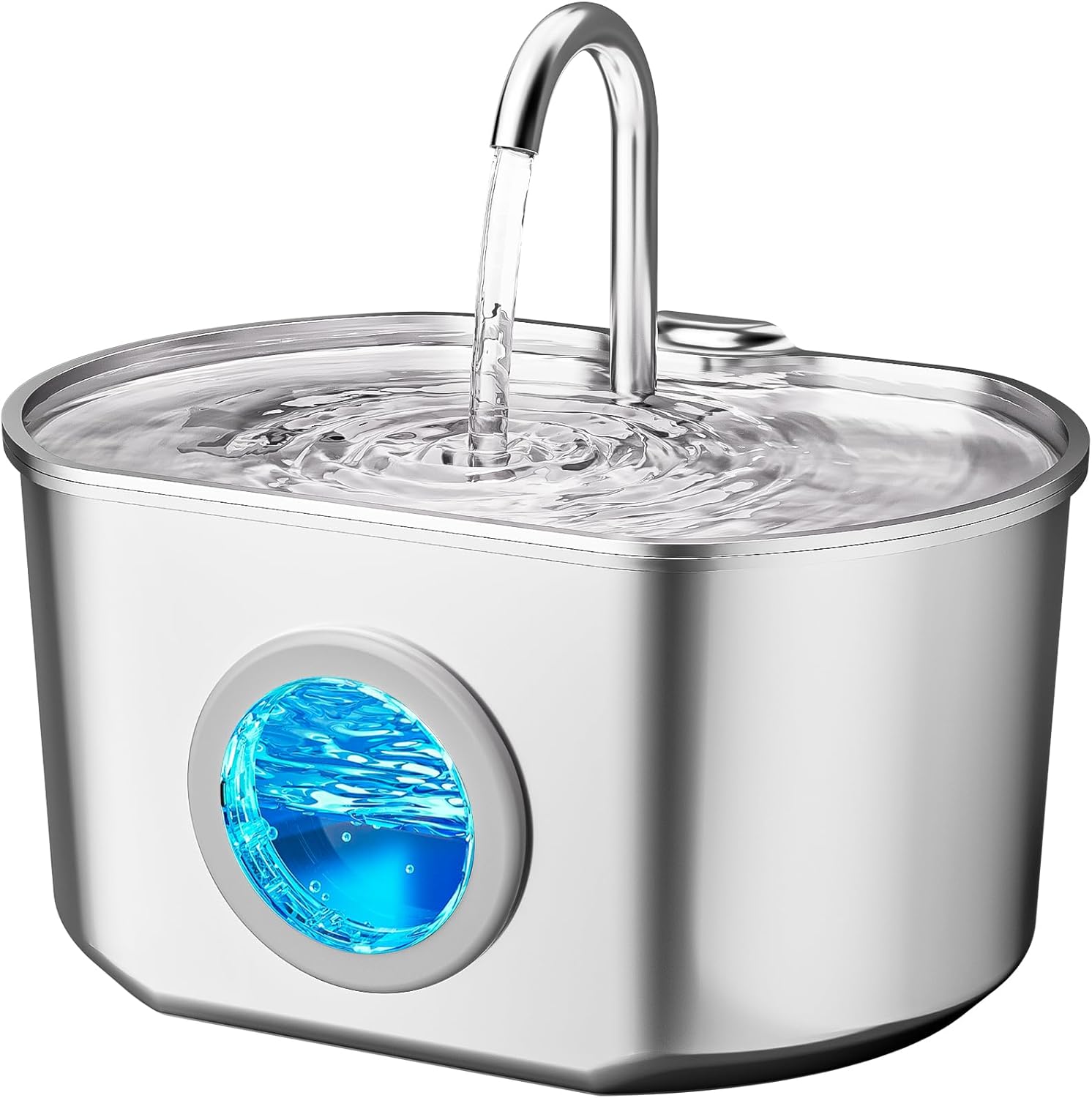

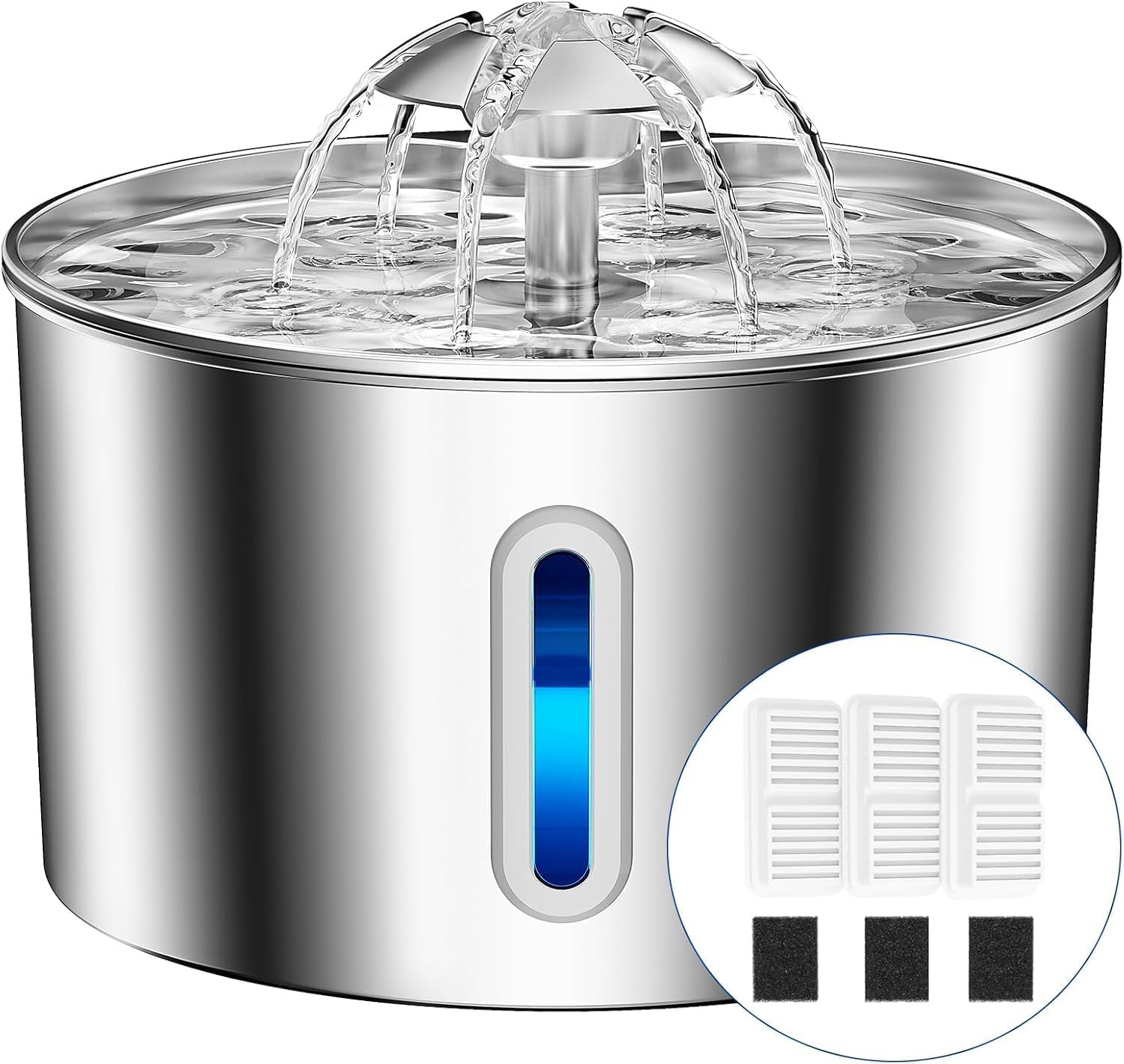

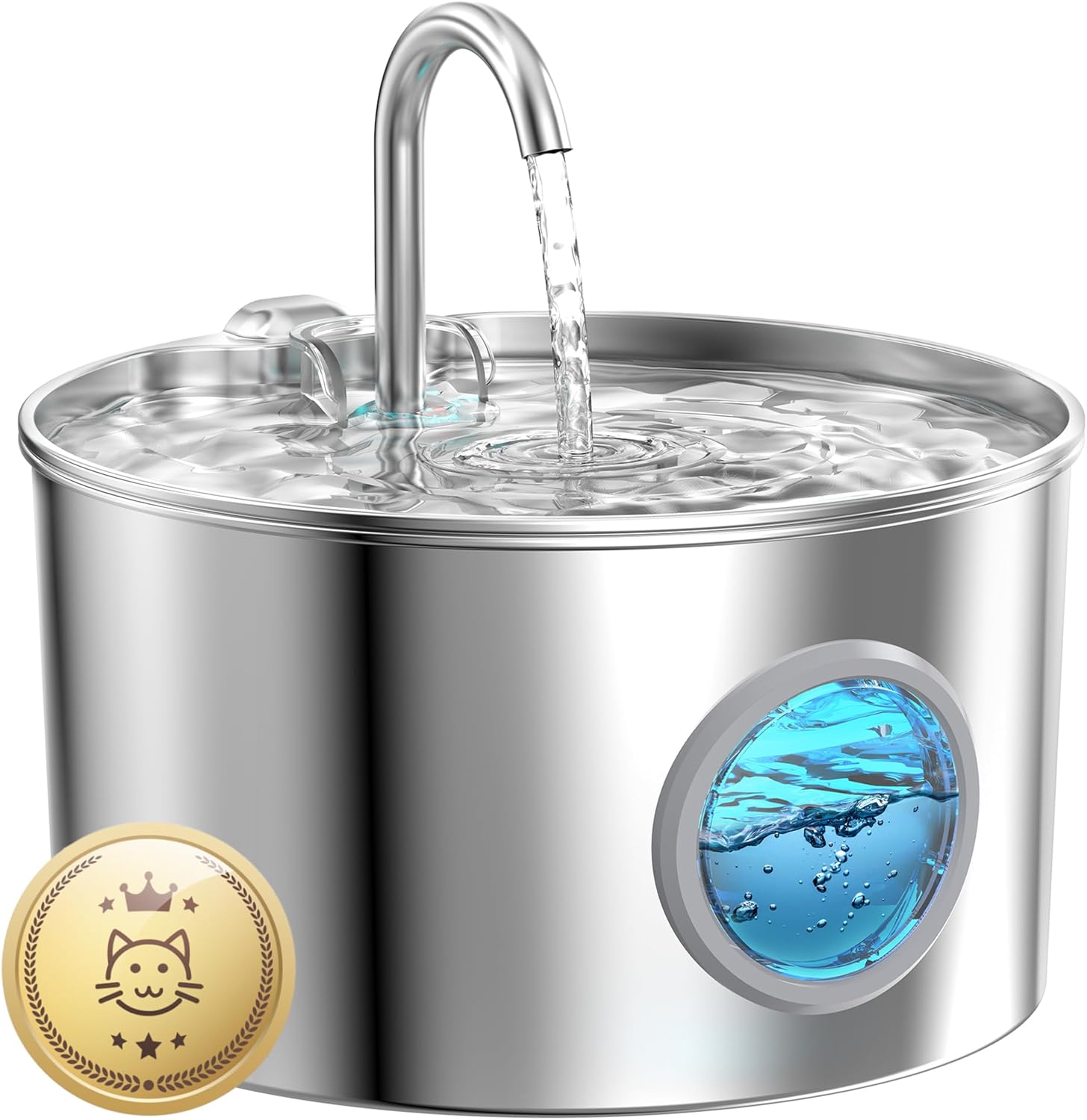


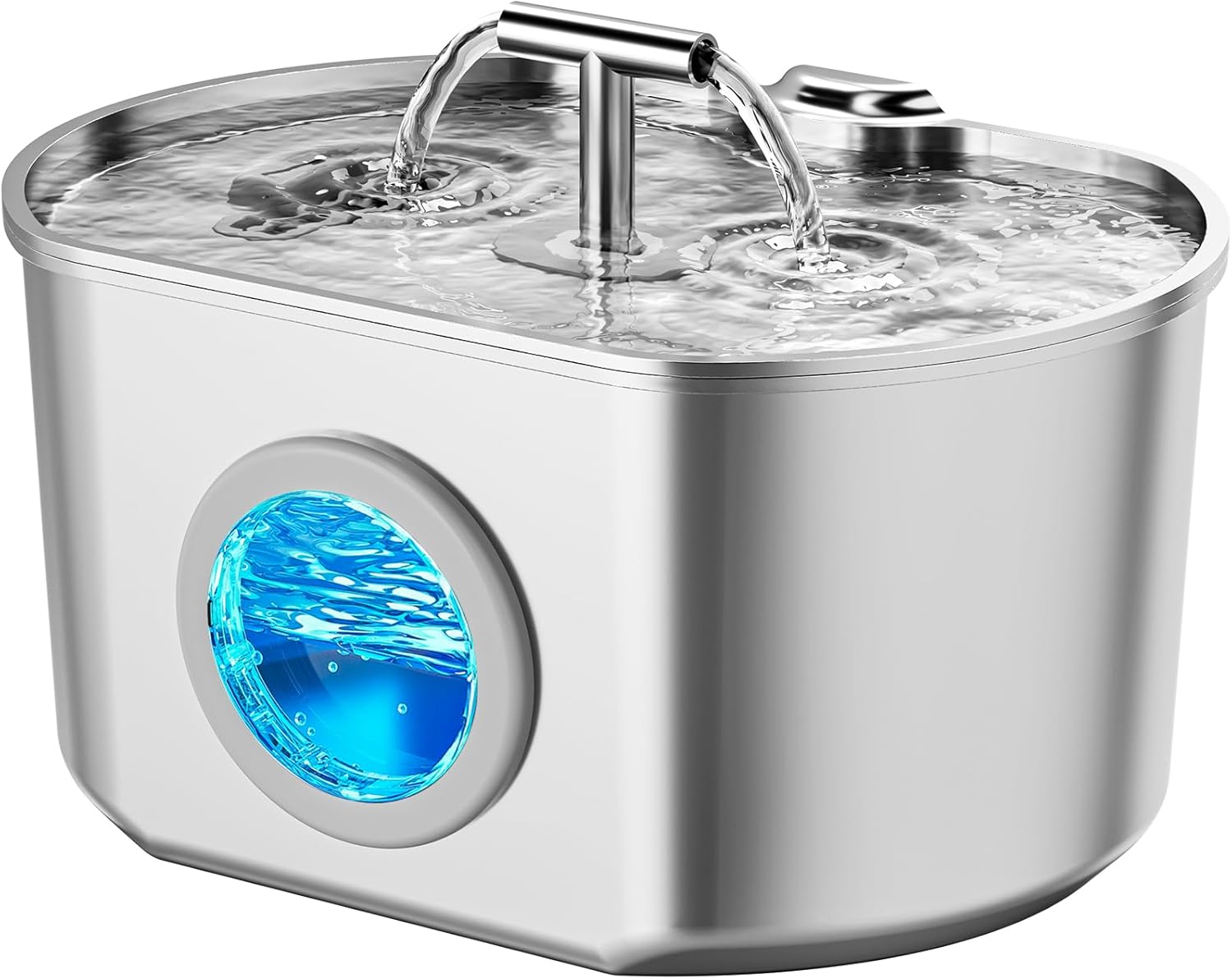


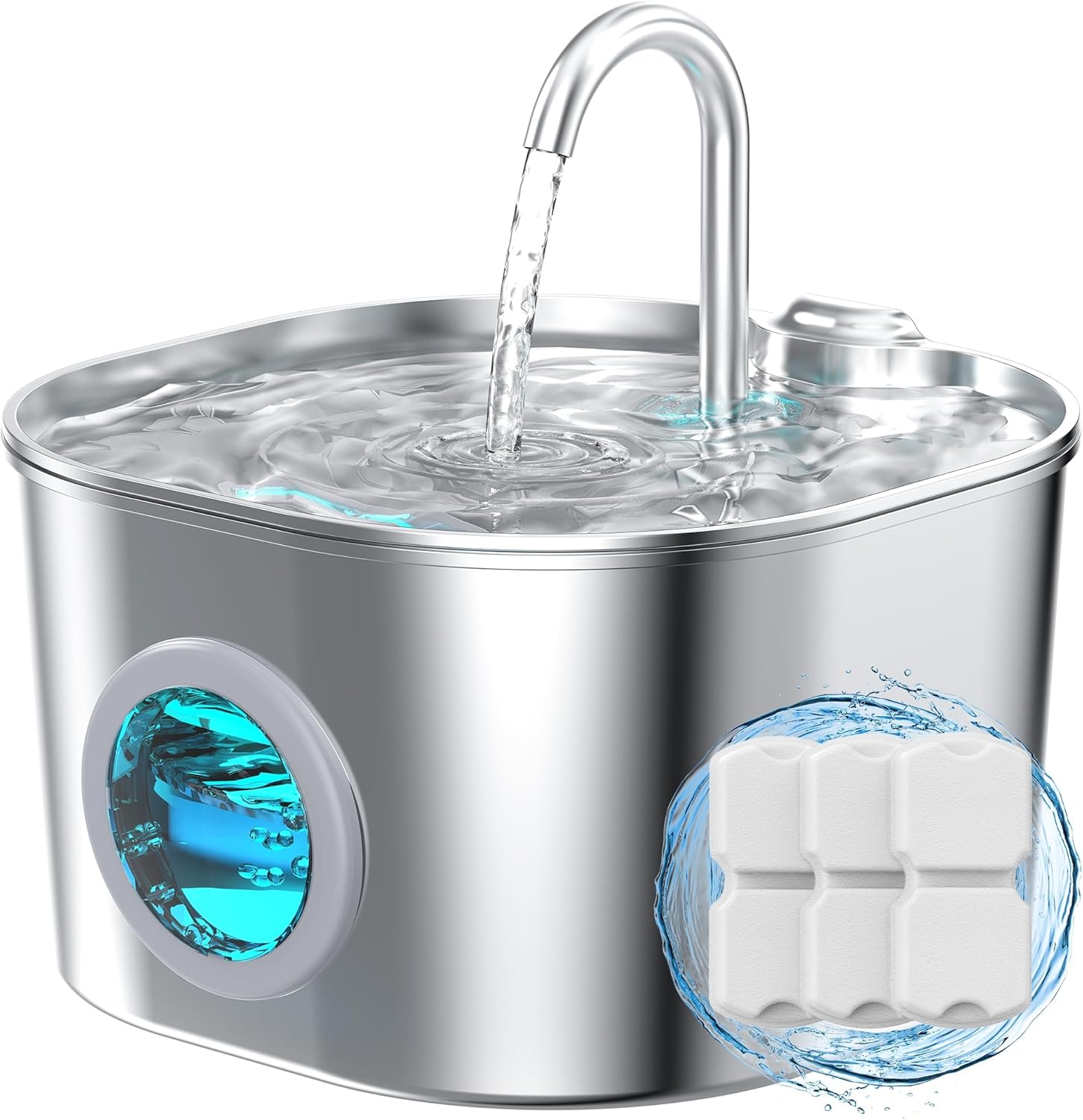

How We Picked These Fountains
We evaluated each fountain based on published specifications, manufacturer documentation, and aggregated customer feedback. Our assessment focused on water capacity, filtration effectiveness, pump noise levels, material quality, and real-world durability. This is a research-based editorial review; no products were physically handled by our team.
The fountains listed above represent a range of price points and feature sets, from compact 74-ounce models ideal for single cats to larger 108-ounce units designed for multi-pet households. All feature either stainless steel or food-grade plastic construction, multi-stage filtration systems, and energy-efficient pumps rated for continuous operation.
What to Look for When Buying a Cat Water Fountain
Material and Durability
Stainless steel fountains resist rust, corrosion, and odor retention far better than plastic alternatives. Food-grade 304 stainless steel is the standard for premium models and withstands high-temperature cleaning without degradation. Plastic fountains offer lighter weight and lower entry cost, but may absorb odors and show wear over time.
All water-contact components should be BPA-free and dishwasher-safe for convenience. Look for seamless construction to prevent bacteria and impurities from accumulating in crevices.
Filtration System
Multi-stage filtration is essential for removing hair, debris, odors, and impurities. Most quality fountains use activated carbon to eliminate taste and smell, ion-exchange resin to soften water, and sponge or non-woven layers to trap fine particles. A four to six-stage system provides the most comprehensive cleaning.
Filter replacement frequency varies by model and household size. Manufacturers typically recommend changing filters every 2 to 4 weeks, and some include multiple replacement filters with purchase. Check whether affordable replacement filters are readily available for your chosen model.
Noise Level and Pump Efficiency
A pump operating below 25 decibels is ideal for bedroom or living room placement without disturbing sleep or daily activities. Ultra-quiet pumps use suspended or vibration-dampening designs to minimize noise while maintaining steady water circulation. Lower wattage pumps (typically 0.8 to 1.5 watts) consume less electricity and run more efficiently over extended periods.
Pump longevity depends on regular maintenance. Cleaning the pump every two weeks prevents hair and sediment buildup that can cause noise and reduce performance. Many manufacturers offer replacement pumps at reasonable cost if the original fails after extended use.
Capacity and Water Flow Design
Capacity ranges from 74 ounces for single-cat households to 108 ounces for multi-pet homes or owners who travel. A transparent water-level window allows you to monitor supply without removing the lid. Larger capacity means fewer refills and consistent hydration even when you’re away for several days.
Water flow design matters for cat preference. Some fountains offer a faucet-style stream that appeals to cats who prefer drinking from running water, while others provide a gentle fountain spray. Models with multiple flow modes let your cat choose its preferred drinking style, increasing overall water consumption.
Who Should Skip These
If your cat has arthritis or mobility issues, a fountain with high sides or elevated drinking surface may be uncomfortable. Additionally, cats with senior dental problems or those prone to knocking over objects may do better with a traditional, stationary water bowl. Some cats simply prefer still water to flowing water, and no fountain will change that preference. In these cases, multiple static bowls placed throughout your home may be more effective than any fountain model.
Final Thoughts
A quality cat water fountain is one of the most effective ways to encourage natural drinking behavior and prevent dehydration-related health issues. For most cat owners, a stainless steel fountain with multi-stage filtration and a quiet pump delivers the best combination of durability and functionality. The Neareal Cat Water Fountain Stainless Steel offers excellent value with a four-stage filter system and whisper-quiet pump, while the Veken Innovation Award Winner Stainless Steel Cat Water Fountain provides premium construction and a larger 108-ounce capacity for households with multiple pets.
Frequently Asked Questions
How often should I clean a cat water fountain? Most manufacturers recommend cleaning the fountain and pump every 1 to 2 weeks to prevent hair and sediment buildup. A quick rinse and wipe of the basin takes just a few minutes. For deep cleaning, disassemble all removable parts and wash them with mild soap and warm water. Never use harsh chemicals or abrasive scrubbers on stainless steel surfaces.
Can I use tap water in a cat fountain? Yes, tap water is safe for most fountains. However, if your tap water is hard or mineral-rich, the multi-stage filters will help soften it and reduce mineral buildup. Some owners prefer filtered or distilled water to extend filter life and improve water taste. Always use the water type recommended by your fountain’s manufacturer.
How long do cat fountain pumps typically last? With regular maintenance, most pumps operate reliably for 1.5 to 2 years of continuous use. Lifespan depends on water quality, cleaning frequency, and the specific model. Many manufacturers offer replacement pumps at modest cost, making it more economical to replace a worn pump than to buy a new fountain. Keep your pump clean and follow the maintenance schedule in your product manual to maximize longevity.
Will my cat actually use a water fountain? Most cats are naturally attracted to flowing water, but individual preferences vary. Placement matters: position the fountain away from the litter box and food bowls, in a quiet, accessible location. Some cats take days or weeks to adjust to a new fountain. If your cat ignores it initially, try different flow modes or water levels to find what appeals to them. Patience and consistent placement usually lead to increased water consumption over time.


Write Your Review
No reviews yet. Be the first to share your experience!