

You water your vegetable garden by feel, and half your tomato plants develop root rot while the other half wilt from drought. The problem isn’t your effort: it’s that your eyes and fingers can only sense moisture at the soil surface. What matters is what’s happening six inches down, where the roots live. A soil moisture meter solves this guesswork instantly, showing you exactly when to water and when to hold back.
This guide reviews 12 soil moisture meters across multiple price points and feature sets. Whether you need a simple analog dial, a multi-function digital system, or wireless remote monitoring for scattered garden beds, you’ll find a model that matches your needs and budget.







How We Picked These Meters
We evaluated these 12 models based on published specifications, manufacturer documentation, and aggregated customer feedback across thousands of verified reviews. Our assessment focuses on measurement accuracy, ease of use, probe durability, and suitability for vegetable gardening. This is a research-based editorial comparison; we did not physically handle any product.
The ranking reflects real-world performance data, feature completeness, and value for different gardening scenarios. We prioritized models with proven track records in soil moisture detection and highlighted both budget-friendly analog options and advanced digital systems so you can choose based on your specific needs.
Buying Guide: What to Consider
Analog vs. Digital: Speed and Simplicity vs. Extra Data
Analog meters with a dial give you instant readings with no batteries, no setup, and no learning curve. Insert, read the pointer position, and you’re done. Digital meters require batteries and a few seconds to stabilize, but they display precise numerical values for moisture, pH, temperature, and sometimes light intensity and fertility. For vegetable gardeners focused solely on watering timing, analog works beautifully. If you want to fine-tune soil conditions and track trends over time, digital pays off.
Probe Length and Root Zone Reach
Vegetable roots often extend six to eight inches into the soil, especially for tomatoes, peppers, and root crops. A short probe only samples the top few inches, missing the moisture where it matters. Look for probes at least 6 to 7 inches long, or longer for deep-rooted crops. Single-probe designs are gentler on roots than dual-probe models and cause less soil disruption when you remove them.
Multi-Function vs. Single-Purpose
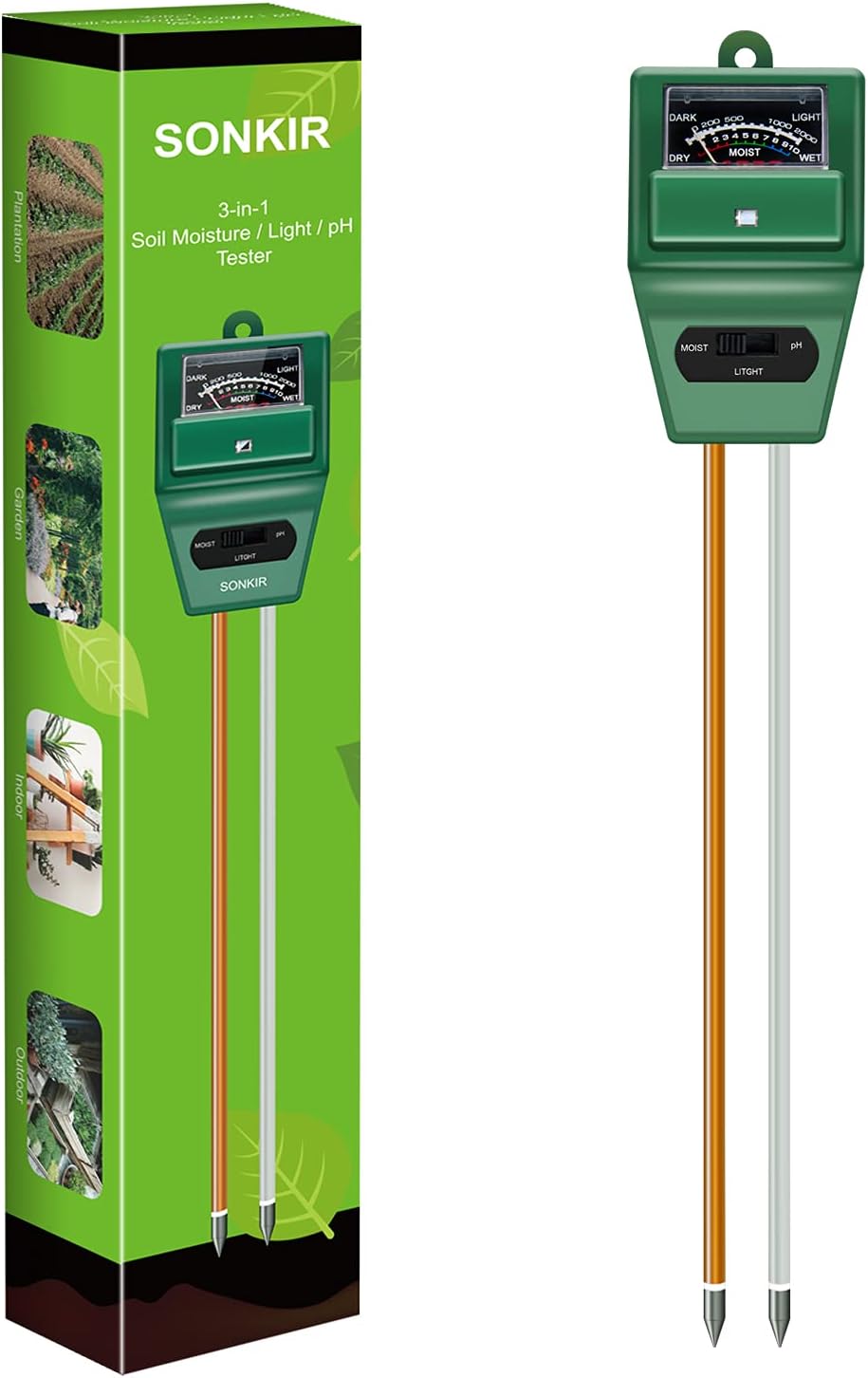
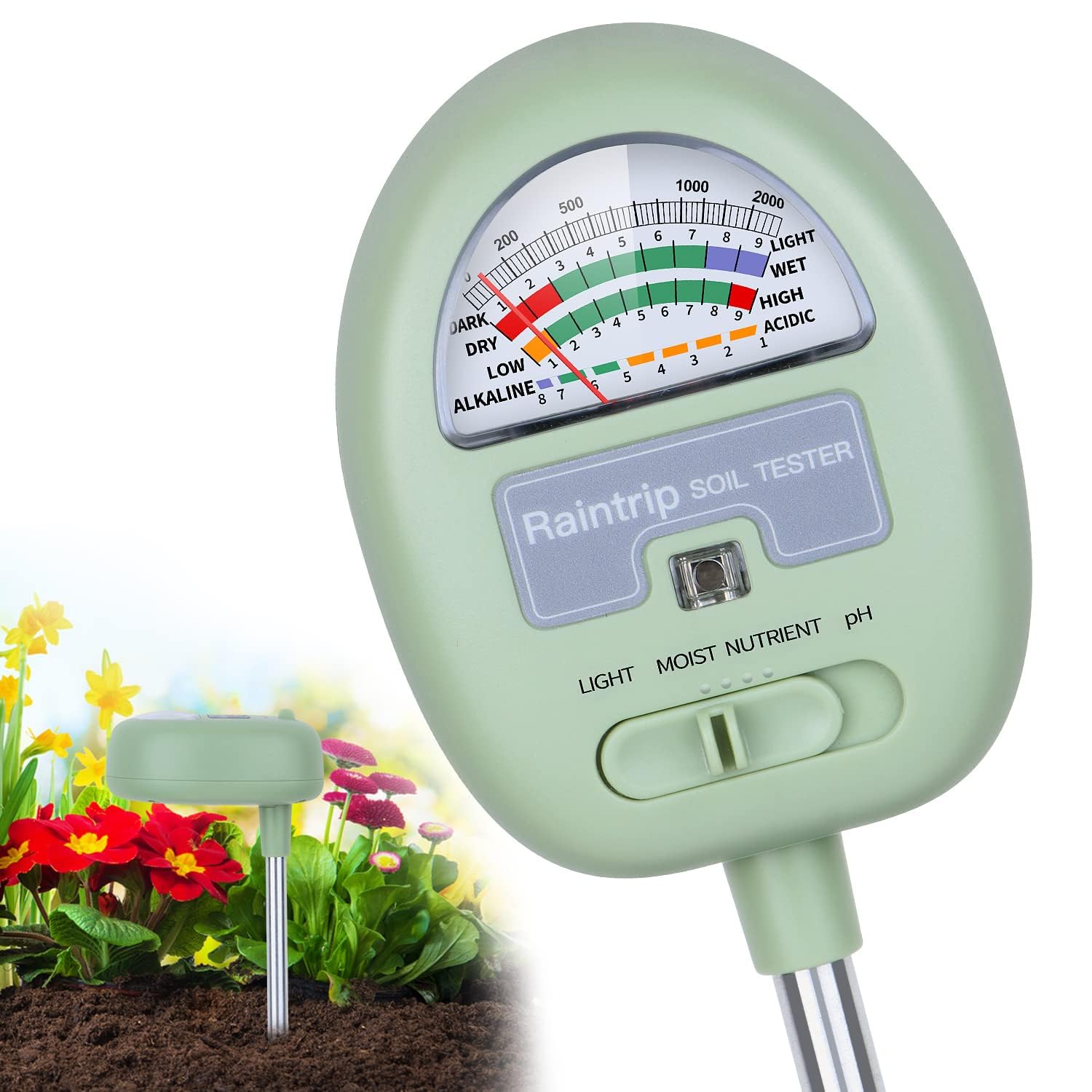
A moisture-only meter keeps things simple and affordable. A 4-in-1 or 7-in-1 system adds pH, temperature, light, and fertility measurements, giving you a complete picture of soil health. Vegetables are sensitive to pH (most prefer 6.0 to 7.0), so a pH function helps prevent nutrient lockout. Soil temperature matters for seed germination and root development. If you’re managing multiple beds with different crops, a multi-function meter becomes a valuable diagnostic tool.
Wireless Monitoring for Large Gardens
If your vegetable garden spans multiple raised beds or a large plot, wireless sensors let you monitor each area from a single display unit up to 300 feet away. This eliminates daily trips to check soil conditions and alerts you when moisture drops below your target range. Wireless systems cost more upfront but save time and reduce the risk of missed watering windows during hot spells.
Who Should Skip These
If your vegetables grow in sandy or very loose soil, standard probes may not deliver reliable readings because water drains too quickly and the sensor struggles to make consistent contact. Similarly, if you garden in extremely hard or clay-heavy compacted soil, forcing a probe in risks damage. For these edge cases, consider a soil sample analysis from your local cooperative extension instead, or invest in soil amendment to improve structure before relying on a meter.
Final Thoughts
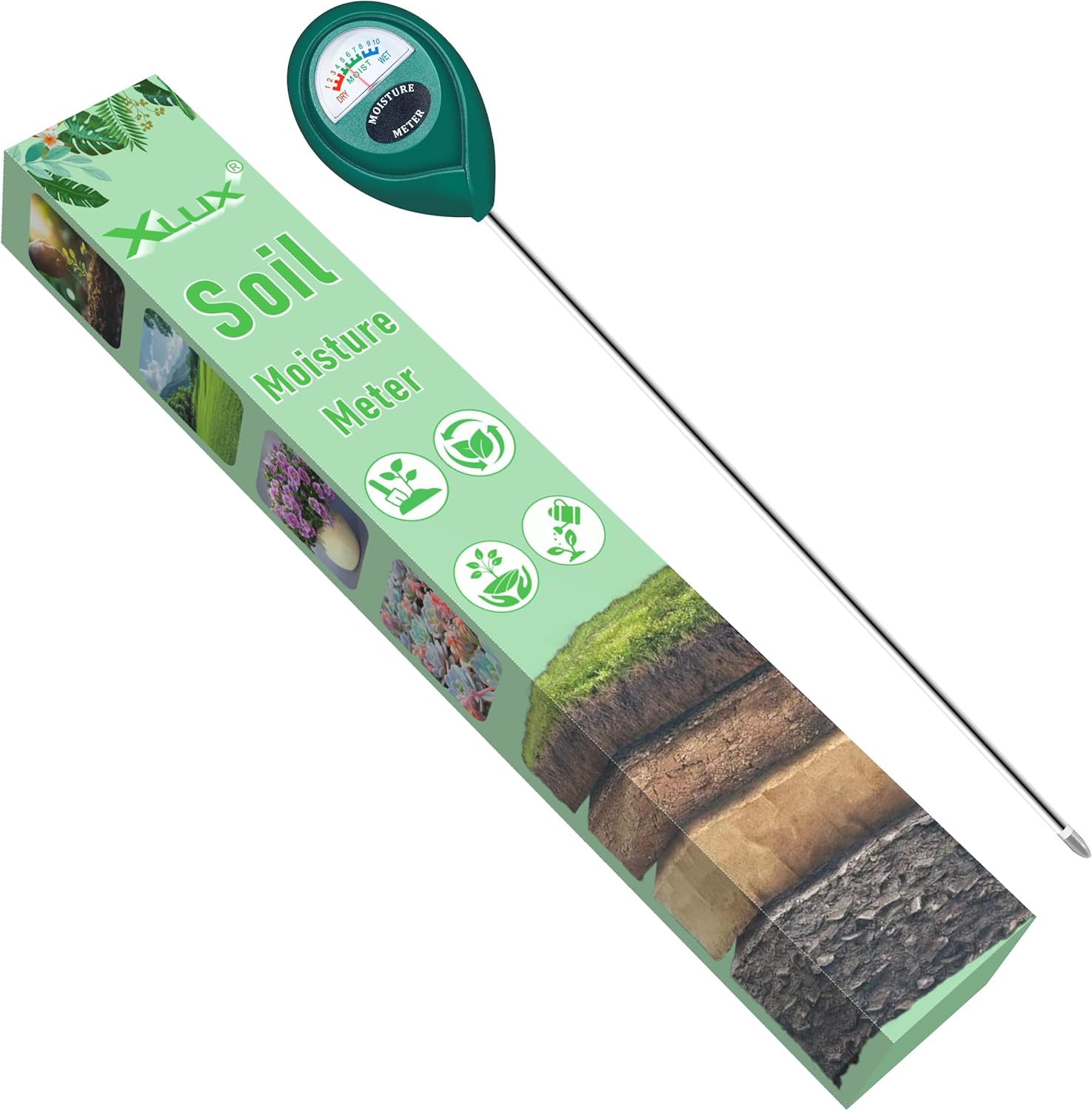
A soil moisture meter is one of the highest-return investments a vegetable gardener can make, eliminating overwatering and the root rot that follows. For straightforward, reliable moisture detection at a modest price point, the XLUX Plant Soil Moisture Meter has earned its reputation over nearly a decade. If you want comprehensive soil diagnostics in one tool, the YAMRON 4-in-1 Soil Moisture Meter delivers pH, temperature, moisture, and light readings with a backlit display for weekend and evening garden checks.
Frequently Asked Questions
How deep should I insert a soil moisture meter into my vegetable garden? Insert the probe to at least 4 to 6 inches, or two-thirds of its total length, to reach the active root zone where moisture matters most. Inserting it too shallow gives you surface readings that don’t reflect what roots actually experience. Always insert at an angle away from the plant stem to avoid damaging it.
Can I leave a soil moisture meter in the ground all the time? No. Leaving the probe in soil for extended periods accelerates corrosion and mineral buildup, shortening the meter’s lifespan. Insert it only when you need a reading, then remove it and wipe the probe clean with a dry cloth. Store it in a protective sleeve or dry location between uses.
Do I need a wireless soil meter or will a basic analog meter work? A basic analog meter works perfectly for small gardens with a few beds. Wireless systems shine when you have multiple planting areas, a large garden, or want to monitor conditions while away. For 2026, most gardeners find that a single reliable analog or budget digital meter covers their vegetable beds efficiently.
What moisture reading means it’s time to water vegetables? Most vegetables prefer soil in the “moist” range, roughly 4 to 7 on a 10-point dial or 40 to 60 percent on a digital scale. Once readings drop into the dry zone, water thoroughly until moisture rises to moist. Avoid letting soil stay in the wet zone for days, as that invites root rot and fungal disease.


Write Your Review
No reviews yet. Be the first to share your experience!