

The Meta Quest 3 has one design problem that everybody discovers in week two: the stock strap is a fabric band that puts the entire weight of the headset on your cheekbones. Twenty minutes in, you are adjusting it. Forty minutes in, you are taking it off.
Meta’s own answer is the Elite Strap, and it works. It also costs more than most people want to spend on a piece of plastic, and the battery version costs a great deal more than that.
KIWI design has built a business on being the sensible alternative to it, and unlike most accessory brands in this space it has been reviewed by people who do this for a living. TechRadar has published reviews of two of its straps, Best Buy stocks the range, and German VR outlet Mixed News rates the comfort battery strap as a genuine Elite Strap alternative.
This guide covers which strap suits which face, the accessories that are actually worth buying alongside it, and the one compatibility trap that catches Quest 3S owners.
Quick Picks
| If you want… | Buy this | Price |
|---|---|---|
| The cheapest real fix | K4 Flex Comfort Head Strap | $34.99 |
| The safe default | K4 Comfort Head Strap | $39.99 |
| Weight off your face entirely | H4 Halo Comfort Head Strap | $54.99 |
| Double the battery life | K4 Boost Battery Head Strap | $69.99 |
| Halo comfort plus battery | H4 Boost Halo Battery Strap | $79.99 |
| Everything in one strap | K4 Duo All-in-One Audio Battery | $139.99 |
| To stop light leaking in | V3 or V4 Facial Interface | From $24.99 |
| To stop throwing controllers | G4 Pro Controller Grips | $34.99 |
First: Two Things That Will Cost You Money If You Skip Them
1. Quest 3 and Quest 3S parts are not interchangeable
The head straps mostly cover both, and the listings say “Quest 3/3S” when they do. The face-touching parts do not. They are shaped to two different headsets:
- Quest 3: F3 Silicone Facial Interface ($19.99), V3 Facial Interface ($24.99)
- Quest 3S: F4 Silicone Facial Cover ($14.99), V4 Ventilated Facial Interface ($24.99), P6 Velvety Lens Protector ($19.99)
The 3 and the 3S have different optics and different body shapes, so a part for one will not seat properly on the other. Check which headset you own before adding a face pad to the basket. This is the single most common way to end up returning something.
2. The model names are genuinely confusing
There are four different products with “K4” in the name, at four different prices, doing four different things:
- K4 Flex Comfort, $34.99, no battery
- K4 Comfort, $39.99, no battery
- K4 Boost Battery, $69.99, with battery
- K4 Duo All-in-One, $139.99, battery plus built-in audio
Add the H4 Halo and H4 Boost Halo and the K3 Boost, and you have seven straps whose names do not tell you what separates them. The word to look for is Boost, which is how this brand signals “has a battery.” Halo means the rigid ring design. Everything else is a comfort strap.
Compare the full strap range →
1. K4 Comfort Head Strap — $39.99
The one to buy if you are only buying one thing.
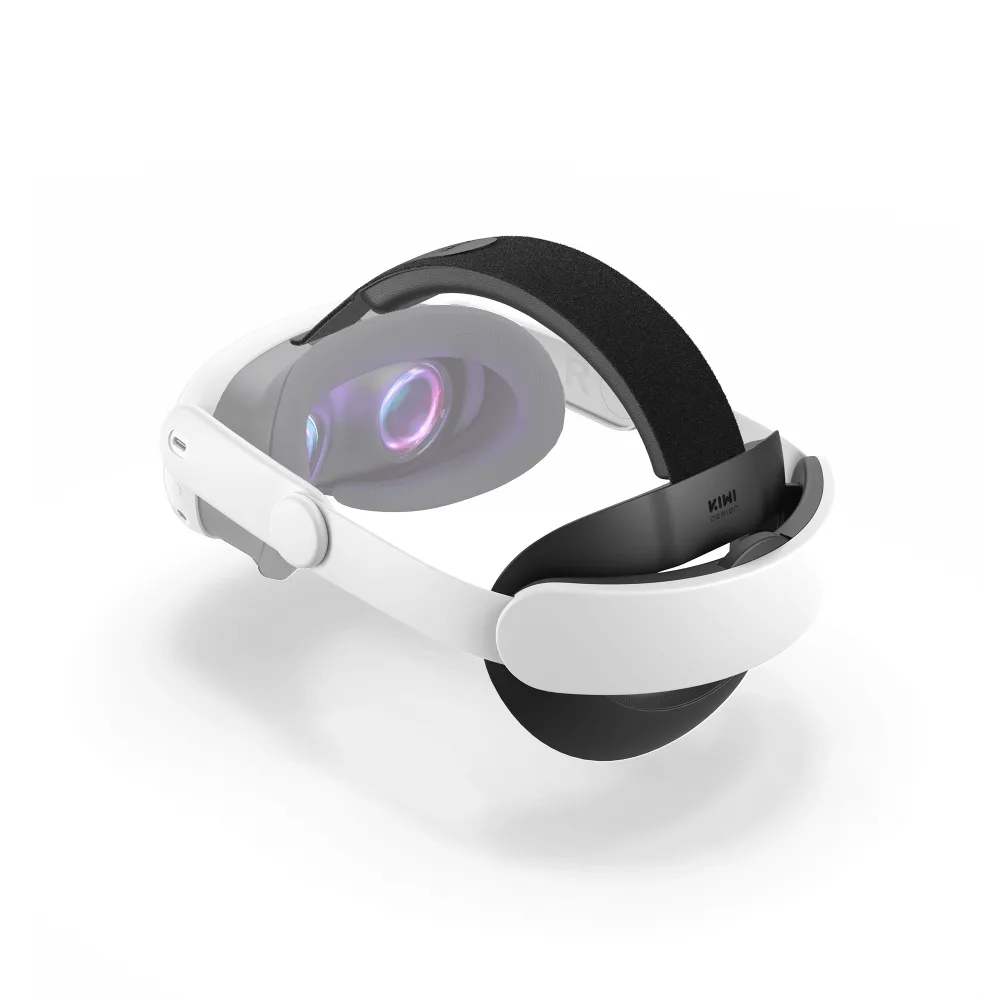
This replaces the stock fabric band with rigid side arms and a padded cradle at the back of the skull, which moves the load from your cheekbones to the top and back of your head. That is the entire fix, and it is why this category exists.
Reviewers have consistently landed on the same observation: KIWI uses a plastic ring wrapped in memory foam that many find more comfortable than Meta’s own version, at well under half the price of the official Elite Strap. Best Buy carries this model, which is worth knowing if you would rather buy from a retailer with a walk-in returns desk.
There is also a K4 Flex Comfort at $34.99 if you want the cheapest possible entry. The five dollars buys a more rigid construction on the standard K4, and rigidity is most of what you are paying for in this category.
2. K4 Boost Battery Head Strap — $69.99
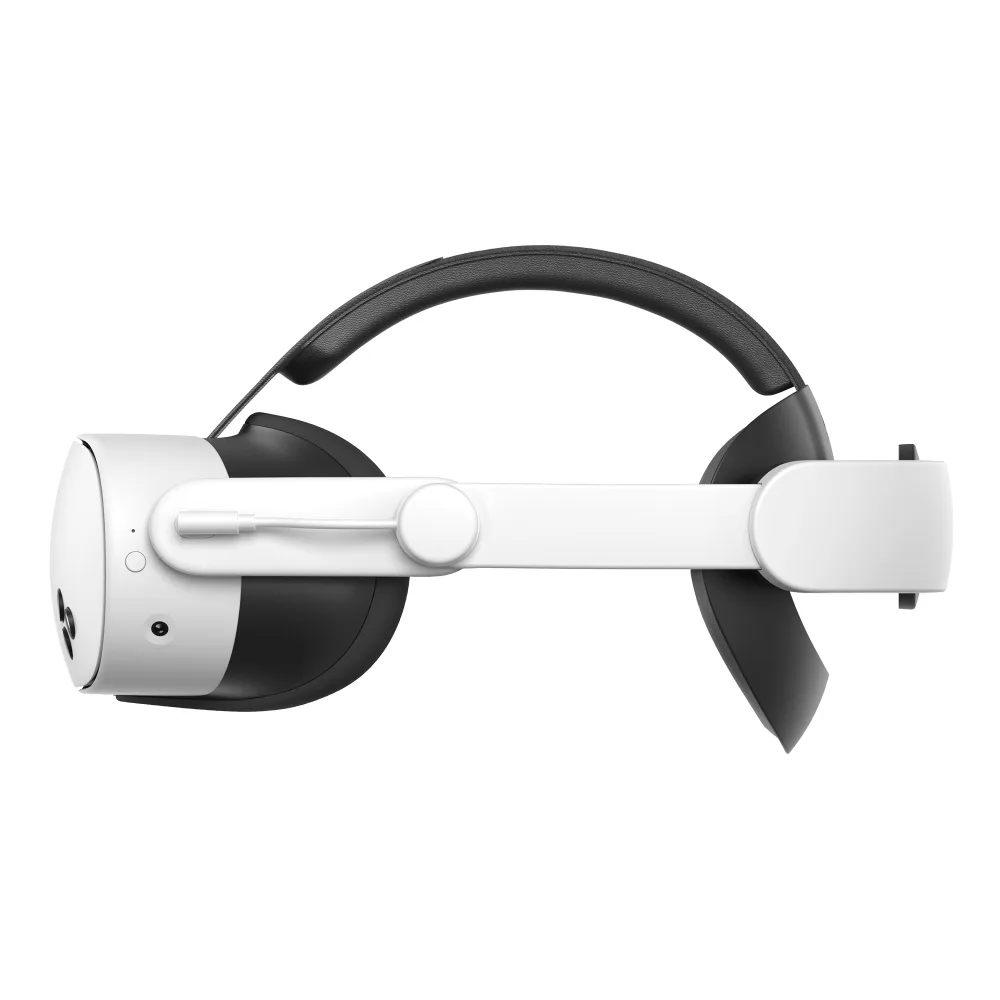
The one TechRadar called the first Quest 3 accessory you should buy.
A battery strap does two useful things at once, and the second one is the part people underestimate. The obvious benefit is runtime: a Quest 3 gives you roughly two hours on its internal battery, and a battery strap roughly doubles that.
The less obvious benefit is counterweight. Putting a battery at the back of your head balances a headset whose mass is all at the front. Even setting the extra runtime aside, the balance change is what makes a long session comfortable.
At $69.99 this sits well below Meta’s own battery Elite Strap. If you play in sessions longer than an hour, or you use the headset for fitness, this is the model to get rather than the plain comfort strap.
There is also a K3 Boost Battery at $59.99, the previous generation, if you want the same idea for ten dollars less.
3. H4 Halo Comfort — $54.99, and H4 Boost Halo Battery — $79.99
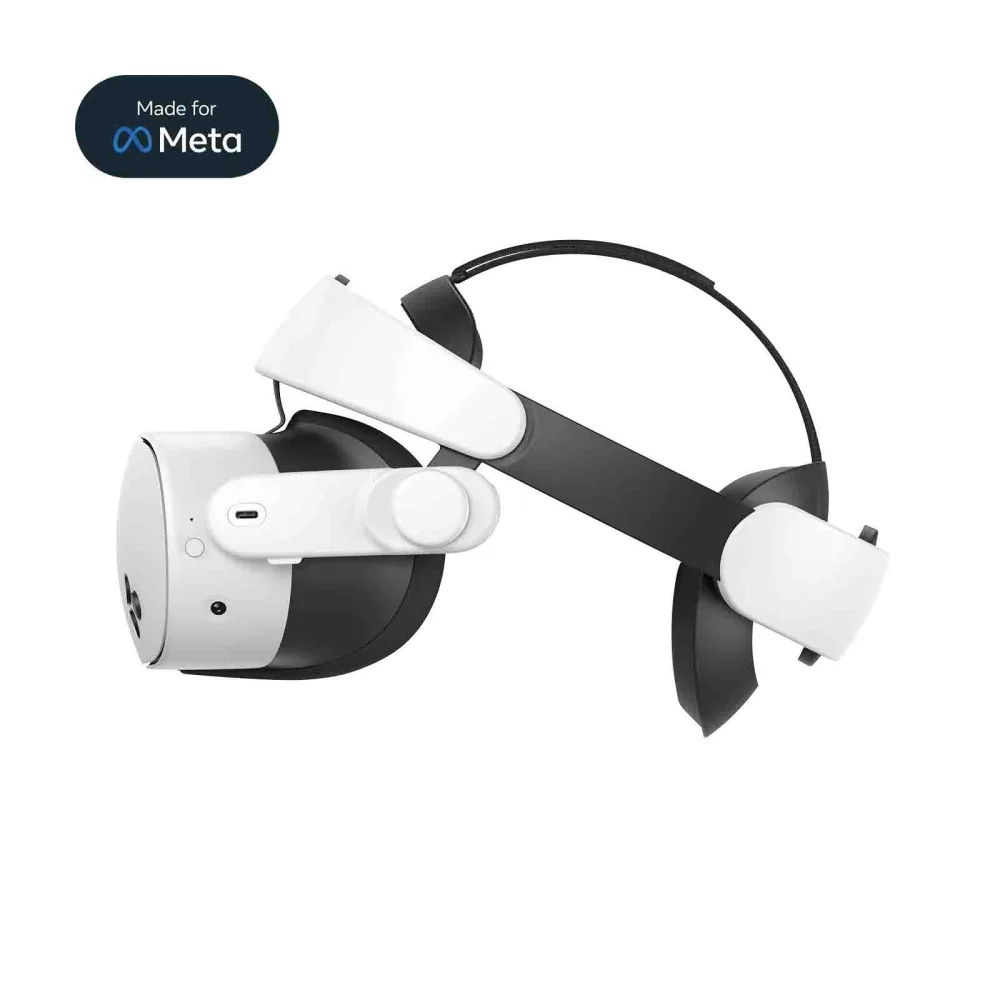
The halo design is the bigger comfort change, and it suits some faces far better than others.
A halo strap suspends the headset from a rigid ring around your head so that, when adjusted properly, the visor does not press against your face at all. There is a small gap. Reviewers describe it as transforming long sessions, taking pressure off the front of the face and balancing the weight far better than the stock arrangement.
Two honest caveats. A halo takes longer to set up correctly than a conventional strap, because the whole benefit depends on getting the ring position right. And the gap that relieves pressure is also a gap that lets light in, which some people find breaks immersion. If you are sensitive to light leak, the conventional K4 may suit you better despite being less comfortable on paper.
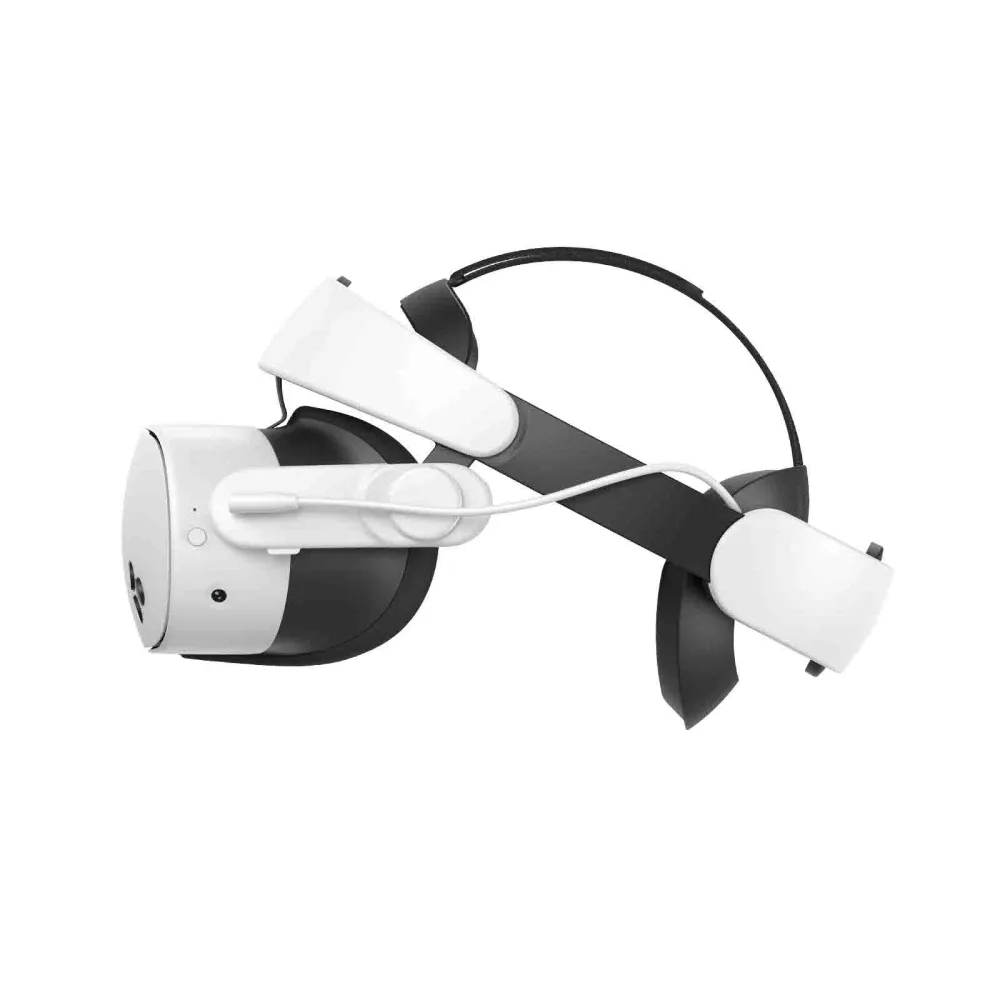
The H4 Boost Halo at $79.99 adds the battery to the halo design, and it is the model TechRadar reviewed as a new favourite Quest 3 headstrap.
A price note worth acting on: TechRadar’s review quotes this strap at $99.99. KIWI’s own store currently lists it at $79.99. Whether that is a permanent drop or a sale, the direct price is the lower one, so it is worth checking the store before buying from a marketplace listing that may still reflect the older figure.
4. K4 Duo All-in-One Audio Battery Strap — $139.99
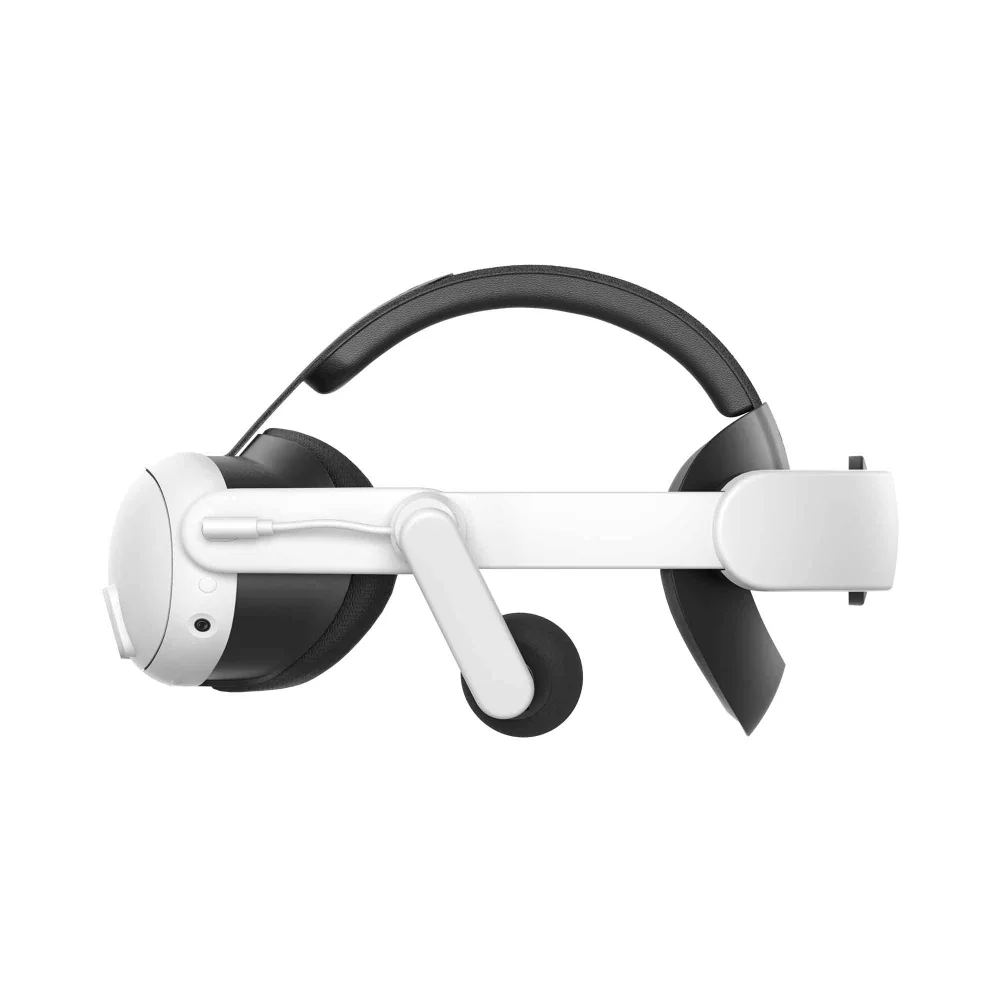
The flagship: comfort strap, battery and over-ear audio in one unit.
The Quest 3’s built-in speakers are open and leak sound in both directions. Anyone else in the room hears your game, and you hear them. Closed cups fix that, and integrating them into the strap avoids the usual mess of separate headphones fighting the strap for space on your head.
At $139.99 this is more than double the K4 Boost, so the question is whether the audio is worth $70 to you. If you already own headphones you like, it probably is not. If you share a living room, or you want one thing to put on rather than three, it is the tidiest solution here.
Worth noting that KIWI also sells A3 Clip-On Headphones for the PICO 4 series at $54.99, but that item is currently showing as out of stock.
5. Facial Interfaces: The Cheap Upgrade Most People Skip
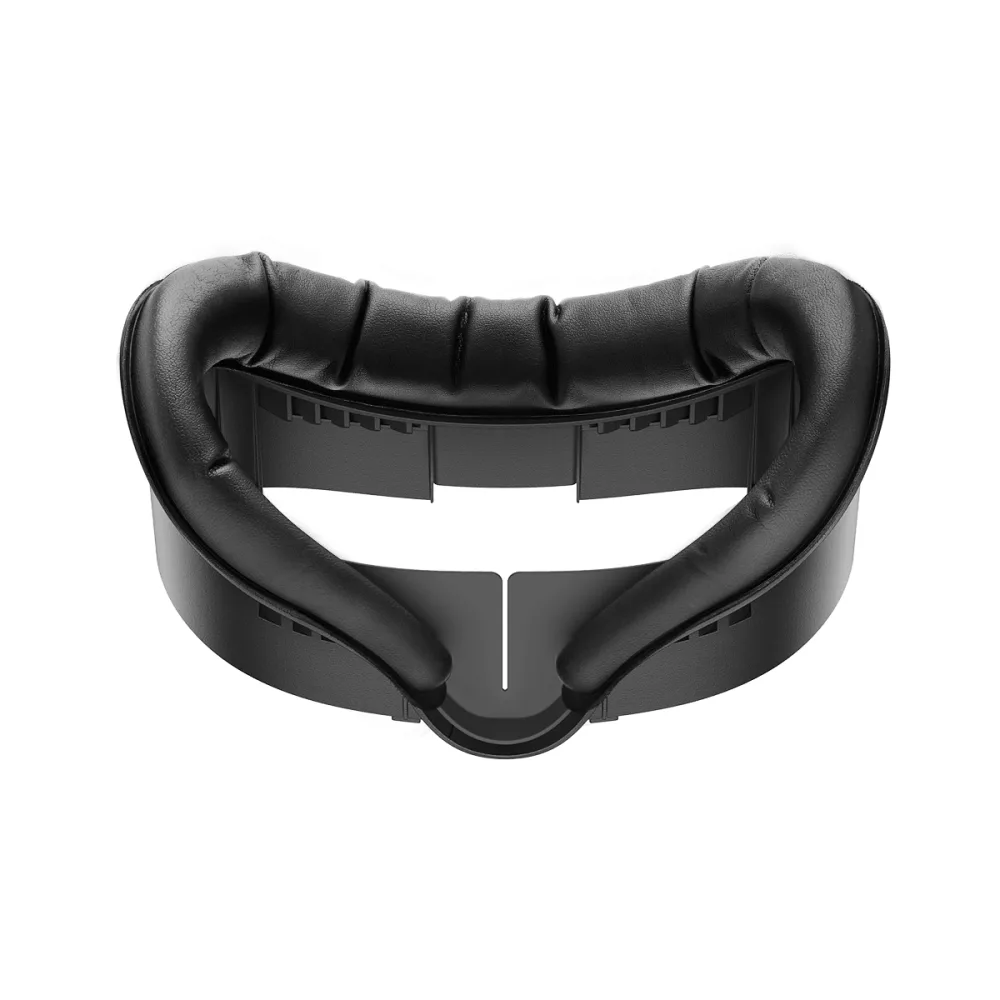
The stock face gasket is thin foam that absorbs sweat, cannot be properly cleaned, and leaves a gap under the nose that lets a bright strip of light in.
KIWI’s options split into two types, and the choice is straightforward:
- Silicone covers ($14.99 to $19.99) fit over the existing gasket. They wipe clean, which matters if more than one person uses the headset or if you sweat in it. Cheapest possible improvement.
- Full facial interfaces ($24.99 to $34.99) replace the gasket entirely with a moulded piece that blocks light better and often improves airflow. The V4 for the 3S is explicitly ventilated.
My honest ranking of upgrades: strap first, face pad second, everything else after. A twenty-five dollar face pad changes the experience more than a sixty-five dollar charging stand does.
6. Controller Grips — $34.99
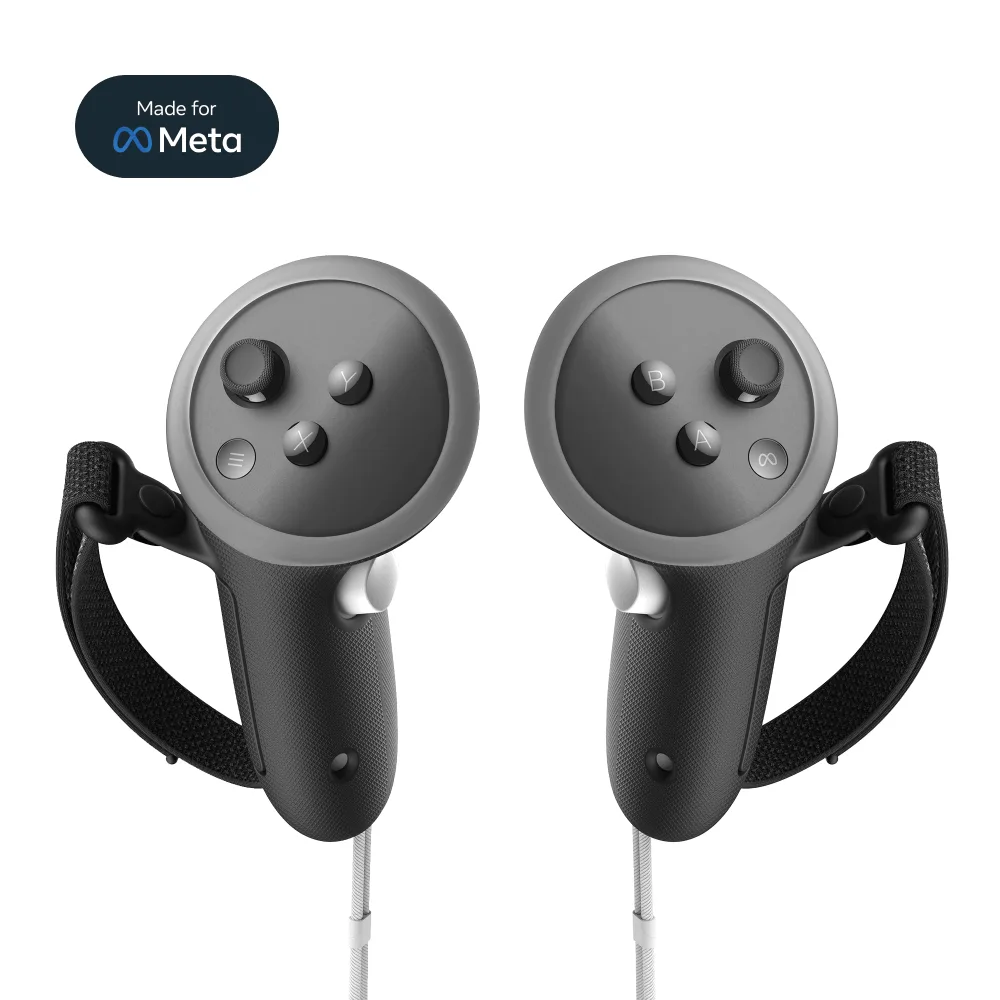
Two versions at the same price: G4 Pro Performance and G4 Max Extended.
The case for grips is narrow but real. They add a knuckle strap so the controller stays on your hand when you open your fingers, which matters in exactly two situations: fitness games where you are moving fast, and any game where you throw things. If you play seated, you do not need these.
The Max Extended version adds length to the controller ring, which changes tracking geometry and gives more clearance for wide swings. That is a boxing and beat-matching feature rather than a general upgrade.
7. Power, Cables and Stands
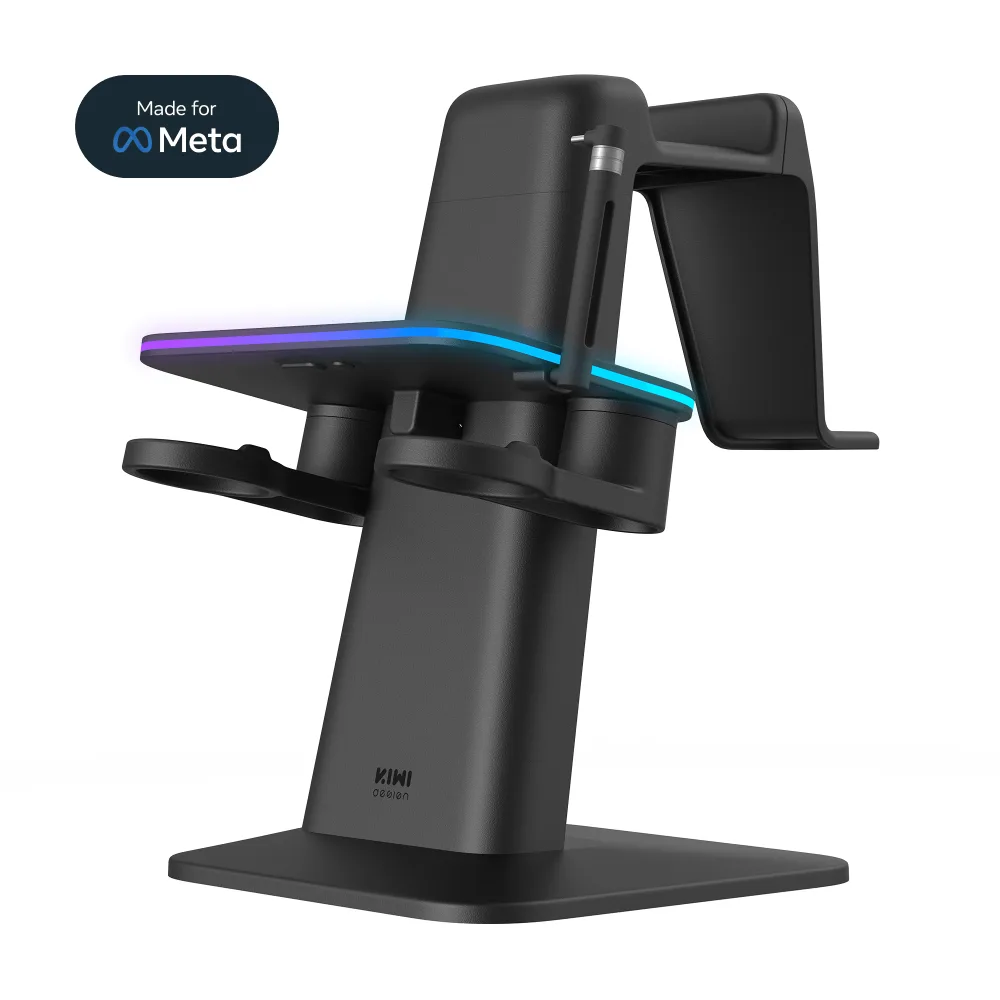
RGB Vertical Charging Stand, $64.99. Charges the headset and both controllers in one dock and gives the headset a home so it is not face-down on a shelf collecting scratches. That last part is the real argument; the RGB is decoration.
P5000 Compact Power Bank 2-Pack, $89.99. Two swappable packs, so one charges while the other is in use. This is the alternative to a battery strap rather than a companion to one, and it suits people who already like their current strap.
Link cables. A 16-foot link cable runs $17.99 to $24.99, and the L1 Plus 13-foot charging link cable at $35.99 both carries PC video and charges at the same time, which is the version you want for long PCVR sessions. Note that most variants of the cheaper 16-foot cable are currently out of stock, so check availability before planning around it.
P4 Portable Carrying Case, $39.99. Only worth it if the headset actually travels. If it lives on a desk, the stand is the better $65.
There are also docks for other platforms: a D2 charging and display dock for PS VR2 and PS5 at $74.99 and a D3 RGB cooling and charging station for the PS5 Slim at $59.99.
What You Should Know Before Ordering
Buy in this order
Strap, then face pad, then everything else. The strap fixes the problem that makes people stop using the headset. Nothing else on this page comes close to that impact, and a grip or a stand bought before a strap is money spent on the wrong bottleneck.
Check the model suffix, not the number
Because four products share the K4 name, the number tells you almost nothing. Boost means battery, Halo means the rigid ring, Duo means audio is included, and anything else is a plain comfort strap. Read the port and feature list rather than assuming the higher number is newer or better.
Prices differ between the direct store and third-party listings
The H4 Boost Halo is the clearest example, listed at $79.99 direct against the $99.99 quoted in TechRadar’s review. Marketplace listings do not always track the brand’s own pricing. Compare the delivered total both ways before ordering.
Watch the optional add-on at checkout
The store offers a low-cost “Worry-Free Purchase” item, priced around a dollar, which is a shipping protection upsell rather than part of the product. It is cheap and it is your call, but know what it is rather than assuming it is required.
Stock is uneven on the accessory tail
The straps are well stocked, but some of the smaller items are not. The A3 clip-on headphones and most variants of the 16-foot link cable were unavailable when I checked. If a specific cable length or colour matters, confirm it is in stock before building a basket around it.
What is genuinely good
- Actual third-party review coverage. TechRadar has reviewed two of these straps and Best Buy stocks the range. In an accessory category flooded with anonymous brands, that is a real differentiator.
- A genuine price ladder from $34.99 to $139.99, so you can buy the amount of comfort you need rather than one take-it-or-leave-it option.
- Well below Meta’s own pricing for the equivalent function, which is the entire reason this market exists.
- The ecosystem is complete. Straps, face pads, grips, cables, docks and cases all from one brand, which means fewer compatibility surprises than mixing four sellers.
- Both Quest and PICO supported, plus PlayStation VR2 docks, which is unusual for a brand this size.
Frequently Asked Questions
Do I really need a different head strap for the Quest 3?
If you use the headset for more than about half an hour at a time, yes. The stock strap loads the weight onto your cheekbones, and that is the single most common reason people stop using a Quest. A rigid strap moves that load to the top and back of your head, which is a structural fix rather than a comfort preference.
Halo or conventional strap?
Halo is more comfortable for long sessions because the visor need not touch your face at all, but it takes longer to adjust and the gap lets in more ambient light. Conventional straps are quicker to put on and seal better. If you mostly play long sessions at a desk, halo. If you pick the headset up for twenty minutes at a time, conventional.
Is a battery strap worth the extra money?
For most people, yes, and the runtime is only half the reason. The battery sits at the back of your head and counterbalances a front-heavy headset, so the strap feels better even before the extra hours matter. If your sessions are consistently under an hour, save the money.
Will Quest 3 accessories fit the Quest 3S?
Head straps generally cover both and say so in the listing. Facial interfaces and lens protectors do not, because the two headsets have different optics and body shapes. F3 and V3 are Quest 3; F4, V4 and P6 are Quest 3S.
How much extra battery life does a battery strap give?
Roughly double the headset’s own runtime, which puts a Quest 3 in the region of four hours rather than two. Actual figures depend heavily on what you are running, since a fitness title and a video app draw very differently.
Do I need controller grips?
Only if you play standing and moving. The knuckle strap keeps the controller on your hand when your fingers open, which matters in fitness and throwing games and does nothing at all if you play seated.
The Verdict
Buy a strap first, and buy the K4 Comfort at $39.99 if you want the safe answer. It is the cheapest thing that fixes the actual problem with the Quest 3, and it is stocked at Best Buy if you would rather have a physical returns counter.
If your sessions run past an hour, skip straight to the K4 Boost Battery at $69.99. The extra runtime is useful and the counterweight effect is the part you will actually notice. Take the H4 Boost Halo at $79.99 instead if you want maximum comfort and do not mind a little light leak.
Then add a face pad at $24.99 and stop. Grips, stands and cases are all reasonable products, but they solve conveniences rather than problems, and the first fifty dollars you spend on comfort does more than the next hundred spent on anything else.
Strengths: real editorial coverage from TechRadar and retail presence at Best Buy, a full price ladder from $34.99 to $139.99, substantially cheaper than Meta’s own equivalents, a complete accessory ecosystem from one brand, and support for PICO and PlayStation VR2 alongside Quest.
Weaknesses: four different products share the K4 name at four different prices, facial interfaces are not cross-compatible between Quest 3 and 3S and it is easy to order the wrong one, pricing differs between the direct store and third-party listings, and several smaller accessories were out of stock at the time of writing.
Rating: 8.5/10 for the head strap range specifically, which is where this brand is strongest and where the value against Meta’s own pricing is clearest.
Prices, specifications and stock reflect KIWI design’s published listings as of September 2026 and are subject to change. Confirm whether you own a Quest 3 or a Quest 3S before ordering face-fitting parts, since they are not interchangeable. As an affiliate, I earn from qualifying purchases made through links on this page.





Write Your Review
No reviews yet. Be the first to share your experience!