

Your check engine light just came on, and the shop wants a diagnostic fee before anyone even looks at it. If you’re like most car owners, you’ve faced this frustration at least once. An OBD2 scanner puts that diagnostic power in your hands, letting you read fault codes, understand what’s wrong, and decide whether to fix it yourself or take it to a shop armed with real information.
This guide covers 12 of the most accessible OBD2 scanners on the market, ranging from ultra-simple code readers to models that handle ABS, SRS, and transmission diagnostics. Whether you drive a 1996 Honda Civic or a late-model Ford F-150, you’ll find a scanner that matches your technical comfort level and budget. We focus on tools that work right out of the box with minimal setup, clear display screens, and straightforward menus, perfect if you’ve never held a diagnostic tool before.
This guide is for general information only and is not professional automotive repair advice. Always consult your vehicle’s service manual and a qualified mechanic for complex repairs or safety-critical systems.




How We Picked These Scanners
We evaluated each scanner based on published specifications, manufacturer documentation, aggregated customer feedback, and side-by-side feature comparison. Our focus was on ease of use for someone with no prior diagnostic experience: menu clarity, display readability, cable length, and the time it takes to get a first code read after plugging in.
This is a research-based editorial assessment. No product was physically handled by our team. We ranked these tools by their suitability for DIY beginners, considering protocol support, vehicle compatibility, built-in code libraries, and whether they require a smartphone app or subscription. All 8 models work with OBD2 vehicles from 1996 onward, though compatibility varies by make, model, and year.
Buying Guide: What to Look for in Your First OBD2 Scanner
Display Size and Readability
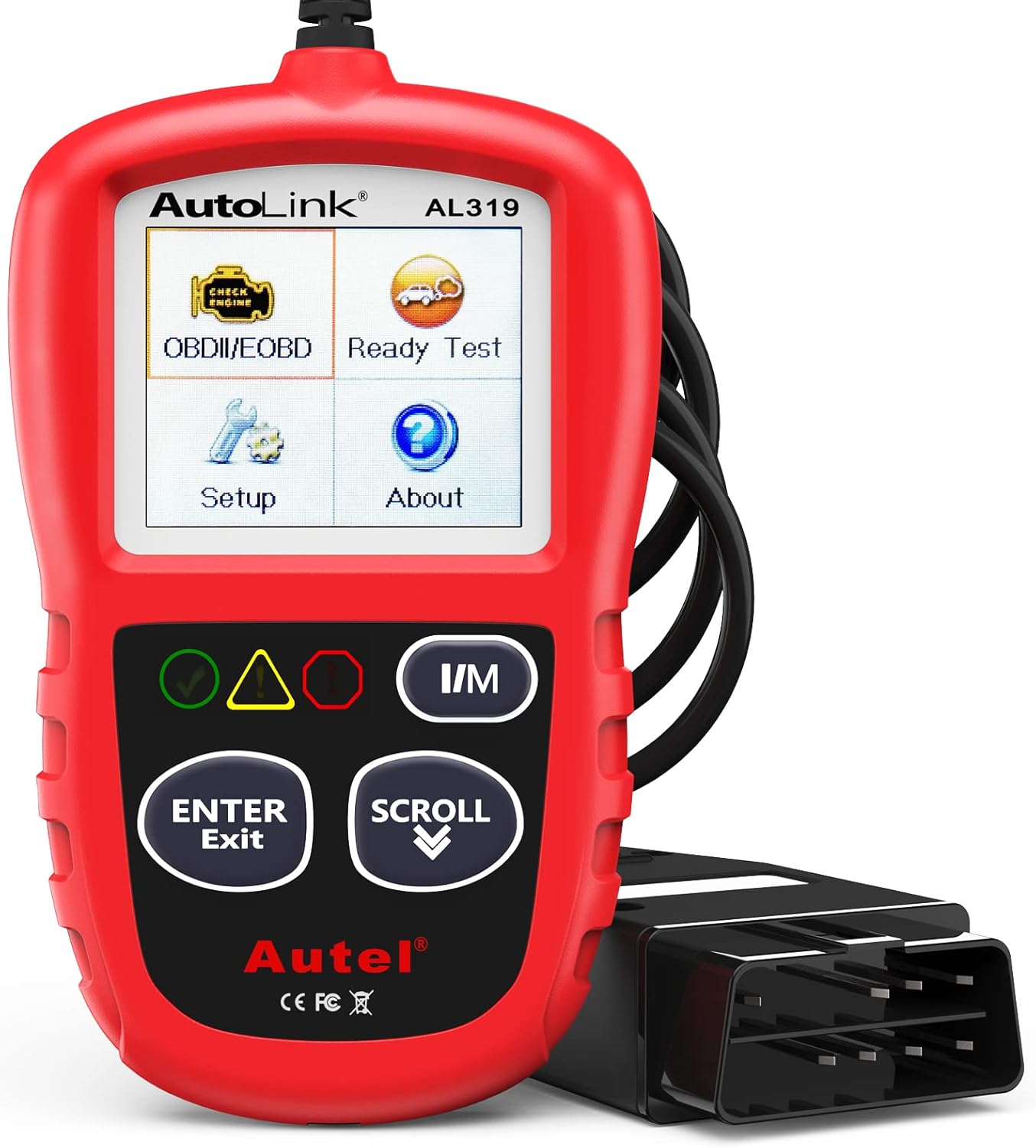
A larger, color screen makes a huge difference when you’re working under the hood or in a dimly lit garage. Scanners with 2.4 in or larger displays let you read code definitions and live data without squinting. Look for adjustable contrast and a white backlight, these features matter more than you’d think when the sun is glaring off the screen.
Some beginner scanners use small monochrome LCDs that are harder to read and slower to navigate. If you plan to use your scanner frequently, investing a bit more in a color screen pays off in frustration saved.
Protocol Support and Vehicle Compatibility
Not all OBD2 scanners support all five major OBD2 protocols: KWP2000, J1850 VPW, ISO9141, J1850 PWM, and CAN. Most vehicles use one or two of these, but to avoid buying a scanner that won’t work with your car, confirm that the tool supports CAN (the modern standard) and at least three others. Check the product description or contact the manufacturer with your vehicle’s year, make, and model before purchasing.
European and Asian vehicles especially can be finicky. A scanner that works flawlessly on a 2015 Ford may struggle with a 2012 BMW or a 2010 Subaru. The automotive tools category includes models with broad international coverage if you own multiple vehicles.
Code Library Size and Definitions
A scanner with a large built-in DTC (diagnostic trouble code) lookup library saves you from having to Google every code that pops up. Beginners especially benefit from scanners that display plain-English definitions right on the screen, “P0128: Coolant Thermostat (Coolant Temp Malfunction)”, rather than just a code number.
Some scanners offer 3,000 to 42,000 code definitions. The difference matters less than you’d think for common issues, but a larger library means you’re less likely to encounter a mystery code.
Power Source and Cable Length
All OBD2 scanners draw power directly from the vehicle’s OBD2 port, no battery needed. What matters is cable length. A 2.5 ft cable is standard, which works if the OBD2 port is under your dashboard. Longer cables give you more freedom to position the scanner on your lap or dashboard while reading live data. Make sure the cable is thick and flexible; cheap insulation cracks and frays after a few uses in a cold garage.
Who Should Skip These
If your vehicle is pre-1996, has an OBDI port instead of OBD2, or is a specialty vehicle (some Fiats, Alfa Romeos, certain French Peugeots, or Russian Ladas), most of these scanners won’t work. Similarly, if you need to service your ABS, airbag, or transmission systems and reset them to factory defaults, you’ll need a more advanced scan tool than what’s in this guide. For those repairs, a trip to a dealer or professional shop is the safer choice.
Final Thoughts
A good OBD2 scanner is one of the smartest purchases a DIY car owner can make. It transforms a check engine light from a source of dread into a diagnostic clue you can actually understand. For most beginners, the MOTOPOWER MP69033 offers excellent value with a clear display and wide vehicle compatibility, while the FOXWELL NT301 adds live data graphing and smog-check readiness for those ready to dig a bit deeper.
Frequently Asked Questions
What’s the difference between a basic code reader and a full OBD2 scanner?
A basic code reader tells you the fault code and its definition. A full OBD2 scanner adds live data (real-time sensor readings like RPM and coolant temperature), freeze frame (a snapshot of conditions when the fault occurred), and I/M readiness status for emissions inspections. For beginners, a basic reader is often enough; full scanners are worth the extra cost if you plan to troubleshoot intermittent problems.
Can I use an OBD2 scanner to turn off my check engine light?
Yes, but only after you’ve fixed the underlying problem. The scanner can clear the code and turn off the light, but if the issue persists, the light will come back on. Clearing a code without repairing the fault is like silencing a smoke alarm while the house is still on fire, it hides the problem but doesn’t solve it.
Do I need a smartphone app or Bluetooth to use an OBD2 scanner?
No. Most handheld scanners in this guide work standalone with a built-in screen and buttons. Some newer models offer Bluetooth connectivity to a smartphone app for extra features, but it’s optional. If you prefer simplicity and don’t want to deal with app updates or connectivity issues, choose a hardwired handheld model. See our guide to vehicle maintenance tools for more accessories that complement a diagnostic scanner.
Will an OBD2 scanner work on my 2024 car?
Most likely, yes. All gasoline-powered vehicles sold in the U.S. from 1996 onward have an OBD2 port. However, some newer vehicles (especially luxury brands and hybrids) may use advanced protocols or proprietary systems that a basic scanner can’t fully access. Always check the product description or manufacturer website for your specific year, make, and model before buying. If you’re unsure, contact customer support with your VIN and they can confirm compatibility.





Write Your Review
No reviews yet. Be the first to share your experience!