

A finished display set spends most of its life in a room with the lights on, looking like grey plastic. Switch the room lights off and it disappears entirely. That is the whole problem a LEGO light kit solves, and it is a bigger transformation than any photograph of an unlit model can suggest.
The category works because LEGO models are hollow. A set with windows, a cross-section, a canopy or a translucent panel has somewhere for light to go, and the moment you put a light inside it, the model reads as a scene rather than an object.
BrickBling makes these kits for one specific LEGO set at a time, and it makes a lot of them. This guide covers how the kits work, which ones are worth the money, the two version names you have to understand before you can order, and some things about this brand you should weigh before spending.
Quick Picks
| If your set is… | Kit | Price |
|---|---|---|
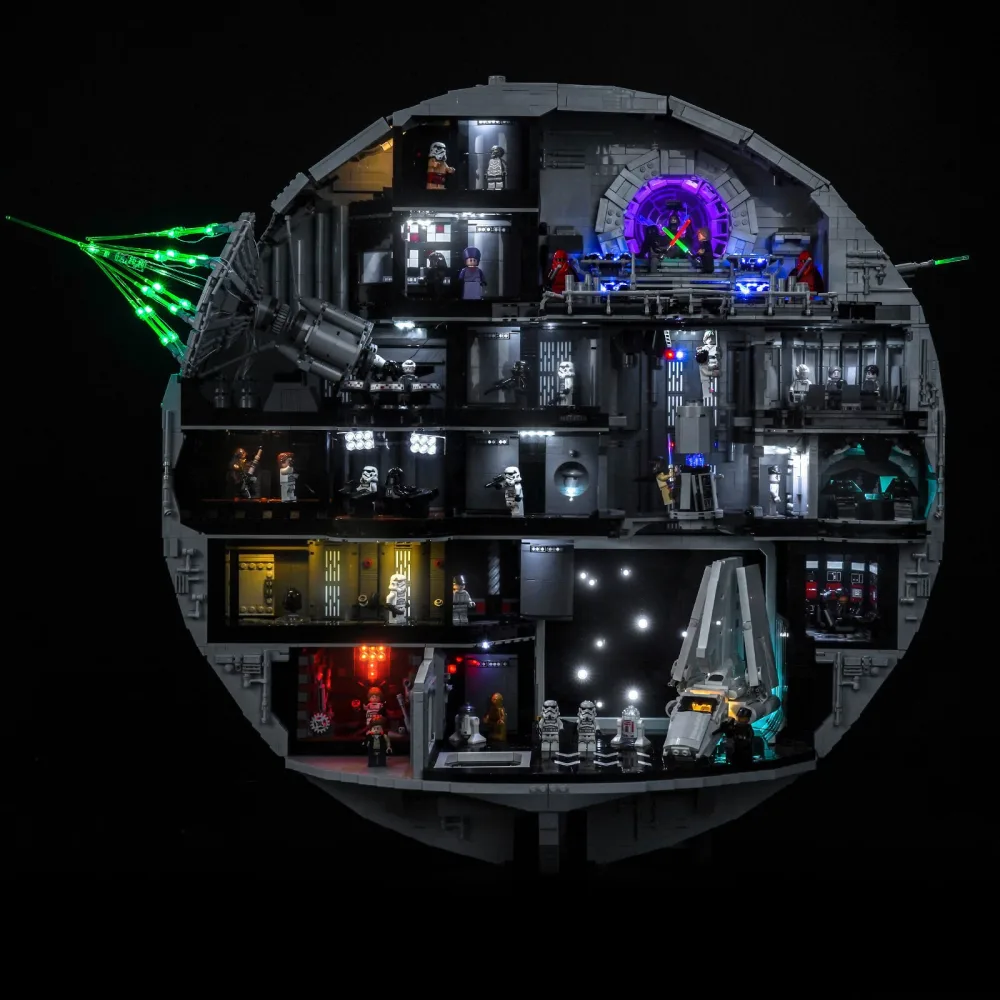
| A cross-section with dozens of rooms | Death Star 75419 | $129.98 |
| A tall landmark | Architecture Eiffel Tower 10307 | $129.98 |
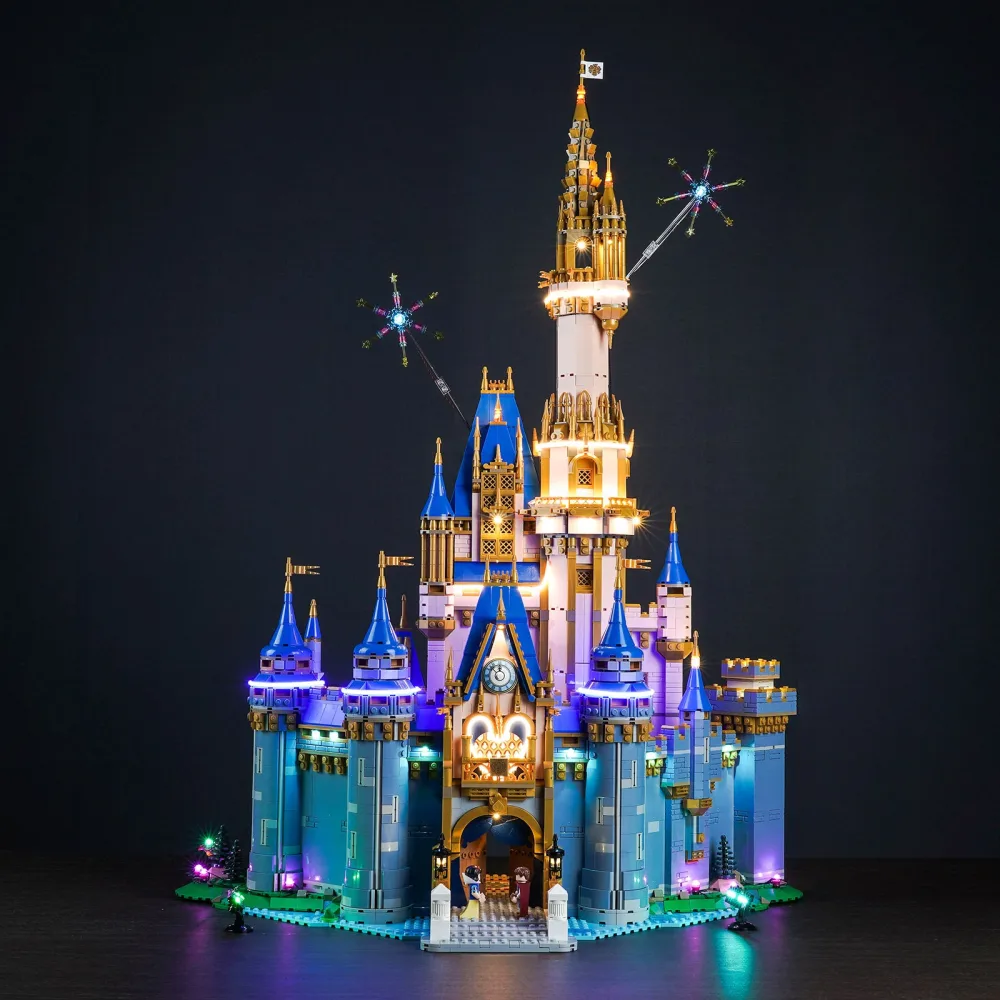
| A castle with towers and windows | Disney Castle 43222 | $109.98 |
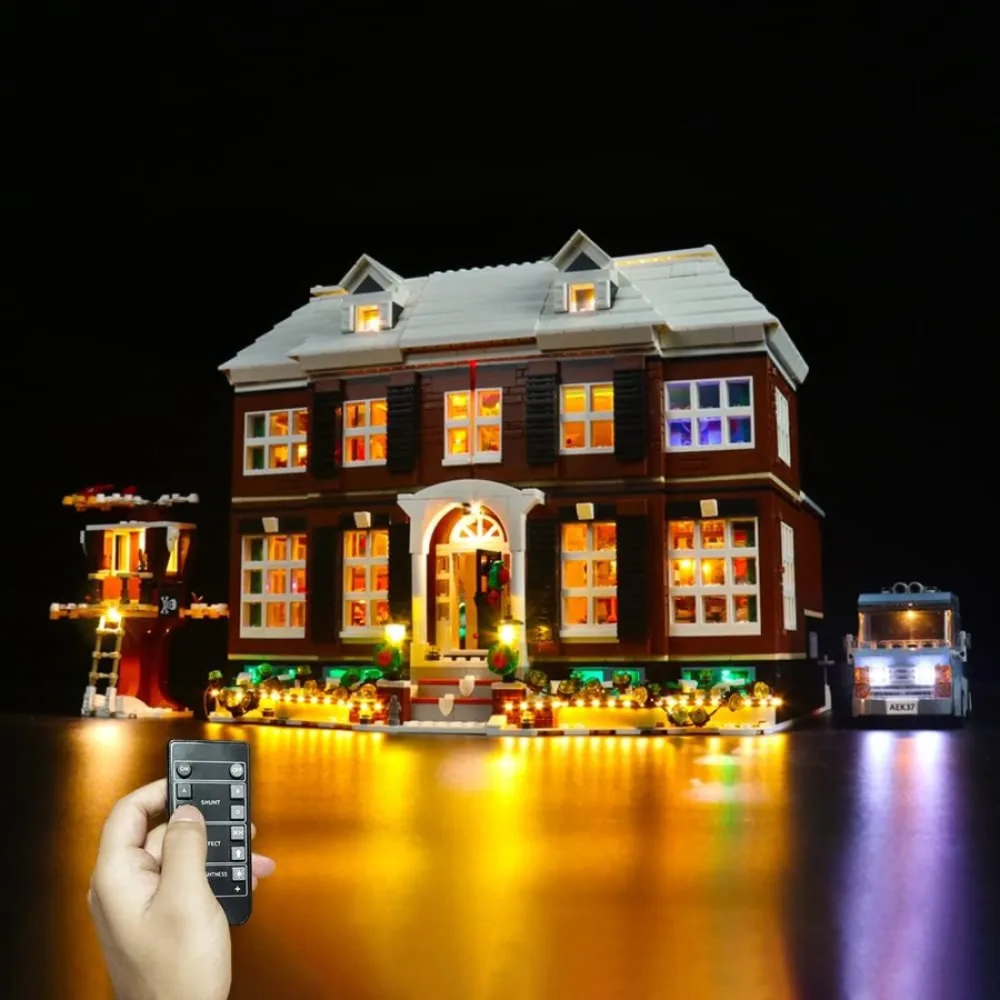
| A house you want to look lived in | Ideas Home Alone 21330 | $69.98 |
| A flat brick mosaic | Milky Way Galaxy 31212 | $67.98 |
| A seasonal building | Icons Holiday House 11387 | $37.98 |
| A small character model | Ideas Wallace & Gromit 21371 | $24.98 |
| Wall art on a budget | Van Gogh The Starry Night 21333 | $21.99 |
Prices are for the Classic version and were checked in September 2026. Across the brand’s best-selling list the range runs from about $20 to about $190.
How These Kits Work
A light kit is a wiring harness, not a lamp. You get individual LEDs on thin ribbon wire, connector boards that let several lights share one line, and a controller. Each light tucks into a specific gap in the model and the wire runs down through the studs to the base.
Three practical points follow from that, and they are the same for every brand in this category.
- Power is USB. The kits run at 5V from a USB cable, so they plug into a power bank, a phone charger or a computer. Some kits also offer an AA battery box. There is no internal battery, which means a lit display needs to live near an outlet.
- Installation means partial disassembly. You lift sections, thread wire, and put them back. BrickBling’s own instructions say to build the LEGO set completely first and then install the kit, which is the right advice and also means setting aside a second evening.
- The kit fits one set, by number. This is not a generic strip you cut to length. It is designed around a specific model, which is why a Death Star kit and an Eiffel Tower kit cost the same and look nothing alike.
That last point is also the main way people waste money, so it is worth repeating: buy by set number, not by set name. LEGO reissues and revises models constantly, and this brand alone lists several Millennium Falcon kits for several different Falcons.
Classic or Remote Control
Almost every kit comes in two versions, and this is the one decision you have to make on the product page.
Classic is the cheaper option. The lights come on when power reaches them, and you switch them by switching the power.
Remote Control adds a small infrared handset that turns the lights on and off, dims them, and triggers whatever effects that kit includes. On the best-selling kits the usual premium is $10, though across the range it varies from under $7 to as much as $35.
My view is that the remote is worth it on anything you intend to actually display, and pointless on anything you will light once for a photograph. A finished model on a shelf gets switched on and off constantly, and reaching behind a Death Star to unplug a USB cable stops being charming after a week. On a $25 kit for a small model that lives on a desk next to a plug, save the money.
Where the Money Goes Furthest
Not every set gains the same amount from being lit. The pattern is consistent and it is about how much hollow space and how many separate compartments the model has.
Cross-sections and interiors: the best case
The Death Star 75419 at $129.98 is the clearest example in the whole catalogue. The set is an open sphere full of separate rooms, so a kit can light each one in a different colour and the model turns into about twenty small scenes at once. The green superlaser beams are the kind of effect that only works because the set was built with somewhere for them to go.
The Disney Castle 43222 at $109.98 works for the same reason, with warm interiors behind the windows and colour washed up the turrets. The firework effects above the spires are the one part I would call a gimmick, and the one most likely to divide people.
Tall landmarks: better than you would guess
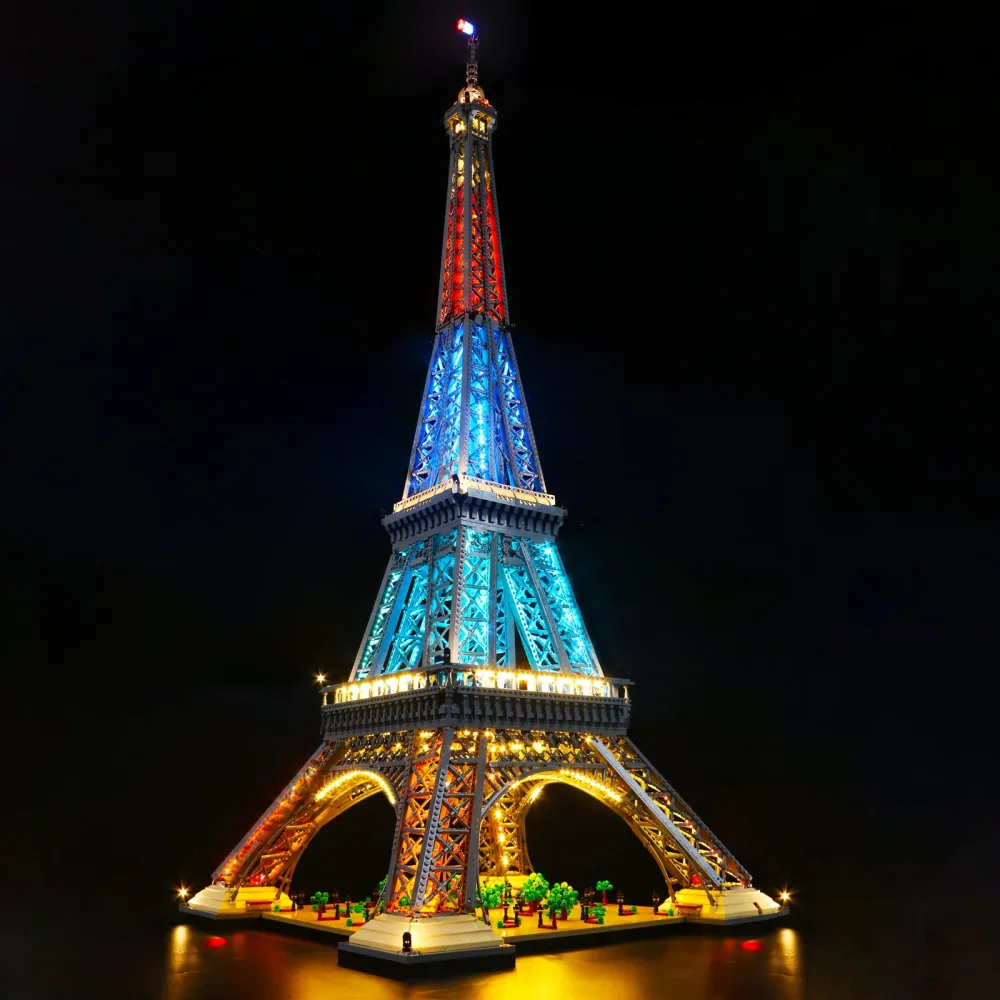
The Eiffel Tower 10307 at $129.98 is a lattice rather than a box, which means light passes through it instead of staying inside. The result reads much more like the real thing lit at night than the bare model does by day. At nearly five feet tall it is also the set most likely to be in a dark corner of a room where it is barely visible unlit.
Backlit mosaics and art: the cheap win
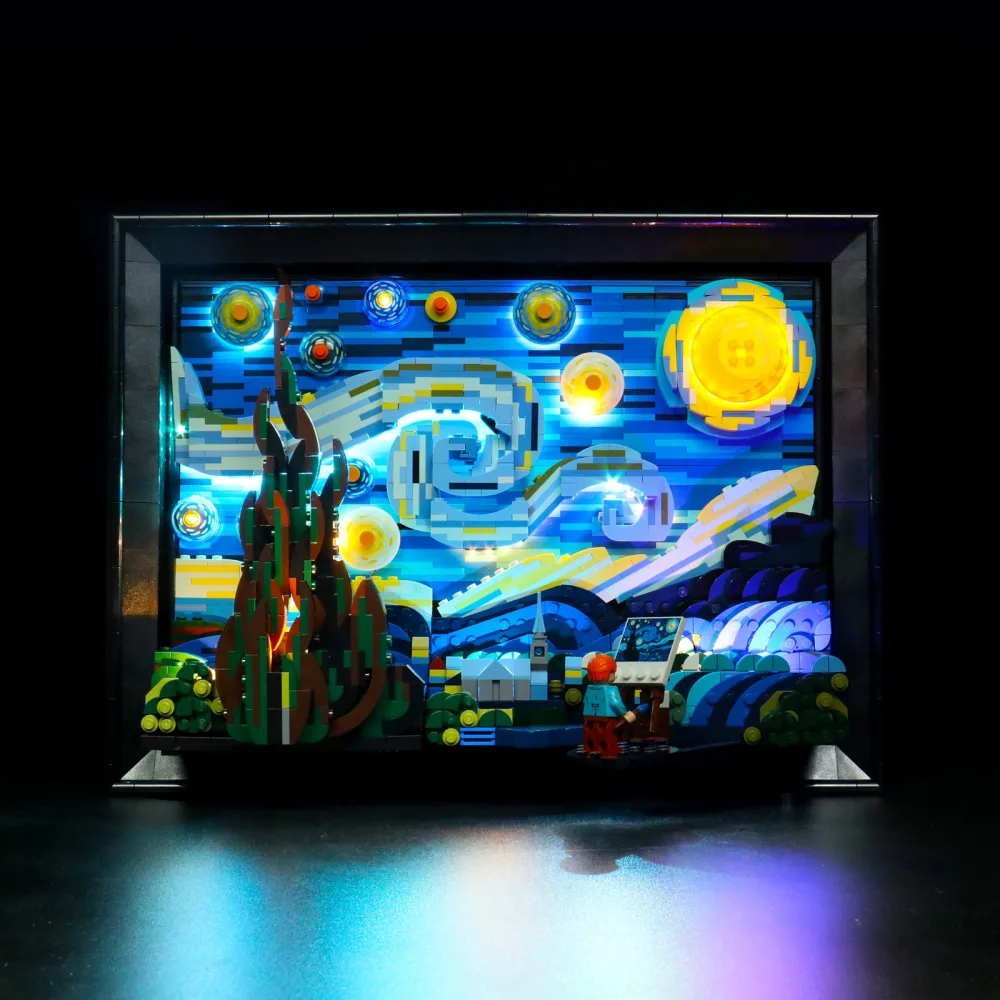
Flat art sets are the best value in the category because they need very few lights to change completely. The Starry Night 21333 at $21.99 lights the moon and the stars from behind, which is exactly the part of the painting that is about light in the first place. For twenty-two dollars this is the kit I would recommend to anyone unsure whether the whole idea is for them.
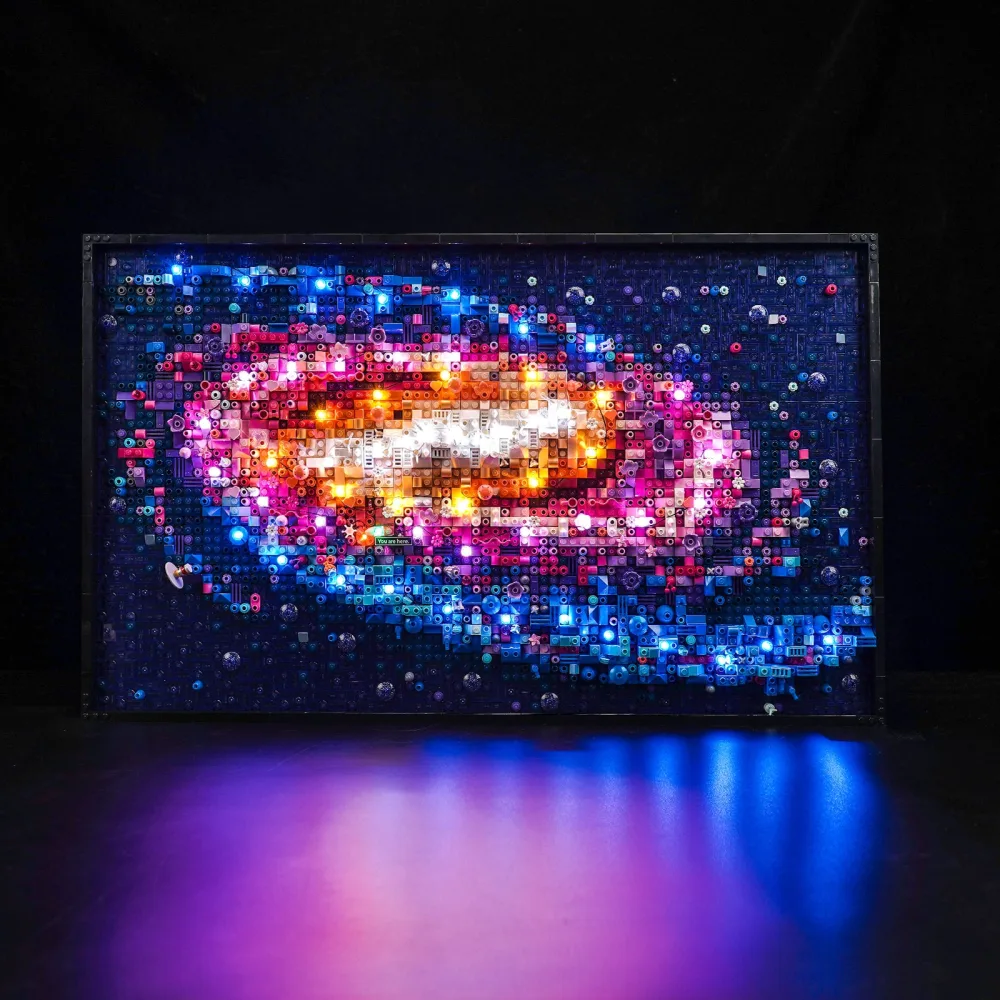
The Milky Way Galaxy 31212 at $67.98 is the same idea with far more lights, and it is the one set here where the unlit model and the lit model are arguably different objects. Three times the price of the Van Gogh for a much denser effect.
Houses and seasonal builds
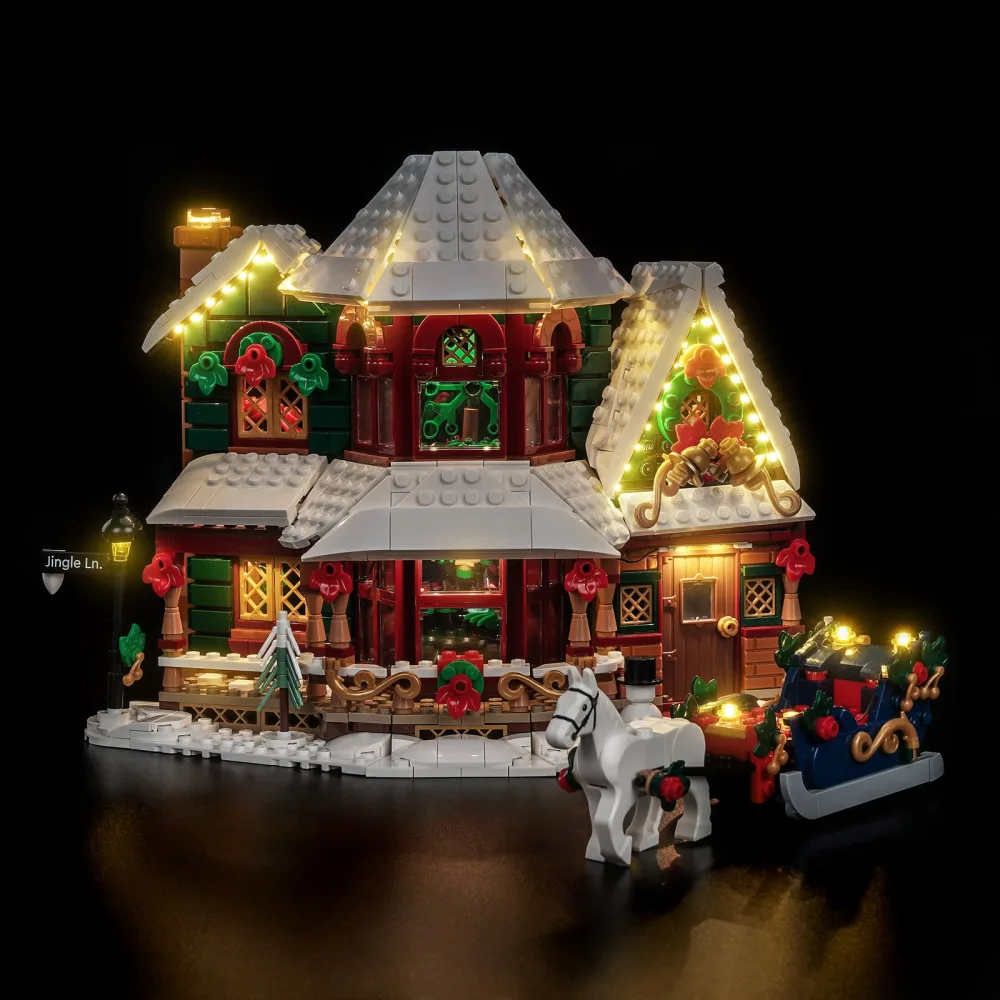
Winter village and holiday sets are the obvious fit, because warm window light is the entire aesthetic those sets are chasing and the models are hollow boxes with lots of windows. The Holiday House 11387 at $37.98 adds roofline strings and a lit lamppost on top of the interior glow, which is more lighting per dollar than most kits manage.
The Home Alone 21330 at $69.98 does the same job on a much larger house, and is worth noting because the set spends eleven months of the year as a plain brick building and one month as the best Christmas decoration in the house.
Small character models: the weakest case
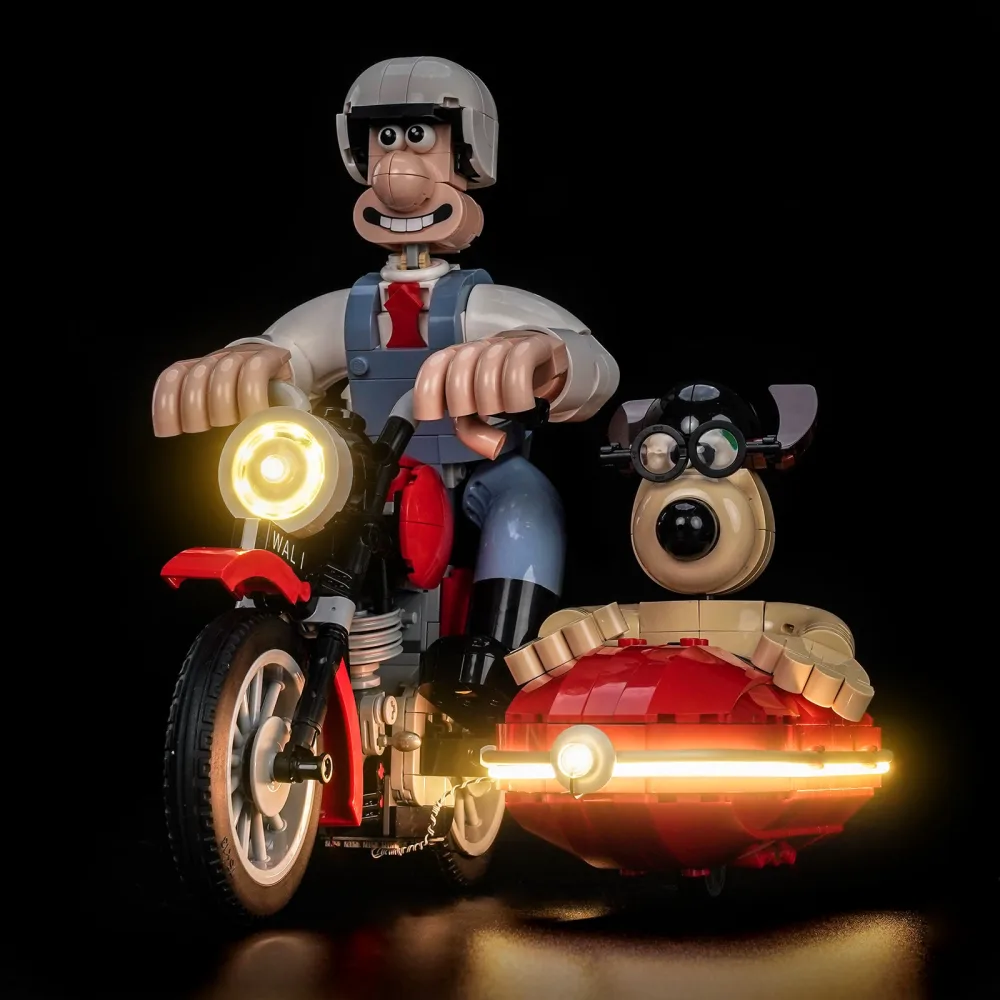
The Wallace & Gromit 21371 kit at $24.98 is a fair illustration of the limit. There is a headlight and a strip around the sidecar, both nicely done, but a solid model with no interior has nowhere for light to hide. You are adding two or three highlights rather than transforming anything.
That is not a criticism of the kit so much as of the match. If your set is a solid figure, a vehicle without windows, or a bare sculpture, spend the money on a set that has somewhere to put the light instead.
Three Things to Weigh Before Buying
1. There is very little independent coverage of this brand
This is the thing I would most want to know, so I will put it first. The established names in LEGO lighting, Light My Bricks, Briksmax and Lightailing, have been reviewed at length by hobby outlets and forum members for years. Searching for the same kind of coverage of BrickBling, I could not find it.
That does not mean the kits are bad. It does mean you are buying largely on the brand’s own photography, with no third party to tell you whether the wire quality, the connectors or the customer service hold up. For a $22 kit that is a small bet. For a $180 one it is worth at least reading recent buyer feedback before you commit.
2. Check the set number on the listing, not just the name
Kits are cut to a specific model, so an incorrect number means parts that do not reach. The listings are usually consistent, but not always. On the Executor Super Star Destroyer kit the set number 75457 appears four times in the description, and then the installation note tells you to fully assemble the LEGO Executor Super Star Destroyer #76352, a different number entirely.
In that case the rest of the listing makes the intent obvious and it reads as a copy slip rather than a wrong product. Still, in a category where the number is the only thing guaranteeing fit, a listing that contradicts itself about the number is worth a second look before you order.
3. Work out what the kit costs relative to the set
The range here runs from about $20 to about $190, and the kit price does not track the set price neatly. Lighting a $170 art piece for $22 is a very different proposition from spending $180 on lighting for a set you already own.
The useful question is not whether the kit is cheap but whether that money would be better spent on another set. For a model you have displayed for two years and stopped noticing, a kit is excellent value. For one you have not bought yet, buy the set first.
What Else Is Out There
It would be a poor guide that pretended this is the only option. Light My Bricks is generally the premium choice, with more lights and more effect components per kit and a reputation for customer service, at the highest prices. Briksmax sits lower on price with well regarded strip lights, and its components are commonly described as interchangeable with Light My Bricks parts. Lightailing is the other name that comes up constantly.
BrickBling competes mainly on breadth and price. Its catalogue runs to roughly 925 kits organised by LEGO theme, with Icons, Star Wars and Technic the deepest sections, so the odds of it covering your specific set are good even when the set is obscure.
If you are still deciding what to light, our guides to brick building sets for adults and RC and motorised building sets cover the display models worth owning, and Bluetooth battery hubs for LEGO Technic covers the other common third-party upgrade.
Frequently Asked Questions
Do light kits damage LEGO sets?
Installation involves temporarily removing pieces to thread wire, not modifying them. Nothing is cut or glued, and the kit can be taken out again. The practical risk is to your patience rather than to the bricks, particularly on a model you have to partly dismantle to reach the middle of.
How are they powered?
By USB at 5V, so a power bank, wall charger or computer all work. Some kits also offer an AA battery box. There is no built-in battery, so plan where the cable goes before you start threading wire.
Is the remote version worth the extra?
On the best sellers the premium is usually $10, and for anything you will display permanently I would pay it. Switching a shelf display on and off at the plug gets old quickly. On a small kit beside a desk socket, skip it.
Will a kit fit a revised version of my set?
Not reliably. Buy strictly by set number, and if your set has had a new release under a similar name, confirm which one the listing covers before ordering.
Which set should I light first?
Whichever one has the most hollow space and the most windows. Cross-sections, castles, houses and backlit art all gain enormously. Solid figures and sculptures gain the least.
Final Thoughts
A light kit is one of the few upgrades that changes how often you look at something you already own, and the return depends almost entirely on picking the right set rather than the right brand.
If you want the single most dramatic result on this page, that is the Death Star 75419 kit at $129.98, because a set made of twenty separate rooms is the ideal case for a product that lights rooms. The Eiffel Tower 10307 at $129.98 is the next best for the same structural reason, and the Disney Castle 43222 at $109.98 after that.
If you are trying the idea out rather than committing to it, start with The Starry Night 21333 at $21.99. It is the cheapest kit here, it lights the part of the model that is about light anyway, and it will tell you within one evening whether you want to do this to the rest of your shelf. The Holiday House 11387 at $37.98 is the best seasonal pick, and the Milky Way Galaxy 31212 at $67.98 the best if you want a backlit piece with real density to it.
Take the Remote Control version on anything that will live on display, usually for about $10 more. Skip it on small kits next to a socket. And before you order anything, read the version name and the set number on the listing properly, because this catalogue gives you 29 different version names and at least one listing that disagrees with itself about which set it fits.
Browse light kits by LEGO theme →
Prices and version names were taken from the brand’s own store in September 2026 and change without notice. Competitor observations come from published hobby coverage of those brands. Product images are courtesy of BrickBling. LEGO and the set names used here are trademarks of their respective owners, which do not sponsor or endorse BrickBling or this article.




Write Your Review
No reviews yet. Be the first to share your experience!